


Offset management
Remove and replant offsets only when they have at least 3–4 firm leaves and visible roots, using a clean, sharp knife and allowing cut surfaces to dry for 2–3 days before potting to reduce rot risk.

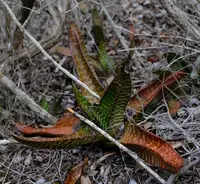
Bredasdorp Gasteria (Gasteria carinata var. carinata) is a compact succulent from South Africa, valued for its tolerance of indoor conditions and limited light. It grows as a small rosette of thick, triangular leaves, often with rough texture and pale spots or bands.
In habitat it occurs on rocky slopes and shallow soils, which makes it adapted to drought and lean, fast-draining substrates. Its slow growth and sturdy foliage make it suitable for windowsills, desks, and small spaces.
These traits generally make it an easy plant for beginners, provided excess moisture is avoided. Understanding how to care for Bredasdorp Gasteria mainly involves balancing bright, indirect light with careful watering and gritty soil.

Care Difficulty
Easy Care

Light Preference
Partial Shade

Water Requirements
Low Water

Temperature Preference
Tropical / Frost Sensitive

Hardiness Zone
10–11

Soil Texture
Sandy, Loamy, Rocky

Soil pH
Acidic (5.5–6.5), Slightly acidic (6.5–7.0)

Soil Drainage
Well-drained

Fertilization
Minimal (feed rarely)
Scan your plant to receive care tips personalized for your specific plant
Available on iOS and Android
This succulent prefers bright, indirect light and gentle sun exposure to avoid leaf damage.
This drought-tolerant succulent needs infrequent, thorough watering in fast-draining soil.
This species prefers mild, frost-free conditions with moderate warmth most of the year.
This species handles typical indoor humidity comfortably and does not need special humidity management.
Gasteria carinata var. carinata needs a very free-draining, mineral-rich mix to prevent root rot.
This compact succulent is well suited to container growing at home or in sheltered outdoor spots.
This slow-growing succulent needs modest feeding to support healthy leaves and root development.
Gasteria carinata var. carinata needs minimal pruning, focused on hygiene and maintaining a neat rosette.
This compact succulent prefers to stay slightly root-bound and only needs infrequent repotting.
This species is commonly propagated from offsets and leaf cuttings under warm, bright conditions.
This succulent is not fully frost hardy and benefits from simple winter protection in most climates.

Plant Health Check
Not sure what's wrong with your plant? Check your plant's health inside the app.
This species is naturally restricted to the southwestern Cape region of South Africa, where it grows on rocky slopes and shale or sandstone outcrops in a winter-rainfall climate with hot, dry summers.
Mature plants develop strap-shaped leaves with a pronounced central keel and rough, tubercled surface, a texture that helps reduce water loss and scatter intense sunlight in its exposed habitat.
The dark green leaves carry pale spots and banding that visually break up the rosette outline, providing camouflage among lichen-covered rocks and shaded crevices where the plants often nestle.

Wild populations of Gasteria carinata var. carinata are sometimes found growing partly wedged into vertical rock faces, with roots anchored in narrow fissures, an adaptation that allows the plants to exploit tiny pockets of moisture and avoid competition on the surrounding soil surface.
Lack of flowers usually comes from insufficient maturity, light that is too low, or irregular watering. Plants often need several years to bloom. Steady bright light, slight crowding in the pot, and cool, dry winters encourage flowering.
Keep your plants happy and healthy with plant identification, disease detection, and easy care guidance.

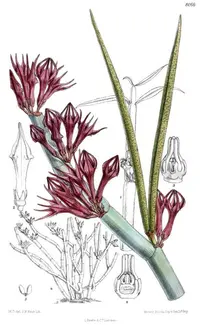
Ceropegia fusca
Ceropegia fusca

Blushing Philodendron
Philodendron erubescens 'Golden Erubescens'
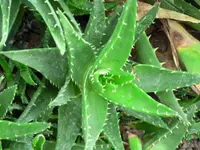
mitre aloe
Aloe perfoliata
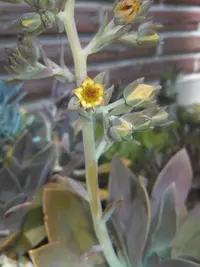
Graptoveria
× Graptoveria 'Fred Ives'
Schlumbergera russelliana
Schlumbergera russelliana
Felt Plant
Kalanchoe beharensis 'Fang'
Begonia angularis
Begonia angularis
Japanese Laurel
Aucuba japonica