Aechmea mexicana Care

Aechmea mexicana

About Aechmea mexicana

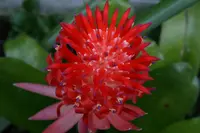
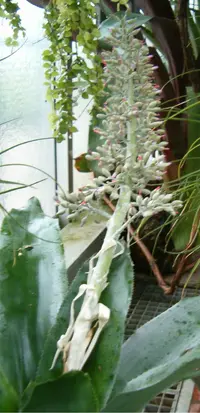
Aechmea mexicana is a terrestrial or epiphytic bromeliad native to humid forests of Mexico and Central America. It forms a vase-like rosette of stiff, often spiny-edged leaves that can collect water in the center. Tall, colorful flower spikes emerge from the rosette, followed by decorative berries, giving the plant strong architectural interest in indoor or sheltered outdoor spaces.

The species tends to be robust and adaptable, which makes it relatively straightforward for patient growers to manage. It prefers bright, filtered light, moderate warmth, and even moisture with good drainage, and these traits guide how to care for Aechmea mexicana.

Main Plant Requirements

Care Difficulty

Moderate Care

Light Preference

Partial Shade

Water Requirements

Moderate Water

Temperature Preference

Tropical / Frost Sensitive

Hardiness Zone

10–12

Soil Texture

Sandy, Loamy, Organic-rich

Soil pH

Acidic (5.5–6.5)

Soil Drainage

Well-drained

Fertilization

Light (every 4–6 weeks)

Get Personalized Care Plan

Scan your plant to receive care tips personalized for your specific plant

Available on iOS and Android

How to Care for the Aechmea mexicana

This bromeliad prefers bright, indirect light with brief direct sun rather than harsh, all-day exposure.

  • Provide 4–6 hours of bright, filtered light daily; early morning sun is acceptable, but protect from strong midday and afternoon rays to avoid leaf scorch.
  • Outdoors, place Aechmea mexicana in light dappled shade under trees or a shade cloth that blocks 30–50% of direct sun.
  • If leaves turn dark green and the rosette stretches, light is too low; if tips bleach or bronze, move the plant to softer, filtered light.

This species uses its central tank and roots for moisture, so watering focuses on both the cup and the potting mix.

  • Keep the central cup 1/2–3/4 full with fresh water and flush it every 1–2 weeks to prevent stagnation and salt buildup.
  • Let the top 2–4 cm of mix dry before watering the roots; ensure fast drainage with a coarse, barky bromeliad or orchid-type substrate.
  • In warm, active growth, water more often; in cooler months, allow longer drying intervals and watch for rot signs such as a sour smell or collapsing leaves.

This bromeliad prefers warm, frost-free conditions and reacts quickly to cold stress.

  • Aim for 65–80°F (18–27°C) for steady growth; short peaks to 85–90°F (29–32°C) are tolerated if humidity is moderate and air moves gently.
  • Avoid temperatures below 55°F (13°C); prolonged exposure near 40–45°F (4–7°C) can cause leaf spotting and permanent damage, and frost can kill the rosette.
  • In cooler seasons, protect the plant from cold drafts and rapid temperature swings, and in summer provide shade during heatwaves to limit leaf scorch and moisture loss.

This bromeliad benefits from moderately humid air but adapts to typical indoor conditions.

  • Aim for 40–60% humidity for best leaf color and slower tip browning.
  • Tolerates drier air if watered correctly, but prolonged levels under 30% increase brown tips and curling.
  • Increase humidity with a nearby pebble tray or grouped plants, avoiding misting directly into the leaf tank to prevent rot.

This species prefers a loose, airy mix that drains quickly yet holds some moisture around the roots.

  • Use a mix of roughly 50% fine orchid bark, 25% perlite or pumice, and 25% peat or coco coir for a chunky, organic-rich structure.
  • Ensure very fast drainage; water should run through in seconds and not pool on the surface or in the saucer.
  • Keep pH slightly acidic to neutral, around 5.5–7.0, which supports nutrient uptake and healthy root function.
  • Avoid dense garden soil or heavy clay components that compact, stay wet for long periods, and suffocate roots of Aechmea mexicana.

This bromeliad is well suited to container growing due to its compact root system.

  • Choose a stable, relatively heavy pot to counterbalance the tall flowering spike and prevent tipping in wind or bumps.
  • Select a shallow but wide container that gives space for offsets to form around the base without crowding immediately.
  • Use unglazed terracotta if extra evaporation is needed in humid climates, or glazed ceramic in dry homes to slow moisture loss.

Light feeding supports healthy foliage and flowering without overwhelming Aechmea mexicana’s modest nutrient needs.

  • Use a balanced liquid fertilizer (around 10-10-10 or 20-20-20) diluted to 1/4–1/2 strength for container plants.
  • Feed every 4–6 weeks during spring and summer when growth is active.
  • Apply to the potting mix, not into the central tank, to avoid salt buildup.
  • Stop or reduce feeding to 1 light application in fall and skip in midwinter.

Pruning Aechmea mexicana focuses on removing old growth and maintaining a tidy rosette.

  • Best time is after flowering finishes and in late spring or early summer.
  • Cut spent flower stalks at the base with clean, sharp scissors or pruners.
  • Remove dead, damaged, or rotting leaves at the base to improve airflow and appearance.
  • Thinning crowded offsets slightly can maintain shape and allow stronger pups to develop.

Transplanting or repotting keeps this bromeliad stable, well-drained, and able to support offsets.

  • Repot or transplant every 2–3 years, or when roots circle the pot, mix breaks down, or growth slows.
  • Choose late spring to early summer for moving Aechmea mexicana so it can recover in warm conditions.
  • Use a fast-draining mix (bromeliad or orchid bark plus perlite) and a pot just 2–5 cm wider.
  • Handle the root ball gently, keep the central rosette above the mix, water lightly, and shade for 1–2 weeks to reduce stress.

Propagation relies mainly on offsets, which produce new plants genetically identical to the parent.

  • Separate pups when they reach about 1/3–1/2 the size of the mother rosette, usually in spring or early summer.
  • Use a clean knife or pruners to cut pups with some roots attached, then plant in a fast-draining bromeliad mix.
  • Keep newly potted offsets warm (70–80°F), in bright indirect light, with lightly moist mix and a filled central cup.
  • Seed propagation is possible but slow; sow on the surface of sterile mix and keep evenly moist under high humidity.

Winter care aims to keep this tropical bromeliad above freezing and moderately dry.

  • Aechmea mexicana is frost sensitive and should stay above 40°F, ideally 55–75°F, in winter.
  • Move containers indoors or into a greenhouse before the first frost, providing bright, indirect light.
  • Water less often, keeping the mix just barely moist and the central cup only partly filled to avoid rot.
  • In mild climates, use a light mulch around outdoor plants to buffer short cool spells and soil temperature.

Care Tips

Offset management

Remove well-rooted offsets once they reach about 1/3–1/2 the size of the mother plant, using a clean, sharp knife and dusting the cut with sulfur or cinnamon to reduce rot risk and encourage stronger clump renewal.

Central cup hygiene

Empty and refill the central water cup every 1–2 weeks to prevent mosquito larvae, algae buildup, and bacterial growth, especially when growing Aechmea mexicana in warm, stagnant indoor air.

Stable tank support

Pot the plant in a heavy, wide container and top-dress with coarse gravel so the tall rosette and water-filled tank stay stable and do not tip over as they gain weight.

Outdoor summering

If climate allows, move the plant outdoors in bright shade during warm months to increase air movement and light intensity, but acclimate it over 7–10 days to avoid leaf scorch.

Flower stalk handling

After flowering, leave the inflorescence in place until it naturally fades and begins to dry, then remove it cleanly at the base to direct the plant’s remaining energy into offset production.

Common Pests and Diseases

Scale insects

This pest feeds on leaf sap, often hiding along leaf bases and in tight leaf axils, causing yellowing, sticky honeydew, and sooty mold. Infestations are favored by warm, still air and excess fertilizer.

Solution

Remove visible insects with a cotton swab dipped in isopropyl alcohol and rinse leaf surfaces thoroughly, including the central cup. For persistent problems, use repeated applications of a horticultural oil or insecticidal soap, and improve air movement while avoiding overfertilization as part of general Aechmea mexicana care instructions.

Mealybugs

These insects appear as white, cottony clusters in leaf axils, on the undersides of leaves, and sometimes inside the central water cup, weakening the plant by sucking sap. Symptoms include distorted growth, sticky honeydew, and possible sooty mold.

Solution

Isolate the plant, then wipe or rinse off colonies with water and cotton swabs dipped in isopropyl alcohol, taking care to flush the leaf bases. Repeat treatments with insecticidal soap or a low-toxicity systemic product if needed, and inspect nearby bromeliads regularly to catch reinfestations early.

Bromeliad aphids

These insects cluster on young leaves and flower spikes, feeding on sap and causing curling, yellowing, and stunted growth. Honeydew from feeding encourages black sooty mold on leaves and around the inflorescence.

Solution

Spray the plant thoroughly with a strong stream of water to dislodge aphids, including under leaves and around the flower spike. Follow with insecticidal soap or horticultural oil on all affected surfaces and reduce excess nitrogen fertilization, which can promote soft, aphid-prone growth.

Leaf spot

This disease causes small, water-soaked or tan to dark-brown spots on leaves, often starting near the base where water lingers, and can coalesce into larger patches. Symptoms include thinning tissue and, in severe cases, partial leaf dieback.

Solution

Trim off heavily spotted leaves or sections with clean tools and discard them, then keep the central cup water fresh and avoid wetting foliage late in the day. Improve airflow around the plant, reduce crowding with other bromeliads, and use a copper-based or broad-spectrum fungicide if new spots continue to appear.

Phytophthora crown rot

This disease starts at the plant base, especially if the cup or potting mix stays saturated, leading to a soft, brown, foul-smelling crown and rapid collapse of leaves. Symptoms include wilting despite moist conditions and detaching leaves at the base with very little effort.

Solution

At the first signs, remove and discard the most affected rosettes and any soggy organic debris, and allow remaining offsets to dry slightly between waterings. Keep the central cup filled only lightly, ensure the plant is in a very well-draining bromeliad mix, improve drainage and airflow, and avoid leaving the pot standing in water to prevent further spread.

Interesting Facts

Tank-forming tree epiphyte

In its native lowland rainforests of southern Mexico and Central America, this species often grows high on tree branches as an epiphyte, forming a tight leaf rosette that holds water and organic debris, creating a small aquatic habitat for insects and other small organisms.

Unusually large rosette

Among related bromeliads, this species is notable for forming a very large rosette, with stiff, arching leaves that can reach over 1 m long in optimal outdoor conditions in the tropics.

Bird-visited inflorescences

Its tall flowering stalk bears tubular flowers followed by conspicuous berry-like fruits that attract birds, which help disperse the seeds through the forest canopy and understory.

Botan icon

Did you know?

This species is sometimes used as a living water reservoir in traditional agroforestry systems in parts of its native range, where its leaf tanks are valued for holding rainwater that can support beneficial insects and small fauna around cultivated trees.

FAQs about Aechmea mexicana

This bromeliad usually flowers once when mature, then focuses on producing offsets. Lack of bloom often comes from immaturity, insufficient light, or stress. Stable warmth, bright shade, and light feeding support how to take care of Aechmea mexicana for flowering.

Grow Healthy Plants with Botan Care

Keep your plants happy and healthy with plant identification, disease detection, and easy care guidance.

Botan plant care app — identify plants on mobile

Explore More Plants