clove Care (Syzygium aromaticum)

clove

About clove

Clove, Syzygium aromaticum, is an evergreen tropical tree grown mainly for its aromatic flower buds, which are harvested and dried as the familiar kitchen spice. In cultivation it forms a dense canopy of glossy, dark green leaves and can become a small to medium tree in warm, frost-free climates.

This species is native to the Maluku (Spice) Islands of Indonesia but is now cultivated across many tropical regions. It prefers warm, humid conditions, moist but well-drained soil, and shelter from strong wind, which can make outdoor care for clove challenging outside true tropical or subtropical zones.

Main Plant Requirements

Care Difficulty

Hard Care

Light Preference

Full Sun

Water Requirements

Regular Water

Temperature Preference

Tropical / Frost Sensitive

Hardiness Zone

10–12

Soil Texture

Sandy, Loamy, Organic-rich

Soil pH

Acidic (5.5–6.5), Slightly acidic (6.5–7.0)

Soil Drainage

Moist but well-drained

Fertilization

Light (every 4–6 weeks)

Get Personalized Care Plan

Scan your plant to receive care tips personalized for your specific plant

Available on iOS and Android

How to Care for the clove

Syzygium aromaticum prefers bright, warm, tropical light that avoids harsh midday exposure.

  • Provide 4–6 hours of gentle morning sun with light shade or filtered light from late morning to afternoon, especially in hot climates.
  • Allow partial shade (up to 50% shade cloth) in regions with strong sun to prevent leaf scorch and curling on young clove plants.
  • In cooler seasons, choose the sunniest, wind-sheltered spot, avoiding dense shade where growth becomes sparse and stems stretch toward light.

This species needs consistently moist but never waterlogged soil, adjusted to climate and soil type.

  • Water when the top 3–5 cm of soil feels dry, aiming for evenly damp soil that does not feel soggy or crackled dry.
  • Use deep, slow watering so moisture reaches the root zone, combined with well-drained, organic-rich soil to limit root rot in Syzygium aromaticum.
  • In cooler months reduce frequency, watching for drooping, dry leaves as a sign of underwatering and yellowing, soft leaves as a sign of excess moisture.

This tropical tree requires warm, stable temperatures and has very low tolerance to cold.

  • Aim for 70–85°F (21–29°C) for active growth, which supports steady leaf and flower bud development.
  • Protect from any frost; damage can occur below 40°F (4°C), and prolonged exposure under 35°F (2°C) may kill young plants.
  • In hot spells above 95°F (35°C), provide extra shade and soil moisture, while in cooler seasons use wind protection and avoid low-lying frost pockets.

This species prefers consistently moist air and reacts poorly to very dry environments.

  • Aim for 60–80% humidity, as clove naturally grows in tropical, coastal conditions with high atmospheric moisture.
  • Dry air causes leaf-tip browning, curled edges, and slowed growth, especially in heated or air-conditioned rooms.
  • Increase humidity by grouping plants, placing the pot on a pebble tray with water below the pot base, or using a room humidifier nearby.

This species needs deep, evenly moist, well-aerated soil that never stays waterlogged.

  • Use a loose, loamy mix built from roughly 2 parts compost or rich potting mix, 1 part coarse sand, and 1 part perlite to balance moisture retention and drainage.
  • Syzygium aromaticum prefers slightly acidic to neutral soil, around pH 6.0–7.0, which supports nutrient availability and healthy root function.
  • Improve aeration by incorporating chunky materials such as fine bark chips or coco coir, which create air pockets and prevent compaction over time.
  • Avoid heavy clay, poorly drained sites, or mixes dominated by fine peat that stay soggy and encourage root rot and fungal problems.

This tree can be grown in containers for many years if the pot provides stable support and controlled moisture.

  • Choose a tall, heavy container that lowers the center of gravity and resists tipping as the canopy becomes denser and top-heavy.
  • Select a pot material with moderate porosity, such as thick-walled terracotta or ceramic, to steady moisture while preventing prolonged saturation.
  • Use a container with wide, unobstructed drainage holes so excess water exits quickly and does not accumulate around the sensitive fine roots.

Syzygium aromaticum benefits from light, consistent feeding to support steady leafy growth and flower bud production.

  • Use a balanced liquid fertilizer (around 10-10-10) at 1/2 strength every 4–6 weeks during the warm growing season.
  • Alternatively, apply a slow-release balanced fertilizer or a thin layer of well-rotted compost at the start of spring.
  • Skip or greatly reduce feeding in winter when growth slows, especially for indoor or container-grown clove.
  • Always water before and after applying fertilizer to limit root burn and improve nutrient uptake.

Syzygium aromaticum responds well to light structural pruning that maintains a healthy, compact canopy.

  • Carry out main pruning at the end of winter or very early spring, before active growth resumes.
  • Remove dead, diseased, crossing, or inward-growing branches first to improve air flow and light penetration.
  • Shorten overly long shoots to shape the tree and encourage a denser branching habit.
  • Use clean, sharp bypass pruners or loppers, making smooth cuts just above a bud or branch junction.

Container-grown Syzygium aromaticum or young nursery trees need thoughtful transplanting to avoid root stress.

  • Check for roots circling the pot, emerging from drainage holes, or noticeably slowed top growth as signals to move up 1 pot size.
  • Time repotting or outdoor transplanting for late spring, once soil is warm and frost risk has passed.
  • Plan on repotting young container plants every 2–3 years using a deep, free-draining, slightly acidic mix.
  • Handle roots gently, loosen only tight circles, water thoroughly after planting, and shade lightly for several days to aid recovery.

Propagation of Syzygium aromaticum is possible but slow and technically demanding for most home growers.

  • Use fresh, fully ripe seeds in late spring or early summer, as viability drops quickly once dried.
  • Sow seeds in a sterile, free-draining mix, keep at 75–85°F with steady moisture and high humidity for germination.
  • Semi-hardwood cuttings taken in warm weather need bottom heat, high humidity, and rooting hormone to stand a chance of rooting.
  • Expect long timelines; maintain stable warmth, bright indirect light, and consistent moisture to support young plants.

Syzygium aromaticum is tropical and requires careful winter care in regions with cool or cold seasons.

  • In USDA zones colder than 11, grow in containers and move plants indoors before temperatures drop below 50°F.
  • Provide a bright, frost-free room or greenhouse, keeping temperatures ideally between 60–75°F in winter.
  • Reduce watering but do not allow the root ball to dry out completely during cooler months.
  • For in-ground specimens in marginal climates, mulch the root zone with 5–10 cm of organic material to buffer temperature swings.

Care Tips

Root-zone warmth

Use a seedling heat mat or place the container on a consistently warm surface to keep the root zone around 75–80°F, which improves establishment and reduces transplant shock in young clove trees.

Wind and salt shelter

Position plants behind a solid fence, hedge, or windbreak fabric in coastal or exposed sites, since clove foliage and flower buds are sensitive to dry wind and salt spray that can scorch leaves and reduce flowering.

Structured canopy training

During the first 3–4 years, select 3–4 strong main branches spaced evenly around the trunk and remove low or crossing shoots so the tree develops an open, accessible canopy that supports safer harvest and better air movement.

Targeted iron management

If new leaves turn pale while veins stay green, apply a chelated iron drench or foliar spray formulated for acid-loving plants, because clove often shows iron chlorosis in alkaline or poorly drained soils.

Harvest-stage clipping

Clip flower buds when they are full-sized, still closed, and show a glossy pink to light red color, then dry them promptly in a single layer in a shaded, airy place to preserve aroma and reduce mold risk when growing clove for spice use.

Common Pests and Diseases

Clove bud borer

This pest is the larval stage of a moth that tunnels into young flower buds, causing them to dry, drop, or fail to open. Symptoms include small entry holes, frass (insect droppings), and significant loss of flower buds used for spice production.

Solution

Collect and destroy infested buds and fallen debris regularly to break the life cycle. For larger trees, use light traps to monitor moth activity and, if thresholds are high, apply a suitable biological insecticide containing Bacillus thuringiensis to young buds in the evening, following local label directions.

Stem and twig borer

This pest bores into young shoots and small branches, leading to wilting, dieback, and breakage above the entry point. Symptoms include small round holes, sawdust-like frass, and sudden drying of affected twigs.

Solution

Prune and destroy affected twigs 10–15 cm below visible damage to remove larvae inside the stem. Maintain good tree vigor with adequate water and nutrition, avoid mechanical injury to stems, and, in high-pressure situations, consider wrapping young trunks or using targeted trunk sprays recommended for borers in woody crops in your region.

Leaf spot

This disease causes small brown or dark lesions on leaves that may enlarge, coalesce, and sometimes show a yellow halo. Severe infections reduce photosynthesis and can lead to premature leaf drop, especially in humid, poorly ventilated conditions.

Solution

Remove and discard heavily spotted leaves and any fallen foliage around the base to reduce fungal spores. Improve air circulation by thinning dense interior branches, avoid wetting foliage when watering, and, if the problem persists, apply a copper-based or other labeled ornamental fungicide during wet periods as part of broader Syzygium aromaticum care instructions.

Clove dieback

This disease typically starts with yellowing and wilting of young shoots, followed by progressive dieback of branches and, in severe cases, decline of the whole tree. Symptoms include discolored bark, drying of twigs from the tip backward, and sometimes gumming or canker formation on branches.

Solution

Prune out affected branches well below visible symptoms and destroy the material to limit spread. Disinfect pruning tools between cuts, avoid water stress by keeping soil evenly moist but not waterlogged, and strengthen plant resilience with balanced fertilization; in areas with known dieback problems, consult local extension services about resistant planting material or registered fungicidal drenches.

Scale insects

These insects attach to stems and leaf undersides, appearing as small bumps that suck sap and excrete honeydew. Symptoms include sticky leaves, sooty mold growth, yellowing foliage, and general weakening of the tree, especially in sheltered or indoor-like situations.

Solution

Wipe or gently scrub infested areas with a soft cloth or cotton pad dipped in diluted insecticidal soap or horticultural oil, repeating every 7–10 days until populations drop. Encourage natural predators outdoors, avoid excess nitrogen fertilization that promotes soft new growth, and monitor young clove trees regularly so that small infestations can be removed by hand before they spread.

Interesting Facts

Harvested Unopened Flower Buds

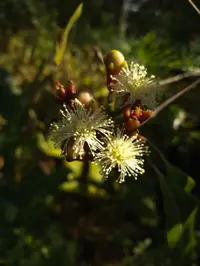
The commercial spice known as cloves consists of the dried, unopened flower buds of Syzygium aromaticum, picked just as they turn from green to pink before blooming.

Extremely Narrow Native Range

In the wild this species is naturally native only to a few small volcanic islands in Indonesia’s Maluku (Spice) Islands, where it once formed dense coastal forests.

Potent Essential Oil Content

Its buds contain a very high concentration of essential oil dominated by eugenol, a phenylpropanoid compound responsible for the strong aroma and flavor and widely studied in food science and dentistry research.

Botan icon

Did you know?

For several centuries, particularly during the 16th–17th centuries, control of the clove trade from the Maluku Islands was so economically important that European colonial powers enforced tree-destruction policies on non-monopolized islands to keep prices high and maintain strategic dominance.

FAQs about clove

Yes, this tree can be grown in large, deep containers with drainage. Use a rich, well‑aerated mix and up‑pot gradually. Container culture helps control size and allows protection from cold or unsuitable outdoor climates.

Grow Healthy Plants with Botan Care

Keep your plants happy and healthy with plant identification, disease detection, and easy care guidance.

Botan plant care app — identify plants on mobile

Explore More Plants