Use light pruning
Pinch or lightly tip-prune new shoots after flowering to keep the shrub compact and improve air flow through the canopy, which reduces fungal issues and encourages denser branching.

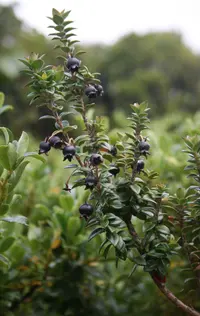
Ugni myricoides is an evergreen shrub from the myrtle family, valued for its dense foliage and small, aromatic leaves. It typically forms a compact, bushy shape that suits hedging or container growing.
This species is native to parts of Central and South America, where it grows in mild, often humid climates. Small flowers and later berries may appear in suitable conditions.
Ugni myricoides is generally moderate in difficulty, as it dislikes extremes: it prefers stable temperatures, consistent moisture, and well-drained, slightly acidic soil. Providing bright light without harsh, prolonged midday sun is a good starting point for how to care for Ugni myricoides.

Care Difficulty
Moderate Care

Light Preference
Partial Shade

Water Requirements
Regular Water

Temperature Preference
Warm Climate

Hardiness Zone
9–11

Soil Texture
Loamy, Sandy, Organic-rich

Soil pH
Acidic (5.5–6.5), Slightly acidic (6.5–7.0)

Soil Drainage
Moist but well-drained

Fertilization
Light (every 4–6 weeks)
Scan your plant to receive care tips personalized for your specific plant
Available on iOS and Android
This shrub prefers bright, gentle light similar to a lightly shaded forest edge.
This plant prefers consistently moist but not saturated soil.
This species favors mild, frost-free conditions for reliable growth and fruiting.
This shrub benefits from moderate humidity but usually adapts to typical indoor levels.
This species prefers a loose, well-drained, organic-rich substrate that stays evenly moist but not saturated.
This species is well suited to container growing for patios, balconies, and small gardens.
This shrub benefits from light, consistent feeding during active growth, but heavy fertilization is unnecessary for Ugni myricoides.
Pruning helps maintain a dense, healthy framework and supports flowering on Ugni myricoides.
This species adapts well to both containers and the ground but dislikes severe root disturbance.
New plants are most reliably raised from semi-ripe cuttings, though seeds are also possible for Ugni myricoides.
This shrub has moderate cold tolerance but benefits from simple winter protection in cooler climates.

Plant Health Check
Not sure what's wrong with your plant? Check your plant's health inside the app.
Ugni myricoides belongs to the myrtle family (Myrtaceae) and produces small aromatic leaves and fruits with a sweet, resinous scent that is distinct from but related to that of common myrtle and guava.
This species is naturally found in humid montane forests of Central and South America, where it grows as a shrub or small tree in cool, misty conditions with consistently high atmospheric moisture.
The small, white to pale-pink, bell-shaped flowers are rich in nectar and are visited by bees and other pollinators, supporting local pollinator communities in its native range.
This species is evergreen in mild climates, keeping foliage year-round if protected from hard frost and severe drought. In colder areas, it may drop some leaves or suffer tip dieback during winter, then regrow in spring.
Keep your plants happy and healthy with plant identification, disease detection, and easy care guidance.