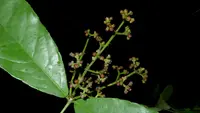
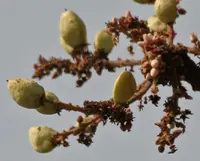
Salt-tolerance management
If grown near coastal areas, hose the foliage with fresh water every 2–4 weeks to wash off salt spray and reduce long-term leaf burn and cumulative salt stress.

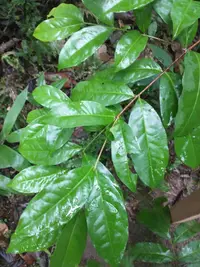
Eugenia patrisii is a tropical evergreen shrub or small tree in the myrtle family, valued mainly for its glossy foliage and dense branching. It typically forms a compact to medium-sized canopy, making it suitable for informal hedges, screening, or trained specimens in warm climates.
This species occurs naturally in parts of northern South America, often in humid lowland forests. Its growth habit is fairly vigorous but responds well to pruning, which helps keep size and shape under control.
It is considered moderately easy to grow when its basic needs are met, and understanding how to care for Eugenia patrisii starts with providing warmth, consistent moisture, and a well-drained, slightly acidic soil in bright light.

Care Difficulty
Moderate Care

Light Preference
Partial Sun

Water Requirements
Moderate Water

Temperature Preference
Tropical / Frost Sensitive

Hardiness Zone
10–12

Soil Texture
Sandy, Loamy, Organic-rich

Soil pH
Acidic (5.5–6.5), Slightly acidic (6.5–7.0)

Soil Drainage
Moist but well-drained

Fertilization
Minimal (feed rarely)
Scan your plant to receive care tips personalized for your specific plant
Available on iOS and Android
This tropical shrub prefers bright, indirect light with some gentle direct sun each day for compact, dense growth.
This species prefers evenly moist, well-drained soil rather than cycles of complete drying or prolonged saturation.
This plant thrives in warm, frost-free conditions typical of lowland tropical and subtropical climates.
This species prefers moderately humid air and reacts if conditions are too dry.
Eugenia patrisii prefers evenly moist, well-aerated soil that drains quickly yet holds some organic moisture.
This species can be grown successfully in containers if the pot is chosen to support its woody, upright growth.
This species benefits from light, consistent feeding when grown in containers or managed landscapes.
Thoughtful pruning keeps this shrub or small tree healthy, manageable, and well-shaped.
This species is more often grown in the ground, but container plants and young specimens respond well to careful transplanting.
New plants are usually raised from seeds or semi-hardwood cuttings under controlled conditions.
This tropical to subtropical species is sensitive to freezing conditions and benefits from targeted winter protection in cooler climates.

Plant Health Check
Not sure what's wrong with your plant? Check your plant's health inside the app.
This species is native to seasonally flooded várzea forests of the central Amazon, where it tolerates periodic inundation and waterlogged soils that would damage many other woody plants.
Eugenia patrisii produces small, fleshy berries that are consumed by birds, which then disperse the seeds and help maintain genetic connectivity among distant riverine forest patches.
As a member of the Myrtaceae, this species has essential-oil–containing glands in its leaves and young shoots, which contribute to its characteristic aromatic foliage and may provide some defense against herbivores.
Growth is moderate under warm, humid conditions. Young plants often add 20–40 cm per year, slowing as they mature. Container plants usually grow more slowly than those in the ground due to limited root space and nutrients.
Keep your plants happy and healthy with plant identification, disease detection, and easy care guidance.