Fancy-leaf Caladium Care (Caladium 'Carolyn Whorton')

Also known as: Heart of Jesus, Angel Wings

About Fancy-leaf Caladium

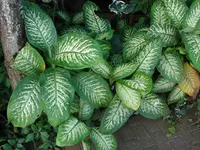
Caladium 'Carolyn Whorton' is a tropical tuberous perennial grown mainly for its striking foliage rather than flowers. It is usually treated as a warm-season annual indoors or in temperate gardens. Large, heart-shaped leaves show pink centers, green margins, and bright veining, giving a bold, decorative look even in small spaces. Plants grow in clumps and rarely become tall, so they suit containers and shaded beds. The species behind this cultivar originates from tropical Central and South America, where it grows in warm, humid, shaded habitats. These origins explain its preference for bright, indirect light, consistent moisture, and airy, well-drained soil. Understanding this background makes it easier to care for Fancy-leaf Caladium successfully indoors.

Main Plant Requirements

Care Difficulty

Moderate Care

Light Preference

Partial Shade

Water Requirements

Keep Soil Moist

Temperature Preference

Tropical / Frost Sensitive

Hardiness Zone

9–11

Soil Texture

Loamy, Peaty, Organic-rich

Soil pH

Acidic (5.5–6.5), Slightly acidic (6.5–7.0)

Soil Drainage

Moist but well-drained

Fertilization

Moderate (every 2–4 weeks)

Get Personalized Care Plan

Scan your plant to receive care tips personalized for your specific plant

Available on iOS and Android

How to Care for the Fancy-leaf Caladium

Caladium 'Carolyn Whorton' performs best in bright, indirect light with some protection from strong midday sun.

  • Provide 3–5 hours of gentle morning sun with dappled or filtered light the rest of the day, especially in USDA zones 8–11.
  • Site this Fancy-leaf Caladium in partial shade; east- or north-facing exposures or under light tree canopy help prevent leaf scorch.
  • Avoid harsh afternoon sun, which burns thin leaves, but also avoid deep shade that leads to weak stems and faded color, especially in summer.

Caladium 'Carolyn Whorton' prefers evenly moist, never waterlogged soil during its active growing season.

  • Water when the top 2–3 cm of soil feels dry, soaking the root zone thoroughly and allowing excess to drain away.
  • Use a loose, well-drained mix; consistently soggy soil causes yellowing leaves, soft petioles, and tuber rot, while crisp, drooping leaves indicate underwatering.
  • Reduce watering sharply as foliage declines in late fall; keep tubers just barely moist or dry and stored, then resume careful watering when new shoots appear.

This caladium grows well in warm, stable temperatures and is very sensitive to cold and frost.

  • Aim for 70–85°F (21–29°C) during active growth; below 65°F (18°C) growth slows and leaves may lose color or curl.
  • Protect the plant from temperatures under 55°F (13°C); tubers can be damaged or killed by light frost and must not freeze.
  • In hot spells above 90°F (32°C), provide shade and consistent moisture, as excessive heat plus full sun can scorch foliage and stress the plant.

This cultivar needs consistently high humidity to maintain large, healthy leaves.

  • Aim for 60–75% humidity; leaves become crispy and edges brown when air stays drier than 50%.
  • In dry homes, group plants, use a small humidifier, or place the pot on a pebble tray with water below the pot base.
  • Thin, papery leaves wilt and curl under low humidity, so avoid heater vents and drafts when caring for Fancy-leaf Caladium.

Caladium 'Carolyn Whorton' performs best in light, airy, organic-rich soil that drains quickly but does not dry out instantly.

  • Use a mix of roughly 50% peat or coco coir, 30% compost, and 20% perlite or fine bark to balance moisture and aeration.
  • Target slightly acidic soil, around pH 5.5–6.5, which supports nutrient uptake and stable foliage color.
  • Ensure the mix feels loose and crumbly; compact or heavy soil reduces oxygen around tubers and increases rot risk.
  • Avoid pure garden soil, clay-heavy mixes, or any substrate that stays waterlogged longer than 2–3 days after watering.

This caladium is well suited to container growing for patios, shaded balconies, and shaded garden spots.

  • Choose a wide, shallow pot rather than a deep one so tubers spread just below the surface and warm evenly.
  • Use a slightly heavier container or add stones at the base to prevent tipping from tall, top-heavy foliage.
  • Select materials that match your climate: plastic retains moisture for hotter, windy sites, while unglazed clay helps excess moisture evaporate in wetter conditions.

Caladium 'Carolyn Whorton' benefits from light, consistent feeding during its active growing season to support colorful foliage typical of Fancy-leaf Caladium.

  • Use a balanced liquid fertilizer (around 10-10-10 or 20-20-20) diluted to 1/4–1/2 strength for container plants.
  • Feed every 2–3 weeks during late spring through summer when leaves are actively growing.
  • Avoid heavy compost or strong slow-release pellets that can burn tender roots in small pots.
  • Stop feeding in fall as leaves yellow and the tubers enter dormancy; do not fertilize dormant tubers in winter.

Caladium 'Carolyn Whorton' needs only light pruning focused on cleanliness and leaf renewal rather than shaping.

  • Use clean, sharp scissors or pruning snips to remove yellowing, brown, or collapsed leaves at the base.
  • Trim damaged or torn foliage during the growing season to reduce disease risk and improve appearance.
  • Cut out crowded or inward-folding leaves sparingly to improve airflow around the plant.
  • Remove fading leaves before dormancy in fall to keep tubers healthy and reduce rot in storage.

Container-grown Caladium 'Carolyn Whorton' benefits from occasional repotting to refresh soil and give tubers room to expand.

  • Look for roots circling the pot, water running straight through, or weak growth as signs it needs repotting.
  • Repot every 1–2 years in early spring just before or as new buds start to swell on the tubers.
  • Choose a pot 2–5 cm wider with free-draining mix, and plant tubers with buds facing up, about 2–5 cm deep.
  • Water lightly after repotting, keep warm and shaded, and avoid overwatering until strong new leaves appear to limit root stress.

Caladium 'Carolyn Whorton' is most commonly propagated by dividing its tubers rather than by seed.

  • Divide tubers in late winter or early spring before planting, when eyes or buds are visible.
  • Use a clean, sharp knife to cut large tubers into sections, ensuring each piece has at least 1–2 eyes.
  • Allow cut surfaces to dry and callus for 1–2 days in a warm, airy place to reduce rot risk.
  • Plant divisions in warm, moist, well-drained mix at 70–80°F with bright, indirect light to encourage sprouting.

Caladium 'Carolyn Whorton' is frost-tender and needs deliberate winter care in most climates.

  • In zones colder than 9, dig tubers before first hard frost, gently brush off soil, and dry for several days.
  • Store dormant tubers in dry peat or vermiculite at 55–65°F in a dark, ventilated place.
  • In mild climates or indoor pots, allow foliage to die back naturally, then keep soil barely moist during dormancy.
  • Move containers indoors before nights drop below 50°F, avoiding cold drafts and overly wet soil in winter.

Care Tips

Pre-sprout Tubers

Before potting, pre-sprout tubers by placing them in barely moist peat or coir at 70–80°F for 1–2 weeks, which encourages uniform shoots and a fuller container display.

Correct Tuber Orientation

When planting, position tubers with the slightly concave, eye-bearing side up and cover with only 2–3 cm of mix to avoid delayed emergence and weak growth.

Staggered Lifting Schedule

In regions with cool winters, mark planting spots and lift tubers only after foliage has fully yellowed, then cure them in a dry, shaded place for 7–10 days before storing.

Storage Humidity Control

For winter storage, keep cured tubers in mesh bags or paper bags filled with dry peat moss at 60–65°F and roughly 50–60% relative humidity to reduce rot and shriveling.

Rotate Containers Regularly

Rotate pots by 90° every 7–10 days during active growth so leaves receive more even light, reducing lopsided growth and improving the overall shape when caring for Fancy-leaf Caladium.

Common Pests and Diseases

Caladium leaf spot

This disease causes small water-soaked or tan spots that enlarge into irregular brown lesions, often with yellow halos, especially in warm, humid conditions.

Solution

Remove and discard affected leaves, keep foliage dry by watering at the soil line, improve air circulation, and avoid overhead watering; in persistent cases on outdoor plantings, a labeled copper or chlorothalonil fungicide can be used according to package directions.

Fusarium tuber rot

This disease attacks caladium tubers, causing sunken, brown, dry or slightly spongy areas that can lead to poor sprouting, stunted plants, and sudden leaf collapse.

Solution

Discard soft or badly affected tubers, plant only firm and healthy tubers in well-drained, clean potting mix, avoid injuring tubers when cutting or dividing, and keep soil evenly moist but not saturated to limit fungal spread.

Thrips

These insects feed by rasping and sucking on leaf surfaces, leading to silvery streaks, small black specks of frass, and distorted or bleached patches on the thin caladium leaves.

Solution

Rinse foliage thoroughly with water to knock down adults and larvae, remove heavily damaged leaves, and apply insecticidal soap or neem oil to leaf tops and undersides every 5–7 days until new growth appears clean.

Spider mites

These pests thrive in warm, dry indoor air and cause fine speckling, dull or grayish leaves, and sometimes fine webbing on the undersides of caladium foliage.

Solution

Increase humidity around the plant, shower leaves with lukewarm water to remove mites, and follow with repeated applications of insecticidal soap or horticultural oil, making sure to cover the undersides of leaves well.

Mealybugs

This pest forms white, cottony clusters along leaf veins, petioles, and at the tuber crown, sucking sap and causing yellowing, wilting, and general decline.

Solution

Isolate the plant, wipe visible insects with cotton swabs dipped in isopropyl alcohol, rinse foliage, and use repeated treatments of insecticidal soap or neem oil while also checking any stored tubers and discarding those with heavy infestations.

Interesting Facts

Classic Florida introduction

This cultivar was selected and named in Florida in the mid-20th century and has since become one of the most widely grown ornamental caladiums in the US landscaping industry.

Stable pink marbling

Its large heart-shaped leaves show a characteristic pattern of bright pink centers with green margins and scattered white speckles that remains relatively stable across plants produced from tuber division.

High landscape reliability

Among fancy-leaved caladiums, this cultivar is known by breeders and growers for its dependable performance in warm, humid summer plantings, which helped it become a standard reference variety in many caladium trials.

Botan icon

Did you know?

Caladium 'Carolyn Whorton' has been so consistently popular in US ornamental horticulture that it is frequently used as a parent in breeding programs aimed at improving leaf color, size, and sun tolerance in new caladium cultivars.

FAQs about Fancy-leaf Caladium

Brown, crispy edges usually result from low humidity, excess fertilizer salts, or inconsistent watering. Improve humidity, flush the potting mix occasionally, and keep the soil evenly moist but not soggy to reduce further browning.

Grow Healthy Plants with Botan Care

Keep your plants happy and healthy with plant identification, disease detection, and easy care guidance.

Botan plant care app — identify plants on mobile

Explore More Plants