Mounted culture setup
Consider growing Black orchid on a slab of cork, tree fern, or hardwood with a thin pad of sphagnum, which keeps the roots airy and mimics its natural epiphytic growth on trees.

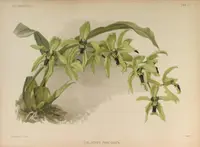
The black orchid, Coelogyne pandurata, is an epiphytic orchid that usually grows on tree trunks in warm, humid forests of Borneo and nearby regions. It forms clumps of pseudobulbs topped with long, arching leaves.
Its flower spikes carry many greenish blooms with a striking dark, almost black, patterned lip, giving the plant its common name. The flowers are showy but have a relatively short blooming period.
This species prefers bright, filtered light, warm temperatures, and steady moisture with good air movement around the roots. With stable conditions and attention to humidity, it is moderately challenging to care for Black orchid, especially for growers outside tropical climates.

Care Difficulty
Hard Care

Light Preference
Partial Shade

Water Requirements
Keep Soil Moist

Temperature Preference
Tropical / Frost Sensitive

Hardiness Zone
12–13

Soil Texture
Peaty, Organic-rich, Loamy

Soil pH
Acidic (5.5–6.5)

Soil Drainage
Moist but well-drained

Fertilization
Moderate (every 2–4 weeks)
Scan your plant to receive care tips personalized for your specific plant
Available on iOS and Android
This orchid prefers bright, filtered light that mimics a bright, humid forest canopy.
This epiphytic orchid needs consistent moisture around its roots without staying waterlogged.
This orchid prefers warm to intermediate temperatures with stable, gentle fluctuations between day and night.
This orchid needs consistently high humidity to grow well indoors or in greenhouses.
This epiphytic orchid needs a very open, fast-draining, airy mix rather than dense potting soil.
This species is well suited to container growing when the pot is chosen to support its creeping growth habit.
This epiphytic orchid benefits from light, consistent feeding during its active growth period.
Pruning focuses on hygiene and flower performance rather than shaping Coelogyne pandurata.
This orchid prefers a slightly tight pot and is repotted infrequently to limit stress.
Division is the standard method for multiplying this orchid, while seed propagation is specialized and lab-based.
This tropical orchid is frost-sensitive and needs warm, sheltered conditions in winter.

Plant Health Check
Not sure what's wrong with your plant? Check your plant's health inside the app.
The flowers have a broad, fiddle-shaped lip with dark olive to black raised ridges, creating a strong visual contrast against the pale green petals and giving the species its common name, black orchid.
Individual flowers are strongly scented with a spicy, resinous fragrance but usually last only a few days, so blooming displays are brief yet striking.
In nature this orchid often grows as an epiphyte on trees overhanging lowland rivers in Borneo and nearby regions, where it benefits from high humidity, bright filtered light, and frequent air movement.

This species can produce impressive arching inflorescences bearing over a dozen large flowers at once, creating a single, dramatic flowering display from each new growth.
Lack of flowering usually comes from insufficient seasonal temperature drop, light that is too low, or depleted energy reserves. A distinct cooler, slightly drier rest period after growth helps trigger spikes and supports Coelogyne pandurata care in home collections.
Keep your plants happy and healthy with plant identification, disease detection, and easy care guidance.