Anthurium concinnatum Care

Anthurium concinnatum

About Anthurium concinnatum

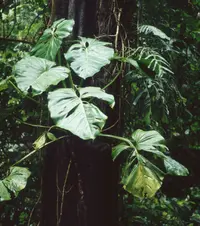
Anthurium concinnatum is a tropical aroid grown mainly for its large, leathery leaves and striking, upright growth. It is typically grown as a foliage specimen rather than for its flowers. Native to Central and South America, it often grows as an epiphyte, anchoring its roots on trees in warm, humid forests.

This growth habit means it prefers airy, well-drained substrate, consistent moisture, and bright, filtered light. It is considered moderately challenging, as it reacts to low humidity, poor drainage, and temperature swings. Understanding how to care for Anthurium concinnatum helps reduce stress issues such as leaf browning and slow growth.

Main Plant Requirements

Care Difficulty

Hard Care

Light Preference

Bright Indirect Light

Water Requirements

Keep Soil Moist

Temperature Preference

Tropical / Frost Sensitive

Hardiness Zone

11–13

Soil Texture

Loamy, Peaty, Organic-rich

Soil pH

Acidic (5.5–6.5)

Soil Drainage

Moist but well-drained

Fertilization

Light (every 4–6 weeks)

Get Personalized Care Plan

Scan your plant to receive care tips personalized for your specific plant

Available on iOS and Android

How to Care for the Anthurium concinnatum

This species prefers bright, filtered conditions that mimic dappled forest light.

  • Provide 6–8 hours of bright, indirect light each day, such as near an east window or under 30–50% shade cloth outdoors.
  • Tolerates partial shade, but growth slows and leaves may elongate or darken if light stays low, especially in winter at higher latitudes.
  • Shield Anthurium concinnatum from strong midday or afternoon sun, which can cause pale patches or brown scorch along leaf edges and tips.

This aroid prefers evenly moist, airy substrate rather than constant saturation.

  • Water when the top 2–4 cm of the mix feels dry, using the finger test rather than a fixed schedule, and allow excess to drain away fully.
  • In spring and summer, expect more frequent watering as warmth and active growth increase uptake; reduce frequency in cooler months when growth slows.
  • Watch for yellowing, limp leaves and a sour smell as signs of overwatering, and for dull, curling, or drooping leaves plus dry, pulling soil as signs of underwatering in Anthurium concinnatum.

Stable, warm conditions support steady growth and reduce stress-related leaf damage.

  • Aim for 70–80°F (21–27°C) during active growth, with nighttime temperatures not dropping more than about 10°F (6°C) below daytime levels.
  • Avoid exposing the plant to temperatures below 55°F (13°C); brief dips to 50°F (10°C) may be survived but can slow growth and risk leaf blemishes.
  • Protect from frost and from hot, stagnant air above 90°F (32°C); increase shade and airflow in heat waves and move plants indoors or under cover before cold snaps.

This species needs elevated humidity to maintain healthy foliage and steady growth.

  • Aim for 60–80% humidity; it tolerates brief dips to around 50% but declines in very dry rooms.
  • Crisping leaf edges, brown tips, and stalled new leaves indicate humidity stress.
  • Increase humidity with a nearby humidifier, clustered plants, and a pebble tray rather than misting leaves.

This species prefers a very airy, organic-rich mix that mimics loose forest litter.

  • Use a chunky mix of orchid bark, perlite or pumice, and peat or coco coir to keep roots aerated.
  • Ensure rapid drainage; water should run through in seconds and not leave the mix waterlogged.
  • A slightly acidic pH around 5.5–6.5 suits Anthurium concinnatum and supports nutrient uptake.
  • Avoid dense garden soil or fine potting mixes that compact, suffocate roots, and encourage rot.

This species adapts well to container growing when the pot supports its climbing, rooty habit.

  • Choose a slightly heavy pot to counterbalance the plant’s vertical or vining growth and prevent tipping.
  • Select a container depth that allows thick roots to spread downward without coiling tightly at the base.
  • Use a pot material with moderate moisture retention, such as terracotta-lined cachepots, to prevent sudden drying.

Balanced feeding supports steady growth and foliage quality in Anthurium concinnatum.

  • Use a balanced liquid fertilizer (around 10-10-10 or 20-20-20) diluted to 25–50% strength for indoor plants.
  • Apply every 4–6 weeks during the warm growing season when the plant is actively producing leaves.
  • Reduce feeding to 1 light application in late winter or stop entirely when growth slows.
  • Choose either a diluted liquid feed, a light top-dressing of fine compost, or a low-dose slow-release product, not all at once.

Light pruning keeps Anthurium concinnatum tidy and supports healthy foliage over time.

  • Carry out most pruning in late winter or early spring before strong new growth starts.
  • Remove yellowing, dead, or mechanically damaged leaves at the base with clean, sharp scissors or pruning shears.
  • Thin out crowded or crossing stems to improve air movement and maintain an open, balanced shape.
  • Disinfect blades with alcohol between plants to reduce the risk of spreading disease organisms.

Container-grown Anthurium concinnatum benefits from occasional repotting to maintain root health and substrate structure.

  • Check for crowded roots circling the pot, water running straight through, or slowed growth as signs it needs a larger container.
  • Plan to repot every 2–3 years in late winter or early spring, just before active growth resumes.
  • Move up only 2–5 cm in pot diameter and use a chunky, well-draining aroid mix to limit waterlogging stress.
  • Water lightly after repotting, keep humidity moderate to high, and shade from strong sun for 1–2 weeks while roots re-establish.

Division is the most reliable method for Anthurium concinnatum plant care in home settings.

  • Divide mature clumps in late spring or early summer when roots are actively growing.
  • Gently unpot the plant, separate sections with at least 1–2 healthy growth points and roots, and trim rotten tissue.
  • Plant divisions in a loose, airy mix, then keep at 70–80°F, high humidity, and bright, indirect light.
  • Maintain lightly moist but not waterlogged substrate; avoid heavy fertilization until strong new growth appears.

This tropical species is frost-sensitive and needs stable warm conditions in winter.

  • Maintain indoor temperatures above 60°F, ideally 65–75°F, with no cold drafts or sudden temperature drops.
  • Bring container plants indoors before outdoor temperatures fall below 55°F.
  • Reduce watering in winter so the mix stays slightly moist but never soggy, as roots are less active.
  • Keep the pot insulated from cold windowsills and increase humidity with a tray of damp pebbles if indoor air is very dry.

Care Tips

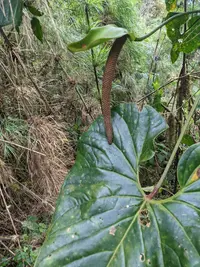
Support long petioles

Provide a low, stable support ring or small stakes for older leaves so long petioles do not kink or snap at the base when the plant is moved or rotated.

Encourage larger leaves

Pot the plant in a slightly wider but still shallow container and allow a short climbing support, such as a flat board wrapped in sphagnum, to encourage larger, more elongated foliage over time.

Root zone monitoring

Use a narrow wooden skewer or moisture probe pushed into the root ball to check that the inner mix has partially dried before deep watering, which helps prevent chronic root stress in this thick-rooted species.

Targeted pest checks

Inspect the undersides of older leaves and the base of the petioles every 1–2 weeks with a hand lens, since thrips and scale often settle in those sheltered points first on this species.

Gentle acclimation moves

When improving light or humidity conditions, shift the plant 20–30 cm closer to the window or humidifier every 7–10 days to avoid stress while growing Anthurium concinnatum in a new location.

Common Pests and Diseases

Bacterial blight

This disease causes dark, water-soaked leaf spots that expand quickly, often with yellow halos and a greasy look along leaf margins. Symptoms include rapid collapse of affected areas in warm, wet conditions and can progress to severe leaf dieback.

Solution

Remove and discard all heavily spotted or collapsing leaves, sterilizing cutting tools between cuts. Keep foliage dry, improve air circulation, avoid overhead watering, and if the plant is valuable, use a copper-based bactericide according to label directions while keeping the plant isolated from others during treatment.

Bacterial leaf spot

This disease starts as small, translucent to dark spots on leaves that may coalesce into irregular patches, especially on older foliage. Symptoms include more slowly expanding lesions than blight, often linked to splashing water or contaminated tools.

Solution

Prune out affected leaves early, disinfecting tools with 70% alcohol between cuts, and discard waste in the trash. Reduce humidity on leaf surfaces by watering at the soil level, space plants to increase airflow, and avoid misting foliage; in persistent cases, use a labeled copper or biological bactericide as a preventative on new growth.

Xanthomonas infection

This disease, caused by Xanthomonas bacteria specific to anthuriums, leads to angular, yellow to brown lesions restricted by leaf veins and can cause distorted new leaves. Symptoms include yellowing along veins and a patchy, scorched appearance on older foliage under warm, humid conditions.

Solution

Isolate the plant, remove leaves with visible lesions, and destroy them rather than composting. Maintain moderate humidity with good air movement, avoid sharing tools or water between plants, and consider preventative copper-based sprays on healthy foliage if the plant is part of a valuable collection of Anthurium concinnatum care instructions.

Anthracnose

This disease is a fungal problem that produces tan to dark brown leaf spots with distinct margins and sometimes tiny black fungal structures in the center. Symptoms include tip burn and irregular dead areas, especially on older or stressed leaves.

Solution

Trim off affected leaves or leaf tips using clean, disinfected scissors and dispose of them in the trash. Improve light and airflow, allow the top layer of the potting mix to dry slightly between waterings, and, if conditions stay humid, use a labeled ornamental fungicide as a protective spray on new, healthy foliage.

Mealybugs

These insects appear as white, cottony clusters on leaf axils, undersides of leaves, and roots, often causing sticky honeydew and sooty mold. This pest weakens the plant by sucking sap, leading to pale, distorted, or stunted leaves.

Solution

Physically remove visible clusters with a cotton swab dipped in 70% isopropyl alcohol and rinse foliage with a gentle lukewarm shower. Repeat inspections weekly, treat remaining insects with insecticidal soap or a horticultural oil labeled for indoor ornamentals, and keep the plant slightly isolated until the infestation is cleared.

Interesting Facts

Climbing rheophytic habit

This species naturally grows as a climbing rheophyte along wet, rocky stream margins in Central America, meaning it is adapted to withstand fast-moving water and periodically flooded conditions while attached to rocks or tree bases.

Deeply lobed foliage

Its mature leaves develop strongly divided lobes with a distinct narrowed middle section, giving them a characteristic hourglass outline that differs from the more heart-shaped leaves of many other Anthurium species.

Velvety leaf texture

The leaf blades often show a matte to slightly velvety surface with prominent, pale primary veins, a texture that helps diffuse intense light in its native understory habitat.

FAQs about Anthurium concinnatum

This species is a climbing aroid that lengthens along a stem and roots as it goes. It benefits from a support such as a moss pole or slab, which helps leaves grow larger and more symmetrical.

Grow Healthy Plants with Botan Care

Keep your plants happy and healthy with plant identification, disease detection, and easy care guidance.

Botan plant care app — identify plants on mobile

Explore More Plants