Calanthe discolor Care

Calanthe discolor

About Calanthe discolor

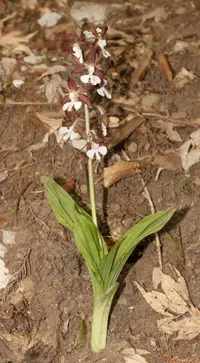
Calanthe discolor is a terrestrial orchid that grows in soil rather than on trees. It forms low clumps of pleated leaves and upright flower spikes. Flowers usually appear in spring and show a mix of white, cream, green, or purple tones, giving the plant a refined woodland look. The foliage often dies back in winter, then regrows from thick underground storage organs. This species is native to woodland habitats in East Asia, where it grows in dappled shade and moist, humus-rich soil. Its seasonal dormancy and preference for cool, stable conditions mean it needs more attention than easy houseplants. Understanding how to care for Calanthe discolor helps keep it healthy in gardens and specialized indoor setups.

Main Plant Requirements

Care Difficulty

Moderate Care

Light Preference

Partial Shade

Water Requirements

Keep Soil Moist

Temperature Preference

Cool Climate

Hardiness Zone

6–9

Soil Texture

Loamy, Peaty, Organic-rich

Soil pH

Acidic (5.5–6.5)

Soil Drainage

Moist but well-drained

Fertilization

Light (every 4–6 weeks)

Get Personalized Care Plan

Scan your plant to receive care tips personalized for your specific plant

Available on iOS and Android

How to Care for the Calanthe discolor

This woodland orchid prefers bright, gentle light that mimics dappled forest shade.

  • Provide 2–4 hours of soft morning sun with bright, filtered light the rest of the day, avoiding strong midday and afternoon sun that can scorch leaves.
  • Grow Calanthe discolor in partial shade under deciduous trees, where summer foliage naturally filters light but early-spring sun still reaches emerging shoots.
  • Watch leaf color and texture; pale, yellowing, or scorched leaves indicate too much sun, while dark, floppy growth and poor flowering suggest insufficient light.

This species needs steadily moist yet airy soil during active growth and drier conditions in winter dormancy.

  • From spring to early fall, water when the top 2–3 cm of soil feels barely dry, aiming for evenly moist but never saturated conditions around the roots.
  • Use a free-draining, humus-rich mix or woodland-like soil so water runs through within a few seconds and no standing water collects around the roots.
  • Reduce watering sharply after leaves yellow and drop; in dormancy keep the medium just slightly damp, watching for shriveling pseudobulbs as a sign of underwatering.

This hardy terrestrial orchid prefers cool to mild conditions with a marked winter chill.

  • Aim for 60–75°F (16–24°C) during active growth, as this range supports steady leaf and root development without excessive stress.
  • Allow winter temperatures down to about 25°F (-4°C) in the ground with mulch; the dormant roots and pseudobulbs tolerate brief light frost but not deep, prolonged freezes without protection.
  • Protect plants from extended heat above 86°F (30°C) by providing shade and extra mulch, since sustained high temperatures can reduce flowering and weaken growth.

This woodland orchid benefits from moderately humid air to keep foliage and pseudobulbs from shriveling.

  • Aim for 50–70% humidity, especially during active spring and summer growth.
  • Tolerates brief dips to 30–40%, but prolonged dry air causes leaf tip browning and pleated, limp foliage.
  • Increase humidity with a pebble tray or grouped plants rather than misting, which can promote leaf spots on Calanthe discolor.

This species prefers a loose, humus-rich substrate that mimics a moist forest floor.

  • Use a mix of fine orchid bark, composted leaf mold or peat, and perlite in roughly equal parts for a fibrous, airy texture.
  • Ensure rapid drainage but consistent moisture retention; water should pass through within seconds without pooling on the surface.
  • Keep pH slightly acidic, around 5.5–6.5, by avoiding lime-heavy materials and favoring pine bark and leaf mold.
  • Avoid heavy clay, compacted garden soil, or pure peat, which restrict root aeration and lead to root rot in Calanthe discolor.

This terrestrial orchid is well suited to container growing outdoors in mild climates.

  • Choose a deep pot that allows for horizontal rhizome spread and at least 5–8 cm of fresh mix below the existing root system.
  • Select a sturdy, slightly heavier material such as ceramic to stabilize the plant’s leafy summer growth against wind.
  • Use a container with multiple side and base drainage holes so water exits quickly, preventing waterlogging at the rhizome level.

Feeding supports flowering and foliage in Calanthe discolor but should remain light and seasonal.

  • Use a balanced water-soluble fertilizer (such as 10-10-10 or 20-20-20) at 1/4–1/2 strength on moist soil.
  • Apply every 2–4 weeks during active growth in spring and early summer, then taper off by late summer.
  • In rich garden soil, integrate a thin layer of fine compost in early spring instead of frequent liquid feeding.
  • Stop feeding during dormancy and winter to avoid weak, stretched growth and salt buildup.

Pruning needs are modest and focus on hygiene rather than shaping for Calanthe discolor.

  • Cut back spent flower spikes at the base after blooming using clean, sharp scissors or pruners.
  • Remove yellow, dead, or damaged leaves at soil level to limit disease and improve air movement.
  • Thin any crowded or crossing shoots lightly to keep clumps open and support good flowering next season.
  • Disinfect tools before and after use, especially if plants have shown any fungal or bacterial issues.

Transplanting or dividing established clumps keeps this terrestrial orchid vigorous and flowering.

  • Look for crowded clumps, roots circling a pot, or declining flowering as signs that division or transplanting is needed.
  • Plan work for early spring just as new shoots emerge, typically every 3–4 years, to minimize disturbance stress.
  • Lift the clump gently, keep root systems as intact as possible, and replant pseudobulbs at the same depth in loose, humus-rich soil.
  • Water well after transplanting, then keep evenly moist and shaded for 1–2 weeks to help roots re-establish.

Propagation of this species is most reliable by division rather than seed for home growers.

  • Divide clumps in early spring as new growth begins, when plants are already being lifted for transplanting.
  • Use a clean knife or hands to separate sections with at least 3–4 healthy pseudobulbs and viable buds.
  • Replant divisions into well-drained, humus-rich soil, spacing them so shoots have room to expand.
  • Keep divisions evenly moist in bright, indirect light and sheltered from strong wind until new roots form.

This hardy terrestrial orchid appreciates a cool dormant period but benefits from basic winter protection in colder regions.

  • In zones around USDA 6–7, plants generally overwinter outdoors once established in well-drained soil.
  • After foliage dies back, cut it to ground level and apply 5–8 cm of loose mulch, such as shredded leaves or bark, over the root zone.
  • Ensure containers do not freeze solid; move potted plants into an unheated garage, cold frame, or sheltered porch.
  • Avoid waterlogged conditions in winter, as cold wet soil increases the risk of root and pseudobulb rot.

Care Tips

Cool-down period

Provide a distinct cool rest from late fall to mid-winter by moving pots to a shaded outdoor spot or an unheated porch kept around 40–50°F to secure stronger flowering the following spring.

Mulch management

Apply a 3–5 cm layer of fine pine bark or leaf mold over the root zone in fall, then gently pull it back in spring to allow new shoots to emerge without obstruction while keeping the pseudobulbs insulated.

Careful division timing

Divide clumps only every 3–4 years in early spring just as new shoots swell, and keep at least 3–5 healthy pseudobulbs per division to reduce transplant shock and maintain reliable blooming.

Shaded pot position

When grown in containers, sink the pot partially into the ground in a shaded bed during the growing season to buffer root temperatures and moisture swings, then lift and overwinter in a protected, frost-free area.

Slug and snail barriers

Place copper tape around pots or set rough gravel or crushed stone rings around outdoor clumps to deter slugs and snails that can quickly destroy emerging shoots and flower spikes when growing Calanthe discolor.

Common Pests and Diseases

Slugs and snails

This pest feeds on tender shoots, flower spikes, and young leaves, often in spring, leaving large irregular holes and slime trails. Symptoms include shredded foliage and damaged flower buds, especially on plants growing in the ground or in shaded, moist spots.

Solution

Hand-pick slugs and snails in the evening, use beer traps or iron phosphate bait around the planting area, and reduce hiding places such as dense mulch or overturned pots. Physical barriers like copper tape around containers and coarse grit around clumps can help protect emerging shoots, especially when growing Calanthe discolor in moist woodland-style beds.

Spider mites

These insects thrive in warm, dry air and can cause pale stippling on leaves, fine webbing, and general leaf dullness. Symptoms include slow decline, bronzing, and premature leaf drop, especially on indoor or greenhouse plants with low humidity.

Solution

Rinse foliage thoroughly with lukewarm water, including the undersides of leaves, and increase humidity around the plant through grouping or a humidity tray. If populations persist, apply horticultural soap or a ready-to-use miticide labeled for orchids, repeating treatments as directed while improving air movement to prevent reinfestation.

Orchid aphids

This pest feeds on flower spikes and the undersides of leaves, excreting sticky honeydew that can lead to sooty mold. Symptoms include distorted new growth, deformed flowers, and sticky residue attracting ants.

Solution

Spray infested areas with a strong stream of water to dislodge aphids, then treat with insecticidal soap or neem oil, ensuring full coverage of buds and leaf undersides. Remove heavily infested flower spikes if necessary and control nearby ant activity, which can protect aphid colonies.

Leaf spot fungus

This disease causes small water-soaked lesions that enlarge into brown or black spots, sometimes with yellow halos on the leaves. Symptoms include premature leaf yellowing and early dieback of the seasonal foliage, especially in crowded, damp conditions.

Solution

Remove and discard affected leaves promptly and avoid overhead watering so foliage stays as dry as possible. Improve spacing and airflow, water at the base in the morning, and if spotting continues, use a fungicide labeled for ornamental or orchid leaf spots according to the product directions.

Bacterial soft rot

This disease typically starts as water-soaked, translucent patches at the base of pseudobulbs or leaves, which quickly become mushy and foul-smelling. Symptoms include rapid collapse of affected tissue and spread through splashed water or contaminated tools.

Solution

Immediately cut out all soft, affected tissue with a sterile blade, dust cuts with powdered sulfur or cinnamon, and keep the plant drier and well ventilated while it heals. Disinfect tools between cuts, avoid water sitting in leaf bases, and discard severely affected plants to protect nearby orchids.

Interesting Facts

Deciduous terrestrial orchid

This species is unusual among orchids because it is fully terrestrial and deciduous, dying back to underground pseudobulbs in winter and resprouting in spring.

Cold-tolerant growth cycle

Native to Japan, Korea, and parts of China, it tolerates winter cold and relies on a cool dormant period to trigger its next season of growth and flowering.

Distinctive bicolored flowers

Its spring flowers have contrasting sepals and petals, often greenish-brown or purple-brown, with a lighter white to pale pink lip, creating a strongly bicolored appearance that is characteristic for this species.

Botan icon

Did you know?

In some parts of Japan, long-established clumps of this orchid in woodland gardens are valued as heritage plantings and can persist for several decades in the same spot when soil and shade conditions remain stable.

FAQs about Calanthe discolor

Lack of flowering usually comes from insufficient winter rest, low light in spring, or nutrient imbalance. Cooler, drier winter conditions, brighter but indirect spring light, and a low‑nitrogen, orchid‑specific fertilizer typically restore normal blooming.

Grow Healthy Plants with Botan Care

Keep your plants happy and healthy with plant identification, disease detection, and easy care guidance.

Botan plant care app — identify plants on mobile

Explore More Plants