Coelogyne cristata Care

Coelogyne cristata

About Coelogyne cristata

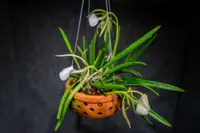
Coelogyne cristata is a cool-growing epiphytic orchid, often called the crested coelogyne. It forms clumps of oval pseudobulbs with arching sprays of white, frilled flowers. The blooms usually appear in late winter to early spring and have a light fragrance, making the plant attractive for indoor displays and cool greenhouses. In nature, it occurs in high-altitude forests of the Himalayas, where conditions are bright, humid, and cool. This background means it is somewhat demanding, especially regarding temperature and air moisture. Those who learn how to care for Coelogyne cristata often succeed by providing bright filtered light, steady moisture, and excellent drainage around the roots.

Main Plant Requirements

Care Difficulty

Hard Care

Light Preference

Bright Indirect Light

Water Requirements

Regular Water

Temperature Preference

Cool Climate

Hardiness Zone

Unknown

Soil Texture

Peaty, Organic-rich, Loamy

Soil pH

Acidic (5.5–6.5)

Soil Drainage

Moist but well-drained

Fertilization

Light (every 4–6 weeks)

Get Personalized Care Plan

Scan your plant to receive care tips personalized for your specific plant

Available on iOS and Android

How to Care for the Coelogyne cristata

This cool-growing orchid prefers bright, soft light that mimics high-elevation forest conditions.

  • Provide bright, filtered light with 8–10 hours per day, such as dappled shade under trees or a bright porch with no harsh midday sun.
  • Allow gentle early morning sun but protect from direct sun from about 10 a.m. to 4 p.m. to prevent leaf scorch, yellowing, and wrinkling.
  • In winter, increase light exposure by moving Coelogyne cristata closer to bright windows or brighter outdoor spots while still avoiding strong midday sun.

This species needs consistent moisture during growth but is sensitive to waterlogged roots.

  • Water when the top 2–3 cm of the medium feels just starting to dry, aiming to keep the root zone evenly moist but never saturated.
  • In active growth and flowering, increase watering frequency and ensure very free-draining orchid mix so excess water runs out quickly.
  • In late fall and winter, allow the medium to dry a bit more between waterings; watch for shriveling pseudobulbs as a sign of underwatering and black, mushy roots as overwatering.

This orchid is a cool-growing species that needs a marked difference between day and night temperatures.

  • Aim for daytime temperatures of 60–72°F (16–22°C) and nighttime 45–55°F (7–13°C) during the main growing and blooming period.
  • Protect from frost; short dips to 35–40°F (2–4°C) may be tolerated if dry, but repeated or hard frosts can damage leaves and pseudobulbs.
  • In hot weather above 80°F (27°C), move to a cooler, shaded, well-ventilated position and increase humidity to reduce heat stress and leaf droop.

This orchid needs cool, moist air with consistently elevated humidity.

  • Aim for 60–80% humidity; it tolerates brief drops but prolonged air below 50% leads to stress.
  • Watch for dry, pleated leaves, brown tips, and bud blast as signs humidity is too low.
  • Increase humidity with a pebble tray under the pot, grouped plants, or a cool-mist humidifier near Coelogyne cristata.

This epiphytic orchid needs a very open, airy mix that drains fast yet holds some moisture.

  • Use a coarse mix of medium orchid bark, chopped sphagnum moss, and a little perlite to support roots and retain moderate moisture.
  • Keep structure loose and chunky so air reaches roots; avoid compact or peat-heavy mixes that stay wet and suffocate them.
  • Provide rapid drainage through ample pot holes and a free-draining medium, as roots are highly prone to rot in stagnant water.
  • A slightly acidic to neutral range around pH 5.5–7 suits Coelogyne cristata, which benefits from organic bark-based mixes rather than mineral garden soils.

This species is well suited to container growing when pot choice supports its shallow, spreading roots.

  • Choose a wide, shallow pot that lets pseudobulbs spread horizontally without forcing new growths tightly against the rim.
  • Use a heavier container or add weight to the base to keep the plant stable as arching flower spikes can make it top-heavy.
  • Select terracotta for slightly faster moisture loss in cool, damp climates, or plastic to retain moisture a bit longer in drier homes.

This cool-growing orchid benefits from light, consistent feeding during its active season.

  • Use a balanced orchid fertilizer (around 20-20-20) diluted to 1/4–1/2 strength every 2–3 weeks in spring and summer.
  • Apply only to moist medium to reduce root burn and alternate with plain water to flush salts.
  • Stop feeding Coelogyne cristata in late fall and keep it unfertilized during its cool, dry winter rest.
  • Avoid slow-release pellets or heavy compost in pots, as they can break down the airy orchid medium too quickly.

Pruning needs for this orchid are minimal and focus on hygiene rather than shaping.

  • After flowering, cut spent flower spikes back to the pseudobulb with clean, sharp scissors or pruners.
  • Remove only dead, shriveled pseudobulbs and yellow or diseased leaves to reduce infection risk.
  • Inspect clumps at least once a year and thin out obviously crowded, dead material to improve air flow.
  • Avoid cutting healthy green growth on Coelogyne cristata, as this reduces future flowering potential.

This species prefers a stable root environment and only occasional repotting.

  • Repot every 2–3 years or when roots circle the pot, the medium decomposes, or growth becomes congested.
  • Choose late spring, just after flowering and as new roots start, to minimize stress and encourage quick recovery.
  • Use a shallow, snug pot with a free-draining mix such as medium orchid bark with some perlite and sphagnum.
  • Gently tease apart the root mass, trim dead roots only, keep pseudobulbs at the surface, then water lightly until growth resumes.

Propagation is usually done by division of mature clumps rather than by seed.

  • Divide in late spring as new growth and fresh roots appear, when the plant is already being repotted.
  • Use a sterile knife or pruning tool to separate sections with at least 3–5 healthy pseudobulbs each.
  • Plant divisions in fresh, free-draining orchid mix and keep slightly shaded with moderate humidity for establishment.
  • Maintain gentle air movement and avoid heavy watering until new roots of Coelogyne cristata are clearly visible.

This orchid needs a distinct cool, drier winter rest rather than heavy protection measures.

  • Keep winter temperatures cool at about 45–55°F, avoiding hard frost and prolonged freezing conditions.
  • Move container plants indoors to a bright, cool room or unheated but frost-free greenhouse for winter.
  • Reduce watering sharply, allowing the medium to dry more between light waterings, and withhold fertilizer.
  • Ensure good air movement and low to moderate humidity to prevent rot in resting pseudobulbs and roots.

Care Tips

Cool-night placement

Place the plant in the coolest room or near a slightly opened window at night in fall–winter, as a 50–55°F night drop for several weeks strongly promotes flower spike initiation.


Potting angle control

Position new pseudobulbs close to the pot rim and angled toward open space when repotting, so future growth has room to extend and pendulous flower spikes can hang freely without hitting the container edge.

High-airflow mounting

If conditions allow, grow the plant on a slatted basket or mount with long strands of sphagnum and strong air movement, which keeps roots aerated and greatly reduces the risk of rot on this cool-growing epiphyte.

Targeted bulb inspection

Inspect pseudobulbs monthly for soft spots, shriveling, or black patches and remove only the clearly rotten sections with a sterile blade, dusting cuts with cinnamon or horticultural sulfur to limit fungal spread while preserving healthy bulbs.

Seasonal feed tapering

Reduce fertilizer to very weak or none as new growths complete their expansion in late summer to early fall, since a leaner period before winter rest supports more reliable flowering when caring for Coelogyne cristata.

Common Pests and Diseases

Scale insects

This pest feeds on sap and often hides on pseudobulbs, leaf bases, and undersides of leaves, causing yellowing, poor growth, and sticky honeydew. Symptoms include small, rounded or oval bumps that do not move when touched.

Solution

Isolate the plant, then wipe infested areas with cotton pads dipped in 70% isopropyl alcohol and repeat weekly until no new insects appear. Improve air movement around the plant, avoid overfertilizing, and, for heavier infestations, use a labeled horticultural oil spray applied in the evening while keeping it off open flowers.

Mealybugs

These insects gather in leaf axils, along pseudobulbs, and among roots, producing white, cottony masses and sticky residue. Symptoms include stunted new growth and distorted or failed flower spikes.

Solution

Remove visible colonies with cotton swabs dipped in 70% isopropyl alcohol and flush tight areas with a strong water spray, keeping the potting mix from becoming waterlogged. Repeat inspections weekly and use a systemic insecticide labeled for orchids only if manual removal and alcohol treatments fail.

Spider mites

This pest becomes a problem in dry, warm indoor air and can cause pale speckling on leaves, loss of gloss, and fine webbing, especially on undersides. Symptoms include dull, yellowed foliage that may eventually brown at the tips and edges.

Solution

Increase humidity to around 60–70%, rinse foliage thoroughly with lukewarm water, and gently wipe leaf undersides to remove mites and webbing. In persistent cases, apply a miticide or insecticidal soap labeled for ornamental plants, repeating as directed while improving air movement and avoiding hot, direct sun after spraying.

Bacterial soft rot

This disease typically starts at the base of pseudobulbs or leaves, causing rapidly spreading, water-soaked, foul-smelling tissue. Symptoms include collapsing bulbs and leaves that turn mushy and dark, especially when kept too wet and warm.

Solution

Immediately cut out all affected tissue with a sterile blade, dust cuts with powdered cinnamon or a commercial bactericide, and discard severely affected plants. Reduce watering, increase airflow, avoid water standing in leaf axils, and keep day temperatures cooler, especially important for caring for Coelogyne cristata in warm homes.

Botrytis petal blight

This disease affects flowers in cool, damp conditions, producing small brown or gray spots on petals and sepals that can merge into larger blotches. Symptoms include prematurely aging flowers and fine gray mold on badly affected blooms.

Solution

Remove and discard spotted or faded flowers promptly and improve ventilation around spikes, especially in cool, humid rooms or greenhouses. Avoid overhead watering, keep moisture off blooms, and maintain good day–night temperature differences so flowers dry quickly after any condensation or misting.

Interesting Facts

Snowline habitat specialist

This orchid naturally grows as an epiphyte on mossy tree branches and occasionally rocks in the eastern Himalayas, typically at cool, high elevations where winter nights can approach near-freezing temperatures.

Cold-triggered flowering

Flowering is strongly associated with a cool, bright, dry rest period after growth, reflecting its adaptation to distinct Himalayan seasons with cold, sunny winters and moist summers.

Fringed lip architecture

The flowers have a characteristic white, three-lobed lip with yellow or orange keels and delicate fringing, which acts as a visual guide and landing platform that directs pollinators toward the reproductive organs.

Botan icon

Did you know?

In the late 19th and early 20th centuries, this species became a prized cool-growing orchid in European collections, because its ability to flower well at relatively low indoor temperatures made it one of the few Himalayan orchids that could thrive in unheated or minimally heated glasshouses.

FAQs about Coelogyne cristata

Lack of a cool, dry winter rest is the most common reason. This species needs several weeks around 45–55°F with reduced watering to initiate flower spikes, followed by brighter light and slightly higher temperatures in late winter.

Grow Healthy Plants with Botan Care

Keep your plants happy and healthy with plant identification, disease detection, and easy care guidance.


Botan plant care app — identify plants on mobile

Explore More Plants