Leaf mulch mimicry
Each autumn, add a thin layer of shredded deciduous leaves over the planting area to mimic woodland litter, protect buds, and stabilize soil moisture through winter and early spring.

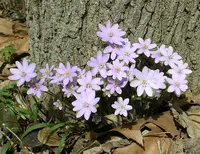
Sharp-lobed hepatica, Hepatica acutiloba, is a small, early-spring woodland perennial native to eastern North America. It forms low clumps of leathery, three-lobed leaves that often persist through winter. In late winter or early spring it produces delicate, star-like flowers in shades of white, pale blue, or pink before the tree canopy leafs out. This species prefers cool, shaded woodland conditions with humus-rich, well-drained soil that does not dry out completely. It grows slowly but is long-lived when undisturbed, which influences how to care for sharp-lobed hepatica in gardens and shaded naturalistic plantings.

Care Difficulty
Moderate Care

Light Preference
Partial Shade

Water Requirements
Moderate Water

Temperature Preference
Cold Hardy

Hardiness Zone
3–8

Soil Texture
Loamy, Silty, Organic-rich

Soil pH
Acidic (5.5–6.5), Slightly acidic (6.5–7.0)

Soil Drainage
Moist but well-drained

Fertilization
Minimal (feed rarely)
Scan your plant to receive care tips personalized for your specific plant
Available on iOS and Android
This woodland perennial prefers cool, filtered light that mimics a deciduous forest floor.
This species prefers evenly moist, cool soil that never stays saturated for long periods.
This hardy spring ephemeral thrives in cool to mild conditions and tolerates significant winter cold.
This woodland perennial prefers moderately moist air but usually adapts to typical indoor humidity.
Hepatica acutiloba benefits from a humus-rich, loose substrate that mimics deciduous woodland leaf litter.
This species adapts well to container culture when the pot and substrate are chosen to match its woodland root habits.
This woodland perennial needs only light feeding in humus-rich soil, so fertilization focuses on gentle support rather than rapid growth.
Pruning needs for Hepatica acutiloba are minimal and focus on cleanliness rather than reshaping the plant.
This species is usually grown in the ground or long-term woodland containers, so transplanting is infrequent and should be done gently.
New plants are usually produced slowly through division or seed, and success depends on cool, stable woodland conditions.
This woodland perennial is cold hardy in much of its native range and usually needs only simple winter care.

Plant Health Check
Not sure what's wrong with your plant? Check your plant's health inside the app.
This species flowers very early in deciduous forests, often emerging while snow still lingers on the ground, taking advantage of full light before tree canopies leaf out.
Its leaves have sharply pointed, three-part lobes that persist through winter in many sites, helping distinguish it from the closely related round-lobed hepatica, Hepatica americana.
The seeds bear small, fleshy appendages called elaiosomes that attract ants, which carry the seeds away and help distribute them in the forest understory.

Paleobotanical and floristic evidence suggests that Hepatica acutiloba is part of a temperate woodland flora that survived past glaciation cycles in refugia, then re-colonized large areas of eastern North America as the ice sheets retreated, which helps explain its patchy but regionally widespread distribution today.
This woodland perennial usually blooms in very early spring, often before tree leaves emerge. Flowers typically last 1–3 weeks, depending on temperature, soil moisture, and sun exposure, then the foliage takes over as the main ornamental feature.
Keep your plants happy and healthy with plant identification, disease detection, and easy care guidance.