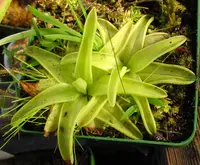
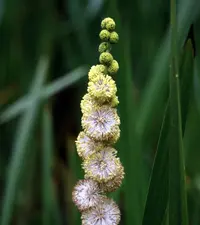
Dormant season setup
Provide a cool, bright dormancy period in late fall by moving pots to a protected outdoor cold frame or an unheated but frost-free window, keeping the soil just damp and reducing disturbance until growth resumes in spring.

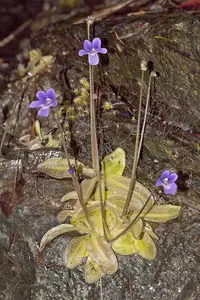
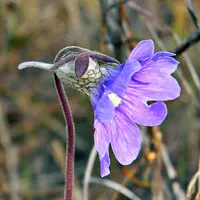
California butterwort (Pinguicula macroceras) is a small carnivorous plant that forms flat rosettes of soft, sticky leaves. These leaves trap tiny insects, which supply nutrients in poor soils. The plant typically grows in cool, wet, sunny habitats such as seeps, bogs, and stream edges in parts of California and the Pacific Northwest. Flowers are usually purple to lavender and rise above the leaves on slender stalks. It prefers bright light, constant moisture, and low-mineral, acidic conditions. Understanding how to care for California butterwort starts with replicating its naturally cool, wet environment and avoiding hard, mineral-rich water.

Care Difficulty
Hard Care

Light Preference
Partial Sun

Water Requirements
Keep Soil Moist

Temperature Preference
Cool Climate

Hardiness Zone
7–9

Soil Texture
Sandy, Peaty, Organic-rich

Soil pH
Strongly acidic (4.5–5.5), Acidic (5.5–6.5)

Soil Drainage
Waterlogged tolerant

Fertilization
Minimal (feed rarely)
Scan your plant to receive care tips personalized for your specific plant
Available on iOS and Android
This carnivorous bog plant prefers bright, cool light that mimics open, misty habitats.
This species requires consistently moist conditions but is sensitive to stagnant, oxygen-poor water.
This temperate carnivorous plant prefers cool to mild conditions with a noticeable seasonal shift.
This species prefers consistently moist air but adapts to a moderate humidity range.
This carnivorous plant requires a low-nutrient, airy, and consistently moist medium.
This species is well suited to container culture when moisture and drainage are carefully controlled.
This carnivorous species gains most nutrients from captured insects, so fertilizer use for California butterwort should be minimal and very dilute.
Light grooming is usually sufficient for Pinguicula macroceras rather than structured pruning.
This butterwort dislikes frequent disturbance, so repotting or transplanting should be infrequent and gentle.
Pinguicula macroceras is most often propagated vegetatively to maintain desirable traits.
This species comes from cool climates and can tolerate cold, but cultivated plants still benefit from controlled winter conditions.

Plant Health Check
Not sure what's wrong with your plant? Check your plant's health inside the app.
This species often forms dense mats on constantly wet, calcareous cliff faces and seeps in coastal northern California and Oregon, tolerating exposure where few other broadleaf plants can survive.
In this species, the flat, sticky summer leaves used for trapping insects are replaced in winter by a compact, non-carnivorous hibernaculum, a tight bud-like rosette that resists cold and desiccation.
Its leaf glands secrete both sticky mucilage to trap small flies and enzymes such as proteases and phosphatases that break down soft-bodied prey, allowing the plant to absorb nitrogen and phosphorus from insects in nutrient-poor substrates.

In parts of its range, this plant co-occurs with other carnivorous genera such as Darlingtonia and Drosera, forming rare carnivorous plant communities that botanists use as indicators of unusually stable, mineral-rich, cold seep ecosystems.
Lack of flowering often comes from insufficient winter coolness, overly warm nights, or excessive fertilization. This species needs a cool, short-day rest period and strong light to trigger buds, otherwise it will stay mostly vegetative.
Keep your plants happy and healthy with plant identification, disease detection, and easy care guidance.