Seasonal Water Access
In restoration or wild-style plantings, position plants in shallow swales or near the down-slope edge of a rain garden so roots can access periodic surface water without remaining submerged for long periods.

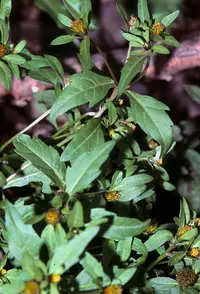
Purplestem beggarticks (Bidens connata) is an annual wildflower in the aster family, commonly found along streams, pond edges, and other wet habitats. It has upright, branching purple-tinged stems with narrow, toothed leaves and small yellow flower heads that mature into barbed seeds. These seeds readily cling to clothing and animal fur, helping the plant spread in the landscape. It grows best in consistently moist to wet soil and full sun to light shade. Gardeners who care for purplestem beggarticks will find it generally easy to grow where moisture is reliable, though it can self-seed freely and may need some management.

Care Difficulty
Moderate Care

Light Preference
Full Sun

Water Requirements
Aquatic

Temperature Preference
Cool Climate

Hardiness Zone
3–8

Soil Texture
Loamy, Silty, Organic-rich

Soil pH
Acidic (5.5–6.5), Slightly acidic (6.5–7.0)

Soil Drainage
Waterlogged tolerant

Fertilization
Minimal (feed rarely)
Scan your plant to receive care tips personalized for your specific plant
Available on iOS and Android
This wetland annual thrives with ample sun but tolerates some shade, especially in hot climates.
This species prefers consistently moist to wet soil and does not tolerate drying out for long.
This plant grows best in mild to warm conditions and is typically treated as a frost-sensitive annual.
Humidity plays a minor role for Bidens connata, which adapts well to typical outdoor levels.
Bidens connata favors consistently moist, nutrient-rich, alluvial-type soil that still allows air around the roots.
This species can be grown in containers if the pot supports its moisture needs and tall, sometimes top-heavy growth.
This native wetland annual usually needs little feeding, but light nutrition can support denser growth in poor soils when caring for purplestem beggarticks.
Pruning Bidens connata is mainly used to manage height, encourage branching, and remove declining growth.
This species is more often transplanted outdoors than kept long term in containers, since it behaves as an annual in most regions.
Bidens connata is most commonly propagated from seed, which germinates reliably in suitable moisture and temperature conditions.
This annual plant generally dies back after hard frost and needs minimal winter care in most climates.

Plant Health Check
Not sure what's wrong with your plant? Check your plant's health inside the app.
Young stems often appear green but become distinctly purplish to dark purple as they mature, especially in full sun and nutrient-rich wet soils, which helps distinguish this species from related beggarticks.
This species is strongly associated with muddy shorelines, marsh edges, and slow-moving streams, where it tolerates repeated flooding and fluctuating water levels better than many other annual herbs.
The narrow, elongated fruits bear small barbs at the tips that cling to animal fur and clothing, giving rise to the common name beggarticks and enabling effective zoochorous, or animal-assisted, dispersal.

Bidens connata is considered a reliable indicator of seasonally flooded, nutrient-rich wetland habitats in parts of eastern North America, so its presence is often used by botanists and ecologists to help characterize specific wetland community types.
This species can behave invasively in wet disturbed habitats because it produces many barbed seeds that cling to animals and clothing. Check local regulations and avoid planting near natural wetlands if it is listed as a noxious or invasive weed.
Keep your plants happy and healthy with plant identification, disease detection, and easy care guidance.