Regal geranium Care (Pelargonium grandiflorum)

Also known as: largeflower storksbill, large flower pelargonium, English storksbill, regal pelargonium, large-flowered pelargonium
Regal geranium

About Regal geranium

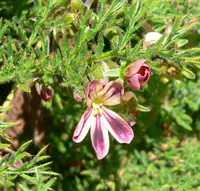
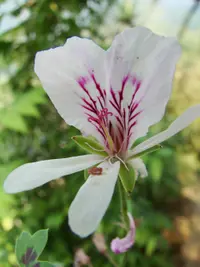
Regal geranium (Pelargonium grandiflorum) is a compact, shrubby perennial often grown as a flowering houseplant or seasonal outdoor container plant. It is valued for its large, ruffled blooms in rich shades of purple, pink, red, and white, usually with darker markings. Leaves are medium green, often slightly toothed, and form a dense mound that highlights the showy flowers. In nature, this species comes from the cooler, mountainous regions of South Africa, which explains its preference for bright light and mild temperatures. It is moderately easy to grow if it receives enough light, regular but not heavy watering, and well-drained soil, and understanding how to care for Regal geranium makes it a reliable repeat bloomer.

Main Plant Requirements

Care Difficulty

Moderate Care

Light Preference

Full Sun

Water Requirements

Moderate Water

Temperature Preference

Tropical / Frost Sensitive

Hardiness Zone

10–11

Soil Texture

Sandy, Loamy, Organic-rich

Soil pH

Slightly acidic (6.5–7.0), Slightly alkaline (7.0–7.5)

Soil Drainage

Well-drained

Fertilization

Moderate (every 2–4 weeks)

Get Personalized Care Plan

Scan your plant to receive care tips personalized for your specific plant

Available on iOS and Android

How to Care for the Regal geranium

This plant needs bright, direct sun for strong flowering but benefits from some protection during intense midday heat.

  • Provide 4–6 hours of direct morning sun, with light afternoon shade in hot summers, especially for Regal geranium in containers.
  • Outdoors, choose an east or southeast exposure; in hotter regions, give filtered light from about 12–3 p.m. to prevent leaf scorch.
  • If stems stretch, leaves pale, or flowering declines, the light is too low; move to a sunnier spot, especially from late winter through spring.

Pelargonium grandiflorum prefers thorough but infrequent watering with time for the soil to dry slightly between waterings.

  • Water when the top 2–4 cm of soil feels dry, then soak the root zone until excess drains away, avoiding water standing in saucers or low spots.
  • During active growth and flowering, drying will happen faster; in cooler seasons or cloudy weeks, expect longer gaps and always test soil before watering.
  • Yellow, soft leaves and a sour smell indicate overwatering and poor drainage; crisp, drooping leaves and very light pots signal underwatering.

This species grows best in mild, stable temperatures and reacts quickly to frost or intense heat.

  • Aim for 60–75°F (16–24°C) for active growth and flowering, avoiding sudden shifts of more than about 10°F (6°C) in a day.
  • Protect from cold below 40°F (4°C); light frost around 32°F (0°C) can damage flowers and foliage, and harder freezes may kill the plant.
  • In hot spells above 85°F (29°C), give afternoon shade and extra airflow, and avoid reflected heat from walls or paving to reduce stress.

This species prefers relatively dry air and usually stays healthy in typical indoor humidity.

  • Aim for 30–50% humidity; avoid very humid rooms such as poorly ventilated bathrooms or kitchens.
  • Regal geranium tolerates dry central-heated air better than prolonged high humidity, which can promote fungal spots.
  • If leaves feel constantly damp or show grey mold, improve air circulation with a small fan and space plants apart.

Pelargonium grandiflorum needs a light, free-draining mix that never stays waterlogged.

  • Use a loose, loamy mix: roughly 2 parts peat-free potting mix, 1 part perlite or coarse sand, and 1 part fine bark or compost.
  • Ensure very sharp drainage; the mix should drain within seconds, not minutes, after thorough watering.
  • Keep pH slightly acidic to neutral, around 6.0–7.0, to support nutrient uptake and reduce micronutrient lockout.
  • Avoid heavy clay, compacted, or constantly wet mixes, and break up any dense zones with extra perlite to improve aeration.

This species is highly suitable for container growing on patios, balconies, or sunny steps.

  • Choose a relatively snug but not cramped pot so roots fill the volume, which helps prevent the mix staying wet for too long.
  • Use rigid pots that will not tip easily, as the bushy top growth can make the plant slightly top-heavy in wind.
  • If using plastic containers that retain more moisture, increase the proportion of perlite or coarse sand in the mix to keep it free-draining.

Pelargonium grandiflorum responds well to controlled feeding during its active growing season.

  • Use a balanced water-soluble fertilizer (for example 10-10-10 or 20-20-20) diluted to 1/2 strength for caring for Regal geranium.
  • Apply every 2–3 weeks from early spring to late summer when growth and flowering are strongest.
  • Switch to a slow-release fertilizer or light compost top-dressing for container plants if frequent liquid feeding is not possible.
  • Reduce feeding to once every 6–8 weeks in fall and stop in midwinter, especially under low light.

Thoughtful pruning keeps Pelargonium grandiflorum compact, leafy, and floriferous.

  • Carry out main pruning in late winter or very early spring before strong new growth begins.
  • Remove dead, diseased, or crossing stems with clean, sharp scissors or hand pruners to improve air flow.
  • Shorten leggy shoots by 1/3–1/2 to encourage branching and denser flowering displays.
  • Pinch spent flower stems and soft shoot tips through the season to maintain shape and extend blooming.

Container-grown Pelargonium grandiflorum benefits from periodic repotting to maintain root health and vigor.

  • Check for roots circling the pot, pushing through drainage holes, or a plant drying out very quickly as signs it needs more space.
  • Plan to repot every 1–2 years in early spring, just before active growth resumes.
  • Choose a pot only 2–5 cm wider, use fresh, well-drained mix, and loosen circling roots gently to limit shock.
  • Water lightly after repotting, keep in bright but not harsh sun for 3–5 days, and avoid heavy feeding until new growth appears.

New plants of Pelargonium grandiflorum are most commonly produced from stem cuttings.

  • Take 7–10 cm non-flowering tip cuttings in late summer or early spring, cutting just below a node.
  • Remove lower leaves, allow the cut surface to dry for 1–2 hours, then dip in rooting hormone if available.
  • Insert cuttings into a free-draining mix, keep at 65–72°F with bright, indirect light, and maintain lightly moist conditions.
  • Provide gentle air movement and avoid high humidity domes long term to reduce rotting during rooting.

Pelargonium grandiflorum is frost-sensitive and needs structured winter care in most temperate climates.

  • Bring container plants indoors before night temperatures fall near 40°F, placing them in bright, cool conditions.
  • In mild climates, overwinter outdoors only in very sheltered spots and avoid exposure to freezing winds.
  • Keep soil on the dry side in winter, watering just enough to prevent complete drying out.
  • Remove spent or mushy growth promptly to limit fungal problems during low-light months.

Care Tips

Cool-season resting

After peak spring flowering, keep plants slightly cooler and drier for 4–6 weeks to encourage bud initiation and prevent exhaustion before the next flush of blooms.

Bud-protective handling

When moving or rotating the pot, support the main stems and avoid knocking or brushing developing buds, since physical shock often causes Regal geranium buds to abort before opening.

Controlled-flush strategy

If plants set too many buds at once, remove the smallest or weakest clusters so the remaining flower heads develop larger blooms with stronger stems.

Regular stem renewal

Each year after flowering, remove 1–2 of the oldest, woodiest stems at the base to encourage new, vigorous shoots that carry better-quality flowers the following season.

Clean, dry foliage

Periodically remove faded flowers and yellowing leaves with clean scissors and avoid leaving wet petals on the canopy, which reduces botrytis and leaf-spot problems when growing Regal geranium.

Common Pests and Diseases

Botrytis blight

This disease often appears on older or damaged leaves and flowers in cool, humid conditions. Symptoms include tan to brown water-soaked spots that develop gray fuzzy mold on petals, leaves, and stems.

Solution

Remove and discard all affected flowers, leaves, and stems, reduce overhead watering, and improve airflow around plants. Keep foliage dry, space plants well, and in severe or persistent cases use a labeled fungicide for ornamental geraniums, following all directions carefully.

Bacterial blight

This disease causes yellowing, wedge-shaped leaf lesions, dark streaks on stems, and rapid wilting, especially in warm, wet conditions. Symptoms include distorted new growth and brown leaf edges that may appear water-soaked.

Solution

Immediately remove and discard infected plants and any fallen debris, avoid overhead watering, and never take cuttings from suspect stock. Disinfect tools between plants, allow the soil surface to dry between waterings, and buy clean, certified Pelargonium grandiflorum plant material whenever possible.

Edema

This physiological disorder develops when roots absorb water faster than leaves can transpire it in cool, damp, low-light conditions. Symptoms include corky, blister-like bumps or scabs on the undersides of leaves and sometimes leaf distortion.

Solution

Allow the potting mix to dry slightly before watering again, reduce watering volume in cool, cloudy weather, and increase light and airflow. Keep plants in well-draining soil and avoid sudden shifts from cool, moist to warm, bright conditions to stabilize Pelargonium grandiflorum care instructions.

Aphids

These insects cluster on young shoots, buds, and the undersides of leaves, sucking sap and excreting sticky honeydew. This pest causes distorted new growth, sticky leaves, and may attract sooty mold on the honeydew.

Solution

Spray infested areas with a strong stream of water to dislodge insects, then treat with insecticidal soap or a light horticultural oil, covering all leaf surfaces. Repeat every 5–7 days until populations drop, and remove heavily infested shoot tips if needed.

Whiteflies

These insects are small, white, moth-like pests that fly up when the plant is disturbed and feed on leaf undersides. This pest causes yellowing, leaf drop, reduced vigor, and sticky honeydew that can support sooty mold growth.

Solution

Use yellow sticky traps to monitor and reduce adult numbers, and regularly inspect and treat the undersides of leaves with insecticidal soap or horticultural oil. Remove heavily infested leaves, improve airflow, and repeat treatments as needed to break the life cycle.

Interesting Facts

Cool-season flowering

This species naturally flowers in cool conditions, often producing its heaviest bloom in late winter to spring when night temperatures stay relatively low, unlike many other pelargoniums that prefer warmer flowering conditions.

Distinctive ruffled petals

The large, often bi-colored flowers have broad, slightly ruffled petals with dark blotches or veining on the upper petals, a pattern that is characteristic for this group and used by breeders to distinguish it from zonal and ivy-leaved pelargoniums.

Complex hybrid background

Modern cultivars sold as Regal or Martha Washington geraniums are not wild-type plants but complex hybrids, primarily derived from Pelargonium cucullatum and related South African species, selectively bred for large, showy flowers and compact growth.

Botan icon

Did you know?

Early greenhouse cultivation of these plants in Europe during the 19th century was driven by their need for cool, bright conditions, so they became status symbols in conservatories where growers could fine-tune temperature to obtain dense spring displays of unusually large, pansy-like flowers.

FAQs about Regal geranium

Lack of flowers often results from insufficient light, heavy feeding with high-nitrogen fertilizer, or old, unpruned stems. Cool night temperatures, spent blooms left on the plant, or a pot that is too large can also reduce flowering.

Grow Healthy Plants with Botan Care

Keep your plants happy and healthy with plant identification, disease detection, and easy care guidance.

Botan plant care app — identify plants on mobile

Explore More Plants