Night-Scented Pelargonium Care (Pelargonium triste)

Also known as: Cinnamon Geranium, Sad Storksbill, Night-scented Storksbill, Clove-scented Storksbill
Night-Scented Pelargonium

About Night-Scented Pelargonium

Night-Scented Pelargonium (Pelargonium triste) is a tuberous, winter-growing species in the geranium family, valued for its strong night fragrance. It forms finely divided, fern-like leaves and slender stems that stay relatively compact, making it suited to pots and small indoor collections.

The plant is native to winter-rainfall regions of South Africa, where it grows in well-drained, often sandy soils. It is considered moderately easy if its seasonal growth cycle is respected.

Plants rest in summer and grow in cooler months, so watering and light must match this rhythm. Understanding this dormancy pattern is key to how to care for Night-Scented Pelargonium.

Main Plant Requirements

Care Difficulty

Moderate Care

Light Preference

Full Sun

Water Requirements

Low Water

Temperature Preference

Warm Climate

Hardiness Zone

9–11

Soil Texture

Sandy, Loamy, Organic-rich

Soil pH

Slightly acidic (6.5–7.0), Slightly alkaline (7.0–7.5)

Soil Drainage

Well-drained

Fertilization

Minimal (feed rarely)

Get Personalized Care Plan

Scan your plant to receive care tips personalized for your specific plant

Available on iOS and Android

How to Care for the Night-Scented Pelargonium

This species prefers bright, dryish conditions that mimic its South African habitat.

  • Provide 4–6 hours of direct morning sun with light afternoon shade; in cooler coastal areas it can handle full sun all day.
  • In hot inland climates, give Pelargonium triste filtered light or dappled shade from about 1–4 p.m. to prevent leaf scorch and excessive potting mix heat.
  • If stems stretch, leaves pale, or flowering declines, increase light exposure gradually over 7–10 days to avoid sunburn on previously shaded tissue.

Watering should follow the plant’s seasonal growth cycle and fast-draining soil conditions.

  • During active growth, water only when the top 3–5 cm of soil is dry; then soak thoroughly and let excess drain away completely.
  • In summer dormancy, reduce watering sharply for Pelargonium triste, giving just enough every 3–4 weeks to stop the tubers from shriveling heavily.
  • Watch for yellowing, soft stems, or a sour smell as signs of overwatering, and for limp, wrinkled leaves and very light pots as signs of underwatering.

This geophytic pelargonium prefers mild, dry air with cool nights.

  • Aim for 60–75°F (16–24°C) during active growth, with cooler nights around 50–55°F (10–13°C) to support strong foliage and flowering.
  • The tubers tolerate brief drops to about 28–32°F (-2–0°C) if soil is dry, but repeated hard frosts can damage buds and fine roots.
  • In hot spells above 90°F (32°C), provide light shade and avoid watering during the hottest part of the day to limit heat stress.

This species prefers fairly dry air and usually does well in typical indoor humidity.

  • Aim for 30–50% humidity; Night-Scented Pelargonium stays healthiest in slightly dry conditions rather than very humid rooms.
  • Tolerates dry, heated air, but sustained humidity below 25% can crisp leaf tips and edges.
  • If air is extremely dry, group pots together or place a shallow water tray nearby, but avoid misting to reduce rot risk.

Pelargonium triste needs a mineral, fast-draining mix to protect its tuberous roots from rot.

  • Use a sandy, gritty mix such as 50% cactus mix with 30% coarse sand and 20% fine pumice or perlite for strong drainage.
  • Maintain a slightly acidic to neutral pH around 6.0–7.0, which supports nutrient availability without stressing roots.
  • Increase aeration by adding extra pumice, perlite, or small horticultural grit if water does not drain through within seconds.
  • Avoid heavy, peat-dominant or clay soils that stay wet, as they quickly cause tuber rot and weak, leggy growth.

This species is very suitable for container growing due to its compact, tuberous root system.

  • Choose a deep pot that allows several cm of space below the tuber so roots can extend downward without crowding.
  • Select a clay or terracotta pot if extra drying is needed, as its porous walls help release excess moisture from the mix.
  • Raise the pot slightly on feet or tiles so drainage holes stay clear and excess water exits quickly after each watering.

Pelargonium triste benefits from light, controlled feeding during its active growing season.

  • Use a balanced liquid fertilizer (around 10-10-10) at 1/4–1/2 strength every 3–4 weeks in spring and early summer.
  • Apply to moist soil, never to dry roots, to reduce salt stress on the tuberous root system.
  • Avoid heavy compost or rich slow-release pellets that keep soil wet and encourage rot.
  • Stop feeding as foliage yellows and the plant moves into summer dormancy or in winter for Night-Scented Pelargonium.

Pruning Pelargonium triste is mainly for tidiness and to maintain a compact, healthy plant.

  • Carry out light pruning at the end of the active season, once flowering declines and stems begin to stretch.
  • Remove dead, diseased, or damaged stems with clean, sharp scissors or pruning snips.
  • Thin out weak or crowded shoots to improve air flow and reduce fungal problems around the crown.
  • Pinch back soft tips during growth to encourage bushier form without cutting into woody bases.

Pelargonium triste prefers snug containers and infrequent disturbance, so repot only when clearly root-bound.

  • Check for roots circling the pot base, pushing through drainage holes, or noticeably slowed growth as signs it needs more space.
  • Plan repotting for late summer to early fall, when the plant is entering or in dormancy and less sensitive to root disturbance.
  • Repot every 2–3 years into a slightly larger pot with very free-draining mix, keeping the tuber at the same depth.
  • Handle the tuber gently, loosen circling roots, water lightly after potting, and keep in bright, indirect light until growth resumes.

Pelargonium triste is most often propagated by seed but stem cuttings are also possible under controlled conditions.

  • Sow fresh seed in late summer to fall in a sharply draining mix, barely covered, and keep at 60–70°F with gentle bottom warmth if possible.
  • Maintain even, light moisture and bright, indirect light; avoid waterlogging, which quickly rots young seedlings.
  • For cuttings, take semi-ripe stems in late summer, allow cut surfaces to dry for several hours, then insert into gritty medium.
  • Provide high light, warmth, and very sparing watering until cuttings root, then pot individually into free-draining soil.

Pelargonium triste is not frost hardy and needs protection from freezing temperatures in most climates.

  • Move container plants indoors or into a cool, bright, frost-free space when night temperatures approach 40°F.
  • Allow the plant to rest fairly dry in winter, watering just enough to prevent the tuber from fully shriveling.
  • In mild climates, grow Pelargonium triste in very well-drained soil and mulch lightly around, not over, the crown to buffer temperature swings.

Care Tips

Dormant-season handling

When the foliage dies back in late summer or early fall, reduce watering sharply and keep the dormant tubers in their potting mix in a cool, dry place at 45–55°F to prevent rot and extend tuber life.

Tuber division timing

Divide crowded tubers only during full dormancy, gently separating and replanting each firm, healthy tuber at the same depth to maintain plant vigor without shocking actively growing roots.

Deep pot selection

Use tall, relatively narrow pots to accommodate the elongated tubers and deeper root system, which helps stabilize the plant and reduces the risk of tubers pressing against pot walls and deforming.

Winter growth support

Because this species grows mainly in the cool season, provide supplemental light and keep the plant away from heating vents in winter so the foliage stays compact and does not stretch weakly toward low light sources.

Outdoor summer rest

During dry, warm summers, place the dormant potted plant in bright shade outdoors where rain cannot reach it, then resume light watering only when new shoots appear to support balanced Pelargonium triste plant care.

Common Pests and Diseases

Mealybugs

This pest often hides in leaf bases, along stems, and around the tuber neck, feeding on plant sap and weakening the plant, especially during its active growth. Symptoms include cottony white clusters, distorted new growth, and sticky honeydew on nearby surfaces.

Solution

Remove small infestations with a cotton swab dipped in 70% isopropyl alcohol, then rinse the plant to dislodge remaining insects. For larger problems, use repeated applications of an insecticidal soap or a light horticultural oil, making sure to treat the crown and around the tuber while improving light and airflow to support recovery.

Aphids

These insects gather on young shoots, flower stalks, and the undersides of leaves, sucking sap and causing curling, stunting, and sticky honeydew. This pest is particularly attracted to soft new growth when the plant breaks dormancy or is overfertilized.

Solution

Rinse infested parts under a gentle but firm stream of water to knock off most aphids, then apply insecticidal soap to all tender growth and leaf undersides. Reduce excess nitrogen fertilization, avoid overcrowding, and check nearby plants to remove alternative hosts that can reinfest the plant.

Botrytis blight

This disease is favored by cool, humid, stagnant air and commonly affects fleshy geranium tissue, including the tuber and lower leaves. Symptoms include soft brown spots on leaves and stems, grey fuzzy mold, and collapse of affected tissue, often starting near the soil line or crowded foliage.

Solution

Promptly remove and discard all affected leaves, stems, and spent flowers, and avoid overhead watering or splashing soil onto the plant. Improve airflow, keep the foliage dry, and if needed use a fungicide labeled for botrytis on ornamentals, especially during cool, damp periods or when storing the tuber for dormancy as part of Pelargonium triste care instructions.

Bacterial blight

This disease can cause sudden wilting, blackened veins, and angular leaf spots that may become dry and papery, often spreading rapidly under warm, humid conditions. Symptoms include partial stem collapse and dieback from infected points, sometimes with no obvious leaf spotting at first.

Solution

Immediately remove and discard all suspect stems and leaves, cutting back into healthy tissue and disinfecting tools between cuts with 70% alcohol. Avoid overhead watering, keep foliage dry, and isolate affected plants; if wilting and blackening progress, it is safer to discard the entire plant and tuber to prevent spread to other Pelargonium species.

Interesting Facts

Night-scented specialist

This species releases most of its fragrance after dusk, a trait linked to moth pollination, while remaining relatively unscented during the day.

Underground tuber storage

It grows from a subterranean tuber that stores water and nutrients, allowing the plant to survive hot, dry South African summers when it becomes dormant.

Fine fern-like leaves

Its leaves are finely divided and feathery, a morphology that reduces water loss and suits the windy, seasonally dry habitats of the winter-rainfall Cape region.

Botan icon

Did you know?

The complex and variable fragrance of this species, often described as spicy, resinous, or reminiscent of cloves, has made it a parent in breeding programs aimed at enhancing scent diversity in ornamental pelargoniums.

FAQs about Night-Scented Pelargonium

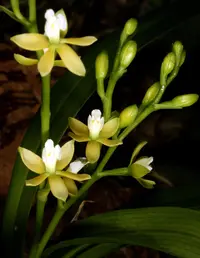
This species usually flowers in late fall to spring, depending on climate and dormancy pattern. The pale, spider-like blooms open in the evening and release a strong, spicy-sweet scent strongest at night and in still air.

Grow Healthy Plants with Botan Care

Keep your plants happy and healthy with plant identification, disease detection, and easy care guidance.

Botan plant care app — identify plants on mobile

Explore More Plants