Divide older clumps
Lift and divide crowded rhizomes every 4–6 years in late summer, replanting only the healthiest, firm sections to maintain flowering and prevent dieback in the center of the clump.

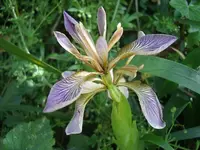
Stinking iris, Iris foetidissima, is an evergreen perennial iris grown mainly for its bold foliage and bright winter seed pods. It forms dense clumps of upright, strap-shaped leaves that stay green year-round in mild climates.
Flowers are usually pale lilac, cream, or yellow-brown and are modest compared to the striking orange-red seeds that follow. It is native to western and southern Europe and North Africa and often grows in woodland edges and shaded banks.
This species is generally tough, shade tolerant, and adaptable, which makes it relatively easy to establish in many gardens. It suits gardeners who want to care for Stinking iris with minimal intervention once it is settled.

Care Difficulty
Easy Care

Light Preference
Partial Shade

Water Requirements
Moderate Water

Temperature Preference
Cold Hardy

Hardiness Zone
6–9

Soil Texture
Loamy, Sandy, Clay

Soil pH
Slightly acidic (6.5–7.0), Neutral (7.0)

Soil Drainage
Moist but well-drained

Fertilization
Minimal (feed rarely)
Scan your plant to receive care tips personalized for your specific plant
Available on iOS and Android
Iris foetidissima prefers bright but not harsh exposure, thriving in dappled or light shade conditions outdoors.
Iris foetidissima prefers evenly moist but never saturated soil, with some drought tolerance once established.
This iris is a hardy outdoor perennial that tolerates a wide temperature range once established.
Iris foetidissima handles a wide humidity range and usually needs no special adjustment in most homes or gardens.
Iris foetidissima prefers moderately fertile, moisture-retentive but well-draining soil that does not stay saturated.
This species is suitable for container growing when the pot supports its clumping, rhizomatous root system.
Iris foetidissima grows well in average soil and needs only modest feeding for best foliage and flowering.
Pruning Iris foetidissima is simple and mainly focused on tidiness and plant health.
Transplanting Stinking iris is only needed occasionally, mainly to relieve crowding or move established clumps.
Iris foetidissima is most commonly propagated by division, with seed raising used for larger or more variable plantings.
Iris foetidissima is generally cold hardy in much of the US and needs little specific winter care in the ground.

Plant Health Check
Not sure what's wrong with your plant? Check your plant's health inside the app.
Despite its showy look, this species is named for the unpleasant, slightly meaty odor released only when its leaves are bruised, a likely deterrent to grazing animals.
After the pale flowers fade, the plant forms tough pods that split open to reveal long-lasting, glossy orange-red seeds that can stay visible through much of winter and help feed birds.
In the wild, this iris often grows on shaded woodland edges and rocky banks in western Europe, tolerating low light and dry shade better than many other iris species.

This species is one of the very few irises native to the British Isles that naturally thrives in mild coastal climates, and its persistent seed clusters have made it a long-used ornament in traditional Christmas and winter greenery arrangements in parts of Europe.
This species spreads slowly by short rhizomes and self-seeding. It can form modest clumps over time but is rarely aggressive. Remove seedpods before they drop if you want to limit spread in smaller beds.
Keep your plants happy and healthy with plant identification, disease detection, and easy care guidance.