Staggered Succession Sowing
Sow small batches every 2–3 weeks rather than all at once so flowering is continuous and gaps in the display are minimized as earlier plants age out.

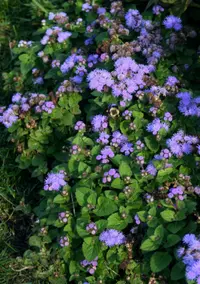
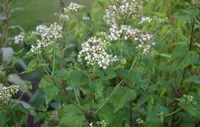
Bluemink, Ageratum houstonianum, is a compact annual flowering plant valued for its dense clusters of soft, fuzzy flower heads. The blooms are usually blue to lavender, with some white or pink forms. It grows as a bushy mound and is often used in bedding, borders, and containers to create low, uniform color blocks. The plant originates from Mexico and Central America but is now widely grown in temperate gardens. Bluemink is generally easy to grow for beginners when given full sun to light shade, regular moisture, and well-drained soil. Understanding how to care for bluemink helps maintain continuous flowering and a tidy shape through the growing season.

Care Difficulty
Easy Care

Light Preference
Full Sun

Water Requirements
Regular Water

Temperature Preference
Tropical / Frost Sensitive

Hardiness Zone
10–11

Soil Texture
Loamy, Sandy, Organic-rich

Soil pH
Acidic (5.5–6.5), Slightly acidic (6.5–7.0)

Soil Drainage
Moist but well-drained

Fertilization
Light (every 4–6 weeks)
Scan your plant to receive care tips personalized for your specific plant
Available on iOS and Android
Ageratum houstonianum prefers bright conditions with gentle sun for compact, floriferous growth.
This species favors evenly moist, well-drained soil that never stays soggy for long periods.
This warm-season annual performs best in stable, mild temperatures without frost exposure.
This species grows best in moderate humidity but usually copes with typical indoor and outdoor air.
This plant prefers loose, well-drained, organic-rich soil that stays evenly moist without becoming waterlogged.
This species is well suited to container growing outdoors on patios, balconies, and borders.
Ageratum houstonianum benefits from modest, consistent feeding to support dense growth and continuous flowering.
Pruning Ageratum houstonianum helps maintain compact shape and prolongs flowering.
This annual is more often transplanted in beds or containers than repeatedly repotted.
Ageratum houstonianum is most commonly propagated from seed for uniform, vigorous plants.
Ageratum houstonianum is a frost-tender annual and does not overwinter outdoors in cold climates.

Plant Health Check
Not sure what's wrong with your plant? Check your plant's health inside the app.
This species is native to Mexico and Central America, where it grows as a short-lived perennial in warm, frost-free areas but behaves as an annual in temperate gardens.
The fluffy, powder-puff look of its flower heads comes from many narrow tubular florets whose long, extended styles create the soft, fuzzy appearance.
In tropical and subtropical regions, this plant can naturalize and become an invasive weed, spreading in disturbed soils, pastures, and along roadsides due to its prolific seed production.

The blue to violet flower color of this species is relatively rare among annual bedding plants and has made it an important breeding parent for developing compact, long-blooming blue-flowered ornamentals used in mass plantings and container displays.
Poor flowering usually comes from low light, excess nitrogen fertilizer, or lack of deadheading. Remove spent blooms, avoid high-nitrogen feeds, and ensure the plant is not shaded by taller neighbors to restore regular flowering.
Keep your plants happy and healthy with plant identification, disease detection, and easy care guidance.