Culver's root Care (Veronicastrum virginicum)

Culver's root

About Culver's root

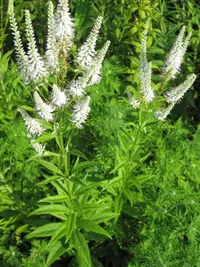
Culver's root, Veronicastrum virginicum, is a tall, long-lived herbaceous perennial native to moist prairies and open woodlands in eastern and central North America. It forms upright clumps with strong, unbranched stems.

The plant is recognized by its whorled leaves and narrow, candle-like flower spikes in white or pale lilac that attract bees, butterflies, and other pollinators. It brings a vertical, architectural look to mixed borders and naturalistic plantings.

Once established, it is relatively low-maintenance, provided it has consistent moisture, sun to light shade, and deep, well-drained soil. These traits make it straightforward to care for Culver's root in many temperate gardens.

Main Plant Requirements

Care Difficulty

Easy Care

Light Preference

Full Sun

Water Requirements

Regular Water

Temperature Preference

Cold Hardy

Hardiness Zone

3–8

Soil Texture

Loamy, Clay, Organic-rich

Soil pH

Acidic (5.5–6.5), Slightly acidic (6.5–7.0)

Soil Drainage

Moist but well-drained

Fertilization

Minimal (feed rarely)

Get Personalized Care Plan

Scan your plant to receive care tips personalized for your specific plant

Available on iOS and Android

How to Care for the Culver's root

Veronicastrum virginicum prefers consistent sun exposure to produce tall, sturdy flowering spikes.

  • Provide 6–8 hours of direct sun daily; full sun is ideal in cool to mild summer climates.
  • In hotter regions, aim for morning sun with light afternoon shade to prevent leaf scorch and shortened bloom time for Culver's root.
  • Plants tolerate bright partial shade (around 4–5 hours of sun), but stems may lean and flowering will be lighter, especially in dense shade.

This species prefers evenly moist soil, especially during its active growing and flowering period.

  • Water when the top 3–5 cm of soil feels slightly dry, then soak the root zone so moisture penetrates 15–20 cm deep.
  • During hot, dry spells, increase watering and watch for drooping leaves or slow recovery after heat as signs Veronicastrum virginicum needs more moisture.
  • Avoid waterlogged conditions; yellowing lower leaves, soft stems, or persistent surface wetness indicate poor drainage or overwatering.

This hardy perennial tolerates a wide temperature range typical of temperate outdoor gardens.

  • Best growth occurs around 65–80°F (18–27°C) during the main growing season, supporting strong stems and flower development.
  • Dormant crowns survive winter cold down to about -20°F (-29°C) when planted in the ground with good drainage and some organic mulch.
  • The plant handles summer heat up to about 90°F (32°C) if soil stays moist; prolonged hotter periods may cause wilting and earlier dieback.

Veronicastrum virginicum handles a broad humidity range and rarely needs special adjustment outdoors.

  • Target 40–60% humidity, which matches most temperate outdoor conditions where Culver's root is typically grown.
  • Plants tolerate short dry-air spells if soil moisture is stable, but prolonged heat with very low humidity can speed wilting.
  • In unusually hot, dry weather, reduce humidity stress by applying mulch over the root zone and watering early in the day.

Veronicastrum virginicum prefers consistently moist, deep soil with good structure.

  • Use a loamy, organic-rich soil that holds moisture yet does not stay waterlogged, such as garden loam mixed with compost.
  • Aim for slightly acidic to neutral pH around 6.0–7.0, avoiding strongly alkaline conditions that can limit nutrient uptake.
  • In heavy clay, improve drainage and aeration by working in coarse compost, leaf mold, or fine pine bark before planting.
  • Avoid compacted, very sandy, or drought-prone ground, since drying out at root level reduces flowering and overall vigor.

This tall, deep-rooted species is possible but not ideal for long-term container growing.

  • Choose a tall, heavy container to provide depth for the root system and prevent the plant from tipping in wind.
  • Use a moisture-retentive yet free-draining mix, such as compost-enriched potting soil with added fine bark for structure.
  • Position the pot where it will not overheat, since dark or metal containers can cause root-zone temperatures to rise quickly.

Veronicastrum virginicum is not a heavy feeder but responds well to modest nutrition in lean soils.

  • Apply a thin layer of compost around the root zone in early spring to boost organic matter.
  • In poor soil, use a balanced slow-release fertilizer (e.g., 10-10-10) once in late spring for Culver's root.
  • If using liquid feed, dilute to 1/2 strength and apply monthly during active growth only.
  • Stop feeding in late summer so stems harden before winter dormancy.

Pruning Veronicastrum virginicum is straightforward and mainly supports tidy growth and reliable flowering.

  • In late winter or very early spring, cut back last year’s dead stems to just above ground level using clean pruners.
  • After the main bloom, shear off spent flower spikes if a neater look or modest rebloom is desired.
  • Remove any damaged, weak, or crossing stems at the base to reduce crowding and improve air flow.
  • Leave some seed heads over winter if structure and wildlife value are preferred, then clear them before new shoots emerge.

This species is best grown in garden beds, with attention focused on planting and occasional division rather than frequent moving.

  • Transplant or divide clumps in early spring or early fall when temperatures are mild and soil is moist.
  • Look for signs like congested crowns, declining vigor, or stems emerging tightly packed as indicators that division is due every 4–6 years.
  • Lift the clump carefully with a spade or fork, keeping as much root and soil together as possible to limit stress.
  • Replant divisions at the same depth, water deeply, and maintain even moisture for several weeks to help roots re-establish.

New Veronicastrum virginicum plants are most reliable from division, with seed used where genetic diversity is desired.

  • Divide mature clumps in early spring as new shoots appear, cutting the root mass into sections with several buds each.
  • Replant divisions immediately into prepared, moist soil and water thoroughly to settle roots and remove air pockets.
  • Sow fresh seed in fall outdoors or use cold stratification at 35–40°F for 8–12 weeks before spring sowing.
  • Provide bright light, consistently moist but not waterlogged substrate, and good air circulation for steady seedling development.

This hardy perennial tolerates typical winters in most temperate climates and needs only minimal seasonal attention.

  • In cold regions, apply a 5–8 cm layer of mulch around the root zone after the ground cools to buffer freeze–thaw cycles.
  • Stems can be left standing for winter interest and wildlife, then cut back close to the ground in late winter.
  • Container-grown plants in very cold areas benefit from moving pots into a sheltered, unheated but frost-moderated location.

Care Tips

Sturdy staking system

Install discreet stakes or a pea fence in early spring and loosely tie stems in a fan shape to prevent tall flower spikes from lodging in wind or heavy rain.

Succession deadheading

After the first flush of blooms fades, shear back only the top third of the stems to encourage a second, lighter flowering while still leaving foliage to feed the roots.

Companion plant support

Plant it among sturdy perennials like grasses or upright asters so neighboring plants act as a living support that reduces flopping without the need for heavy staking.

Clump division timing

Divide mature clumps every 4–6 years in early spring just as new shoots emerge, replanting outer, more vigorous sections to maintain strong flowering and reduce overcrowding.

Pollinator-friendly spacing

Space groups of 3–7 plants closely enough that flower spikes almost touch at maturity, creating a dense vertical mass that is more attractive and efficient for pollinators when growing Culver's root.

Common Pests and Diseases

Rust

This disease causes small orange, rust-colored pustules on leaf undersides and yellowing on upper surfaces. Symptoms include premature leaf drop in humid, crowded plantings.

Solution

Remove and dispose of affected leaves, thin or divide crowded clumps to improve airflow, and avoid overhead watering so foliage dries quickly. In sites with recurring issues, choose a sunnier, airier location and apply a sulfur or chlorothalonil-based fungicide at first sign of spotting, following label directions.

Powdery mildew

This disease shows up as white, powdery patches on leaves and stems, often late in the season. Symptoms include distorted growth and a dull, gray cast over heavily affected foliage.

Solution

Increase spacing and airflow, water at soil level, and remove the worst-affected leaves to slow spread. In gardens where powdery mildew is persistent, start preventive sprays of potassium bicarbonate, horticultural oil, or a labeled fungicide when new foliage emerges and repeat as directed.

Leaf spot

This disease produces small brown, tan, or purple spots that may merge into larger blotches, especially in wet summers. Symptoms include cosmetic damage and occasional early leaf drop, but plants usually survive without long-term harm.

Solution

Cut off and discard heavily spotted leaves, then clean up all fallen debris at season’s end to reduce overwintering spores. Improve drainage and airflow, and in severe or recurring cases, use a copper or chlorothalonil-based fungicide early in the season, particularly if focusing on Veronicastrum virginicum care in damp climates.

Aphids

These insects cluster on young stems and undersides of leaves, sucking sap and excreting sticky honeydew. Symptoms include curled or distorted new growth and sometimes sooty mold growing on the honeydew.

Solution

Spray colonies off with a firm stream of water and pinch back heavily infested tips. For persistent infestations, apply insecticidal soap or neem oil thoroughly to stems and leaf undersides every 5–7 days until populations decline, while also encouraging natural predators such as lady beetles by avoiding broad-spectrum insecticides.

Japanese beetles

These insects chew skeletonized holes between leaf veins and may also damage flowers, often appearing in large groups in midsummer. Symptoms include ragged foliage and reduced bloom quality when populations are high.

Solution

Hand-pick beetles in early morning and drop them into soapy water, focusing on the first waves of adults to reduce feeding damage. In gardens with chronic problems, use row covers during peak feeding on young plants, avoid using beetle-attracting yard traps nearby, and consider targeted soil treatments for grubs only if turf and ornamental damage is consistently severe.

Interesting Facts

Prairie indicator species

This species is considered a conservative prairie plant in parts of its range, meaning it typically occurs in high-quality, relatively undisturbed tallgrass prairies and open woodlands rather than in degraded habitats.

Tiered flowering spikes

Its candelabra-like inflorescences branch into several horizontal tiers of slender spikes, which often open from the top downward and provide a long, staggered bloom period for pollinators.

Specialized pollinator visitors

The narrow, tube-shaped flowers are especially suited to long-tongued bees, butterflies, and hoverflies, and research on tallgrass prairie communities often cites this species as an important midsummer nectar and pollen source.
Botan icon

Did you know?

Early American botanists documented that the common name Culver's root refers to Dr. Culver, an 18th–19th century physician who reportedly promoted this species, making it one of the relatively few North American prairie plants whose common name preserves a specific historical person.

FAQs about Culver's root

This species forms clumps and slowly expands by short rhizomes and self-seeding, but it is not generally aggressive. Seedlings are easy to remove or transplant. In most gardens, it behaves as a well-mannered, structural perennial.

Grow Healthy Plants with Botan Care

Keep your plants happy and healthy with plant identification, disease detection, and easy care guidance.

Botan plant care app — identify plants on mobile

Explore More Plants