Angraecum pectinatum Care

Angraecum pectinatum

About Angraecum pectinatum

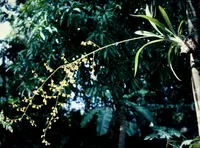
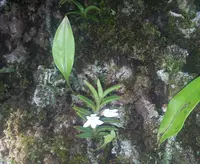
Angraecum pectinatum is a small epiphytic orchid, usually found growing on trees, with narrow leaves and delicate, star-shaped white to greenish flowers. It develops a compact root system that clings to bark rather than growing in regular potting soil.

This species is native to Madagascar and nearby islands, where it experiences warm temperatures, bright filtered light, and good air movement. In cultivation, its need for consistent humidity and airflow can be the main challenge.

For those learning how to care for Angraecum pectinatum, it generally prefers bright indirect light, regular but moderate moisture, and a very open orchid mix or mounted culture that dries slightly between waterings.

Main Plant Requirements

Care Difficulty

Hard Care

Light Preference

Bright Indirect Light

Water Requirements

Keep Soil Moist

Temperature Preference

Tropical / Frost Sensitive

Hardiness Zone

Unknown

Soil Texture

Sandy, Organic-rich

Soil pH

Acidic (5.5–6.5)

Soil Drainage

Moist but well-drained

Fertilization

Light (every 4–6 weeks)

Get Personalized Care Plan

Scan your plant to receive care tips personalized for your specific plant

Available on iOS and Android

How to Care for the Angraecum pectinatum

This orchid prefers bright, filtered light that mimics dappled forest conditions.

  • Provide 6–8 hours of bright, indirect light per day, such as under 30–50% shade cloth or behind a sheer curtain.
  • Allow gentle morning sun but protect from strong midday and afternoon sun, which can scorch leaves and cause yellow patches or crisp edges.
  • In winter, move Angraecum pectinatum to a slightly brighter position, but still filtered, to compensate for shorter days and lower light intensity.

This species prefers consistent moisture around the roots without staying waterlogged.

  • Water when the medium feels just barely dry at the surface; fine roots should never sit in stagnant water or dense, muddy mix.
  • In active growth, water more frequently so the medium dries only slightly between waterings; reduce frequency in cooler months while still preventing complete dryness.
  • Watch leaves and roots: wrinkling and dull, silvery roots suggest underwatering, while blackened roots, limp leaves, or sour smell indicate overwatering and poor drainage.

This orchid does best in intermediate to warm conditions with stable temperatures.

  • Aim for 65–80°F (18–27°C) by day and 60–70°F (16–21°C) at night for steady growth and flowering.
  • Protect from cold: growth slows below about 55°F (13°C), and prolonged exposure under 50°F (10°C) can damage leaves and roots; frost is lethal.
  • In hot spells above 85°F (29°C), increase shade, airflow, and humidity, avoiding hot, stagnant spots near walls or reflective surfaces.

This orchid prefers moderately high, stable humidity for steady growth.

  • Aim for 50–70% humidity; brief drops are tolerated but prolonged air below 40% can slow growth.
  • Crisping root tips, limp leaves, or buds that dry and drop indicate humidity stress.
  • Increase humidity with a pebble tray under the pot, grouping plants, or a small room humidifier while keeping air gently moving.

This epiphytic orchid needs a very airy, fast-draining medium rather than regular potting soil.

  • Use a chunky mix such as medium orchid bark with 10–20% perlite and a little sphagnum moss to retain some moisture.
  • Ensure the mix drains within seconds of watering; water must not pool around the roots or in the pot saucer.
  • A slightly acidic medium (around pH 5.5–6.5) suits Angraecum pectinatum and supports nutrient uptake.
  • Avoid dense, peat-heavy or garden soils that compact, reduce aeration, and quickly cause root rot.

This species is well suited to container growing when the pot supports its fine, sensitive roots.

  • Choose a narrow but deep pot or orchid basket that allows roots to extend downward without crowding the base.
  • Select clay or slotted orchid pots when extra evaporation is needed, and plastic pots in drier homes to slow moisture loss.
  • Place the container in a stable cachepot or heavy outer pot to prevent tipping as foliage and flower spikes develop.

Feeding should be light but consistent to support healthy growth and flowering in Angraecum pectinatum.

  • Use a balanced orchid fertilizer (around 20-20-20) or similar NPK formula, suited for epiphytic orchids.
  • During the active growing season, feed every 2–3 weeks at 1/4–1/2 the strength recommended on the label.
  • In fall and winter, reduce feeding to once a month or pause if growth is minimal.
  • Flush the potting medium with plain water monthly to limit salt buildup from fertilizer.

Pruning needs are minimal and focus on hygiene and maintaining a clean outline for Angraecum pectinatum.

  • Best timing is after flowering, when spent blooms and old spikes can be removed.
  • Cut dead, yellowing, or damaged leaves and flower spikes back to healthy tissue with sterile scissors or pruners.
  • Avoid cutting green, actively growing shoots, as these support future flowering and plant vigor.
  • Light grooming improves airflow and reduces risk of fungal problems without changing the plant’s natural form.

Repotting focuses on maintaining fresh, airy medium rather than giving Angraecum pectinatum a much larger pot.

  • Repot every 2–3 years, or when roots circle the pot, growth slows, or medium breaks down and stays soggy.
  • Choose late spring to early summer, when active root growth helps the plant recover more quickly.
  • Use a small pot with fresh, coarse orchid bark or bark–sphagnum mix, keeping roots gently spread, not tightly packed.
  • Water thoroughly, then keep slightly on the dry side for 7–10 days to limit rot while new root tips re-establish.

Propagation is possible but modest in speed, and most home growers rely on careful division of established Angraecum pectinatum plants.

  • Plan divisions in late spring, when temperatures are stable and new roots are starting.
  • Select a healthy plant with several growths and divide so each section has at least 3–4 robust pseudobulbs or growth points.
  • Pot divisions in fresh, airy orchid mix, keeping them snug in small containers to maintain humidity around roots.
  • Provide bright, indirect light, 70–80°F warmth, and high humidity to support rooting and reduce stress after division.

Winter care focuses on avoiding cold damage and maintaining stable indoor conditions for Angraecum pectinatum.

  • This orchid is frost-sensitive and should be kept above 55°F, ideally 60–70°F through winter.
  • Move container plants indoors before night temperatures drop near 55°F, placing them in bright, indirect light.
  • Keep humidity around 40–60% and reduce watering slightly while ensuring the medium never stays cold and waterlogged.

Care Tips

Mounted culture setup

Mount plants on cork or hardwood with a thin layer of long-fiber sphagnum around the roots, and secure gently with fishing line or soft wire so roots can dry quickly yet stay evenly moist when you increase watering frequency.

Airflow without drafts

Place a small oscillating fan several feet away on a low setting to keep air moving around leaves and roots, which helps prevent fungal spotting on this compact orchid without exposing it to direct cold drafts.

Targeted root inspection

Every 2–3 months, briefly unclip or loosen any removable ties and check that roots are firm and silvery-green, trimming only dead, brown, hollow sections with sterilized tools to maintain healthy new growth.

Blooming support routine

When spike buds first appear, avoid repotting or remounting and keep handling to a minimum, as this species can abort developing flowers if roots or spikes are disturbed during this stage of Angraecum pectinatum care.

Water quality control

Use low-mineral water such as rainwater, distilled, or reverse-osmosis and flush the mount or pot thoroughly about once a month to wash away accumulated salts that can burn fine roots over time when growing Angraecum pectinatum.

Common Pests and Diseases

Scale insects

This pest often hides along the stems and leaf bases, sucking sap and causing yellowing, sticky residue, and weak growth in mounted or potted plants.

Solution

Isolate the plant, then manually remove visible scale with a cotton swab dipped in isopropyl alcohol and rinse the plant with lukewarm water; for larger infestations, apply a neem oil or horticultural oil spray directed into leaf axils and along roots, repeating every 7–10 days while improving air movement and reducing excessive nitrogen fertilization.

Mealybugs

These insects gather in leaf axils, between tightly packed roots, and around flower spikes, leaving cottony masses, sticky honeydew, and distorted new growth.

Solution

Unpot or unmount carefully if needed and flush the root zone and leaf bases with a strong but gentle stream of water, then spot-treat remaining clusters with isopropyl alcohol on a cotton swab or soft brush and follow with a systemic or neem-based treatment, repeating weekly until no new insects appear.

Spider mites

This pest thrives on Angraecum grown too dry and warm, causing fine stippling on leaves, dull color, and delicate webbing along the undersides and leaf tips.

Solution

Increase humidity to 50–70%, shower the plant thoroughly to wash off mites, and then treat leaf undersides with a miticide labeled for orchids or with repeated applications of insecticidal soap, taking care not to spray in full sun and ensuring good air circulation during drying.

Bacterial brown spot

This disease appears as rapidly enlarging, water-soaked brown lesions on leaves, often starting near wounds or where water sits, and can cause tissue collapse in small, thin leaves.

Solution

Immediately remove affected leaves or cut well into healthy tissue with sterile tools, keep foliage dry, improve air circulation, and avoid overhead watering; in severe or recurring cases, use a bactericide labeled for orchids while also reducing temperature swings and leaf wetness duration.

Leaf tip blight

Symptoms include browning and dieback from the leaf tips inward, often linked to fungal infection combined with low humidity, fertilizer salts, or poor air movement around the slender leaves.

Solution

Trim off affected tips with sterile scissors, rinse the plant and medium to reduce salt buildup, improve airflow and humidity, and, if spread continues, apply a preventive fungicide suitable for orchids, ensuring the plant is not kept overly wet at the crown or in the leaf axils.

Interesting Facts

Miniature twig epiphyte

This orchid grows as a tiny epiphyte on twigs and small branches in Madagascar’s forests, forming very compact plants that can flower while only a few centimeters tall.

Night-scented star flowers

It produces small, star-shaped white flowers that open mainly at night and release a stronger fragrance in the dark, an adaptation linked to nocturnal pollinators.

Cool to intermediate native climate

In nature this species occurs in higher-elevation, cooler habitats of Madagascar, where it experiences pronounced day–night temperature drops and high air movement.

Botan icon

Did you know?

The starry white flowers have a narrow, elongated nectar spur that is specialized for pollination by long-tongued hawk moths, reflecting the classic moth–orchid pollination syndrome first described from related Angraecum species in Madagascar.

FAQs about Angraecum pectinatum

This orchid usually blooms once a year, most often in the cooler season, producing small, starry flowers. Under stable conditions it may occasionally flower twice, but it is naturally a modest, seasonal bloomer.

Grow Healthy Plants with Botan Care

Keep your plants happy and healthy with plant identification, disease detection, and easy care guidance.

Botan plant care app — identify plants on mobile

Explore More Plants