Early trellis training
Install a sturdy trellis or wire support at planting time and loosely tie new shoots as they elongate, which prevents tangling and makes it easier to direct vines for even coverage and better flowering.

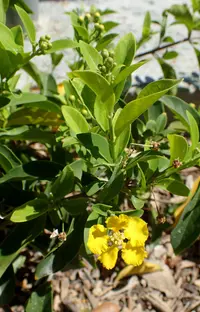
Hillyhock, Callaeum macropterum, is a twining woody vine grown mainly for its decorative foliage and showy, winged seed pods. It typically climbs over supports, fences, or nearby shrubs, forming a light, airy screen. Native to parts of Mexico and Central America, it is adapted to warm climates with a marked dry season. The plant tends to be moderately fast-growing when given enough warmth and sun, but it dislikes cold and poorly drained soil. Once established, it usually tolerates short dry spells yet benefits from regular moisture in well-drained ground. Gardeners who want to learn how to care for hillyhock should focus on providing bright light, protection from frost, and support for its climbing stems.

Care Difficulty
Moderate Care

Light Preference
Full Sun

Water Requirements
Moderate Water

Temperature Preference
Warm Climate

Hardiness Zone
9–11

Soil Texture
Sandy, Loamy, Organic-rich

Soil pH
Slightly acidic (6.5–7.0), Neutral (7.0)

Soil Drainage
Well-drained

Fertilization
Minimal (feed rarely)
Scan your plant to receive care tips personalized for your specific plant
Available on iOS and Android
Callaeum macropterum performs best with bright outdoor light and some protection from harsh midday sun.
This vine prefers evenly moist, well-drained soil and does not tolerate prolonged saturation.
This species favors warm, frost-free conditions typical of mild to subtropical climates.
This vine handles typical outdoor humidity but benefits from moderate moisture in the air.
Soil for Callaeum macropterum should be free-draining, moderately fertile, and well aerated.
This vigorous climber adapts well to container growing when given stable support and ample root space.
This vigorous vine benefits from light, balanced nutrition rather than heavy feeding.
Thoughtful pruning keeps Callaeum macropterum manageable and flowering well.
This vine is usually grown in the ground, so focus on careful transplanting rather than frequent repotting.
Propagation is usually done from seeds or semi-ripe cuttings taken in warm seasons.
This warm-climate vine has low frost tolerance and needs some winter protection in cooler areas.

Plant Health Check
Not sure what's wrong with your plant? Check your plant's health inside the app.
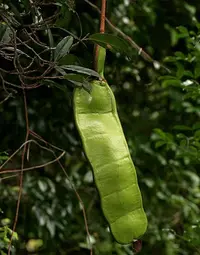
This vine produces large, flat, papery winged fruits (samaras) that spin as they fall, an adaptation that helps its seeds glide away from the parent plant on dry tropical winds.
It serves as a larval host for certain passion‑vine butterflies, whose caterpillars feed on its foliage and gain some chemical protection from predators by ingesting the plant’s defensive compounds.
In its native dry tropical habitats of Mexico and Central America, this liana takes advantage of trees and shrubs for support, climbing into brighter canopy light during the rainy growing season and slowing growth as conditions become drier.

The species was long included in the genus Mascagnia, and its distinctive winged fruits played a key role in taxonomic studies that led botanists to reclassify it in the genus Callaeum based on both morphology and DNA evidence.
This species is a twining vine that climbs rather than forming a spreading ground cover. Stems wrap around nearby structures, shrubs, or trellises. Without support, it tends to sprawl and tangle along the ground.
Keep your plants happy and healthy with plant identification, disease detection, and easy care guidance.