Acclimate Light Gradually
When moving the plant to brighter conditions, increase light over 7–10 days by shifting it a little closer to the window or grow lights every 2–3 days to prevent pitcher burn and leaf scorch.

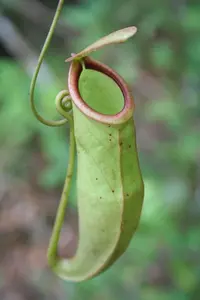
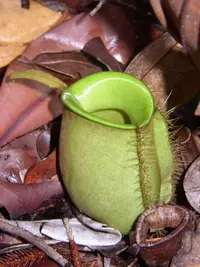
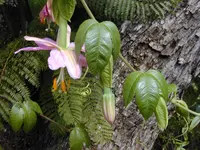
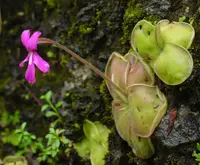
The common swamp pitcher-plant, Nepenthes mirabilis, is a tropical carnivorous vine that forms climbing stems and hanging, tube-shaped pitchers. These pitchers trap and digest insects to supplement nutrients.
In nature it grows in warm, humid, lowland swamps, marshes, and open wet grasslands across Southeast Asia and northern Australia. It often tolerates fluctuating water levels and nutrient-poor, acidic substrates.
This species is considered one of the more adaptable Nepenthes, but it still needs stable warmth, high humidity, and pure, low-mineral water. Bright filtered light and an airy, low-nutrient mix are important for anyone learning how to care for common swamp pitcher-plant.

Care Difficulty
Hard Care

Light Preference
Partial Shade

Water Requirements
Keep Soil Moist

Temperature Preference
Tropical / Frost Sensitive

Hardiness Zone
11–12

Soil Texture
Sandy, Peaty, Organic-rich

Soil pH
Strongly acidic (4.5–5.5)

Soil Drainage
Moist but well-drained

Fertilization
Minimal (feed rarely)
Scan your plant to receive care tips personalized for your specific plant
Available on iOS and Android
This lowland tropical pitcher plant prefers bright, warm conditions with protection from harsh midday sun.
Watering for this carnivorous species focuses on consistently moist, low-mineral conditions without waterlogging the roots.
This species is a true lowland tropical plant that thrives in consistently warm conditions without cold drafts.
This species needs high, stable humidity for reliable pitcher formation and long-term vigor.
This carnivorous species prefers a loose, airy, nutrient-poor, and consistently moist substrate rather than dense mineral soil.
This species adapts well to container growing, especially for controlled moisture and humidity management.
Nepenthes mirabilis is a low-nutrient bog plant that benefits from very light, careful feeding in cultivation.
Pruning Nepenthes mirabilis is mainly done to manage size and remove declining growth.
Repotting Nepenthes mirabilis focuses on refreshing the airy, acidic mix rather than moving to much larger pots.
Nepenthes mirabilis is most commonly propagated from stem cuttings under warm, humid conditions.
This lowland species needs consistently warm conditions and requires dedicated winter care in most temperate climates.

Plant Health Check
Not sure what's wrong with your plant? Check your plant's health inside the app.
This species has one of the broadest natural distributions of any pitcher plant, occurring from northern Australia across much of Southeast Asia to southern China, which shows its high ecological flexibility compared with many other Nepenthes.
In many lowland habitats, this plant often grows in open, disturbed, or seasonally waterlogged ground with very poor, acidic soils, including road edges and degraded peat or sand, making it a classic example of a nutrient-poor substrate specialist.
Where it overlaps with other species, this plant frequently forms natural hybrids, and botanists use these populations to study gene flow and evolutionary relationships within the genus.

This species can reproduce not only by seed but also by forming large clonal colonies through vegetative offshoots, so a seemingly extensive stand of plants in the wild may in fact be a single genetic individual spread over many square meters.
Yes, but seed propagation is slow and requires fresh seed, high humidity, and stable warmth. Seedlings stay tiny for many months. For most growers, cuttings are a more practical method for faster results.
Keep your plants happy and healthy with plant identification, disease detection, and easy care guidance.