Glossy Forest Grape Care (Rhoicissus rhomboidea)

Also known as: Bastard Forest Grape, Glossy Grape, Kaffir Rope Wood, Ropewood, Ropewood Grape
Glossy Forest Grape

About Glossy Forest Grape

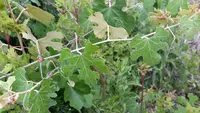
Glossy forest grape (Rhoicissus rhomboidea) is a woody evergreen climber from forested regions of southern Africa. It belongs to the grape family and is grown mainly as a foliage plant.

The plant forms long, flexible vines with glossy, rhomboid or oval leaves that create a dense, green curtain when supported or allowed to trail. Indoors, it is often trained on trellises or hanging baskets.

This species adapts fairly well to typical home conditions if extremes are avoided, which makes it moderate in difficulty for beginners. Understanding how to care for Glossy Forest Grape starts with providing bright, indirect light, evenly moist but not waterlogged soil, and protection from cold drafts.

Main Plant Requirements

Care Difficulty

Easy Care

Light Preference

Bright Indirect Light

Water Requirements

Moderate Water

Temperature Preference

Tropical / Frost Sensitive

Hardiness Zone

10–11

Soil Texture

Loamy, Sandy, Organic-rich

Soil pH

Acidic (5.5–6.5), Slightly acidic (6.5–7.0)

Soil Drainage

Moist but well-drained

Fertilization

Light (every 4–6 weeks)

Get Personalized Care Plan

Scan your plant to receive care tips personalized for your specific plant

Available on iOS and Android

How to Care for the Glossy Forest Grape

This vine thrives in dappled, forest-like light conditions with protection from harsh midday sun.

  • Provide bright, filtered light or light partial shade, such as under high tree canopies or a shade cloth giving 30–50% shade.
  • Aim for 3–4 hours of gentle morning sun with indirect light the rest of the day; intense afternoon sun can scorch Glossy Forest Grape leaves, causing pale, crispy patches.
  • In summer, move plants slightly deeper into shade if leaves bleach; in winter, allow a bit more direct sun to compensate for shorter days.

Rhoicissus rhomboidea prefers evenly moist, well-drained soil that never stays waterlogged for long periods.

  • Water when the top 2–4 cm of soil feels dry to the touch; the soil below should still feel faintly moist, not soggy.
  • Use a free-draining mix and ensure excess water can exit quickly to reduce root rot risk; leaves yellowing from the bottom plus soft stems often indicate overwatering.
  • In active growth (spring–summer), expect more frequent watering; in cooler months, let the soil dry a bit deeper and watch for limp, curling leaves as a sign of underwatering.

This species grows best in mild, frost-free climates with stable, moderate temperatures.

  • Maintain an active growth range around 65–80°F (18–27°C), where foliage stays dense and new shoots extend steadily.
  • Avoid temperatures below 40°F (4°C); brief dips near this level may cause leaf drop, and hard frost can kill stems and roots.
  • In hot spells above 90°F (32°C), provide shade and good airflow to limit heat stress, and in cooler seasons protect from cold drafts and sudden temperature swings.

This species prefers moderate to slightly elevated humidity but usually adapts to typical indoor levels.

  • Aim for 40–60% humidity for steady growth and less leaf edge browning in Glossy Forest Grape.
  • It tolerates short periods of drier air, but prolonged humidity below 30% may cause crispy tips and slow growth.
  • Increase humidity with a nearby humidifier, grouped plants, or a pebble tray, rather than misting heavily.

Rhoicissus rhomboidea grows best in a loose, airy, organic-rich mix that drains quickly but does not dry out instantly.

  • Use a mix of roughly 50% peat or coco coir, 30% fine bark, and 20% perlite to balance moisture retention and aeration.
  • Aim for slightly acidic to neutral pH, around 6.0–7.0, which supports nutrient availability and healthy root function.
  • Ensure water drains freely from the pot within a few seconds; dense, compacted, or clay-heavy mixes increase root rot risk.
  • Improve a heavy store-bought potting mix by blending in extra perlite or bark until it feels light and crumbly in the hand.

This species is well suited to container growing, especially with support for its climbing habit.

  • Choose a stable, heavier pot or add weight at the base so the container does not tip as vines climb or trail.
  • Select a container wide enough for lateral root spread, not only depth, to reduce crowding at the sides of the pot.
  • Use a pot material that matches your watering style, such as porous terracotta for faster drying or plastic for slower moisture loss.

This vine benefits from modest, consistent feeding during active growth for balanced foliage and stem development when caring for Glossy Forest Grape.

  • Use a balanced liquid fertilizer (for example 10-10-10 or 20-20-20) diluted to 1/2 strength.
  • Feed every 4–6 weeks in spring and summer when growth is active.
  • Skip or reduce feeding to 1 very light application in fall and none in winter dormancy.
  • Organic compost or a mild slow-release fertilizer can be added in spring for long-term support.

Rhoicissus rhomboidea responds well to light structural pruning to manage size and density.

  • Carry out main pruning in late winter or early spring before vigorous new growth starts.
  • Remove dead, damaged, crossing, or overcrowded stems back to a healthy node with clean, sharp pruners.
  • Shorten excessively long vines to maintain a compact, manageable shape and encourage branching.
  • Pinch or trim soft tips during the growing season to thicken growth and control direction.

This species adapts well to containers but prefers occasional, well-timed repotting to avoid root congestion.

  • Check for roots circling the pot, emerging from drainage holes, or unexplained slow growth as repotting signals.
  • Plan to repot every 2–3 years in late winter or early spring, just before new growth begins.
  • Move up only 1 pot size, using a well-drained, peat-free mix, and handle the root ball gently to limit damage.
  • Water thoroughly after repotting, then keep in bright, indirect light and slightly reduced watering for 1–2 weeks to reduce stress.

This vine is commonly multiplied from stem cuttings, which root reliably under warm, humid conditions.

  • Take 8–12 cm semi-ripe stem cuttings in late spring or summer, each with 2–3 nodes.
  • Remove lower leaves, dip the cut end in rooting hormone, and place in a moist, well-drained medium such as perlite and peat.
  • Maintain 70–75°F, high humidity, and bright, indirect light until roots form in a few weeks.
  • For layering, pin a flexible stem into moist soil, keep it stable, then detach and pot once well rooted.

In mild climates this vine needs minimal winter care, but container plants benefit from basic protection.

  • Rhoicissus rhomboidea is frost-sensitive and should be kept above about 40°F.
  • Bring potted plants indoors or into a frost-free greenhouse before the first hard frost.
  • Reduce watering in winter, keeping the soil just lightly moist, never waterlogged.
  • In the ground, apply a 5–8 cm mulch layer around the root zone, keeping it away from the stem base.

Care Tips

Provide Climbing Support

Install a sturdy trellis, mesh, or tensioned wires and gently tie new vines with soft plant ties so the stems can climb rather than sprawl, which keeps the plant compact and reduces tangling and breakage.

Regular Tendril Management

Inspect and redirect fast-growing tendrils every 1–2 weeks, loosening and repositioning those that wrap too tightly around stems or supports to prevent girdling and to guide a neat, even canopy.

Leaf Dust Control

Wipe the glossy leaves with a barely damp, soft cloth every 3–4 weeks to remove dust, which improves light capture and allows earlier detection of pests or mechanical damage.

Prevent Vine Matting

If stems start to form a dense mat, gently lift and separate them section by section, then secure key shoots in different directions to maintain air flow through the foliage and reduce fungal issues when growing Glossy Forest Grape.

Cutting Propagation Rotation

When trimming longer vines, take 8–12 cm tip cuttings with 2–3 nodes, root them in water or a sterile mix, then replant into the original pot to keep the plant full and youthful over time.

Common Pests and Diseases

Spider mites

This pest thrives on the undersides of leaves, especially in warm, dry indoor air, causing stippling and fine webbing on Glossy Forest Grape vines. Symptoms include dull, speckled foliage that may yellow and drop if populations build up.

Solution

Rinse foliage thoroughly with lukewarm water, focusing on leaf undersides, and repeat every few days to break the life cycle. For persistent infestations, use an insecticidal soap or a ready-to-use horticultural oil, and increase ambient humidity while improving air circulation to discourage reinfestation.

Mealybugs

These insects appear as white, cottony clusters in leaf axils, along stems, and sometimes on roots, sucking sap and weakening growth. Symptoms include sticky honeydew, distorted new leaves, and slow or stunted vines.

Solution

Isolate the plant, then dab visible mealybugs with cotton swabs dipped in isopropyl alcohol and wipe down affected areas. Follow up with regular inspections and, if needed, a series of insecticidal soap or systemic insect treatments labeled for indoor vines until no new insects appear.

Scale insects

This pest forms small, brown or tan bumps on stems and leaf veins that do not move when touched, gradually weakening the vine. Symptoms include yellowing leaves, reduced vigor, and sticky honeydew that can lead to sooty mold on nearby surfaces.

Solution

Gently scrape or rub off individual scales with a soft cloth or fingernail, then treat the plant with horticultural oil to suffocate remaining insects and crawlers. Repeat treatments according to label directions and prune heavily infested stems to reduce populations and improve Rhoicissus rhomboidea plant care outcomes.

Leaf spot

This disease causes small, brown to dark spots on leaves that may enlarge, merge, and sometimes develop yellow halos. Symptoms include prematurely dropping leaves and a generally thinned canopy on affected vines.

Solution

Remove and discard affected leaves, avoid wetting foliage when watering, and improve air movement around the plant to keep leaves drying quickly. If the problem persists, apply a fungicide labeled for ornamental leaf spot and maintain stable, non-soggy soil moisture to reduce stress.

Powdery mildew

This disease appears as a white or grayish powdery film on upper leaf surfaces and young shoots, which can cause leaves to curl, yellow, and lose vigor. Symptoms include reduced growth and a dull, dusty look on foliage, especially in still, humid air with moderate light.

Solution

Increase light and airflow around the vine, avoid overhead watering, and remove the most affected leaves to reduce spore load. In more severe cases, treat with a sulfur-based or other labeled powdery mildew fungicide, applying evenly over both sides of the leaves and repeating as directed until new growth remains clean.

Interesting Facts

Forest understory climber

This species is native to moist forests of South Africa, where it naturally climbs through the understory on tree trunks and shrubs using its tendrils for support.

Distinctive rhombic leaves

The leaves are typically 3-foliate with rhombic, or diamond-shaped, leaflets that help distinguish it from other Rhoicissus species with more rounded or lobed foliage.

Grape family relations

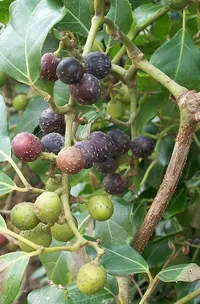
It belongs to the Vitaceae, the grape family, and produces small, grape-like berries in its native habitat, which are eaten by birds and other wildlife but are not used as an edible crop by people.

FAQs about Glossy Forest Grape

This species is a climbing vine that anchors itself with tendrils. It naturally scrambles up supports, tree trunks, or trellises rather than forming a ground-hugging mat, so it is best treated as a vertical climber.

Grow Healthy Plants with Botan Care

Keep your plants happy and healthy with plant identification, disease detection, and easy care guidance.

Botan plant care app — identify plants on mobile

Explore More Plants