Aristolochia triangularis Care

Aristolochia triangularis

About Aristolochia triangularis

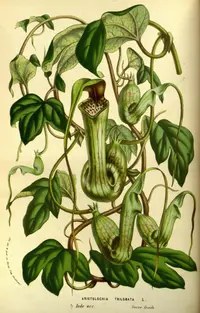
Aristolochia triangularis is a twining vine in the birthwort family, valued mainly for its unusual triangular, tube-shaped flowers and vigorous climbing habit. It is typically grown with a support such as a trellis or fence.

This species is native to tropical regions of Central and South America, where it grows in warm, humid forests. In cultivation, it prefers bright filtered light, evenly moist but well-drained soil, and consistent warmth.

Its fast growth and specific climate needs can make it a bit challenging outside tropical or greenhouse conditions. Understanding how to care for Aristolochia triangularis helps maintain healthy foliage and reliable flowering over time.

Main Plant Requirements

Care Difficulty

Moderate Care

Light Preference

Partial Shade

Water Requirements

Regular Water

Temperature Preference

Tropical / Frost Sensitive

Hardiness Zone

Unknown

Soil Texture

Loamy, Organic-rich

Soil pH

Acidic (5.5–6.5), Slightly acidic (6.5–7.0)

Soil Drainage

Moist but well-drained

Fertilization

Light (every 4–6 weeks)

Get Personalized Care Plan

Scan your plant to receive care tips personalized for your specific plant

Available on iOS and Android

How to Care for the Aristolochia triangularis

This tropical vine grows best with bright, indirect light and some gentle direct sun.

  • Provide 3–5 hours of morning sun with light shade or filtered light in the afternoon to prevent leaf scorch.
  • Tolerates partial shade (around 3–4 hours of dappled sun), but flowering and dense growth decline in deep shade.
  • In hotter summers, shift Aristolochia triangularis to more afternoon shade; in winter, maximize exposure by avoiding heavy overstory or dense structures blocking low-angle sun.

This species prefers consistently moist, well-drained soil without staying soggy.

  • Water when the top 2–4 cm of soil feels dry, aiming for evenly moist soil around the root zone, not saturated.
  • Ensure sharply draining soil and, if in a container, unobstructed drainage holes to reduce root-rot risk; yellowing, soft leaves suggest overwatering.
  • In hot, dry periods increase checks and watering frequency; in cool seasons allow the surface to dry a bit more, watching for limp, curling leaves as a sign of underwatering in Aristolochia triangularis.

This vine thrives in warm, frost-free conditions with only moderate temperature swings.

  • Aim for 65–85°F (18–29°C) for active growth, with best performance near the middle of this range.
  • Protect from cold below 50°F (10°C); foliage and young stems can be damaged near 40°F (4°C) and killed by frost.
  • Tolerates short heat spikes up to about 95°F (35°C) if soil moisture is maintained and roots are mulched, but growth slows in prolonged extreme heat or cold.

This species prefers moderate to high humidity and reacts quickly to very dry air.

  • Aim for 50–70% humidity, especially in heated or air-conditioned rooms.
  • Leaves may curl, brown at the edges, or stall in growth when humidity is too low.
  • Increase humidity with a nearby humidifier, grouped plants, or a pebble tray rather than misting the foliage.

Aristolochia triangularis prefers a loose, organic-rich mix that drains freely but does not dry out too fast.

  • Use a base of peat- or coco-coir-based potting mix with 20–30% perlite and 10–20% fine bark for structure and drainage.
  • Keep pH slightly acidic to neutral, around 6.0–7.0, avoiding strongly alkaline substrates that can lock up nutrients.
  • Ensure the mix feels springy, not compacted; add more perlite or bark if water lingers on the surface for longer than a few minutes.
  • Avoid heavy clay-based mixes or garden soil, which restrict aeration and can promote root rot when kept evenly moist.

This twining vine suits container growing when given a stable, well-drained setup.

  • Choose a deep, weighty pot that resists tipping once the vine climbs a trellis or support frame.
  • Select a slightly wider container than the rootball to give lateral space for feeder roots without creating a waterlogged soil mass.
  • Use a pot material like terracotta if extra evaporation is needed, or glazed ceramic in hot, dry sites to slow moisture loss.

This vine benefits from light, structured feeding during its active growing season.

  • Use a balanced liquid fertilizer (for example 10-10-10) at 1/2 strength every 4–6 weeks in spring and summer.
  • Alternatively, apply a thin layer of compost or a slow-release balanced fertilizer at the start of the growing season.
  • Skip feeding in late fall and winter to respect natural dormancy and avoid weak, soft growth.
  • Always water before and after applying fertilizer to reduce root burn risk and improve nutrient uptake.

Pruning helps manage size, encourage branching, and support flowering on Aristolochia triangularis.

  • Plan main pruning for late winter or very early spring before vigorous new growth starts.
  • Remove dead, damaged, or crossing stems first, then thin congested areas to improve light and airflow.
  • Shorten excessively long shoots to maintain the vine within its support and guide direction of growth.
  • Use clean, sharp bypass pruners and make angled cuts just above healthy buds or side branches.

This twining vine responds well to thoughtful repotting or transplanting when it becomes root-bound.

  • Check for roots circling the pot, emerging from drainage holes, or slowed growth as signals to move it up 1 pot size.
  • Plan repotting or outdoor transplanting in spring, when new growth begins and recovery is fastest.
  • Refresh with a fertile, well-drained mix and position at the same soil depth to avoid stem rot.
  • Handle the root ball gently, loosening only the outer roots, then water thoroughly and shade lightly for several days.

Propagation of Aristolochia triangularis is usually done by seeds or softwood cuttings under warm, humid conditions.

  • Sow fresh seeds in spring in a moist, well-drained seed mix at 70–75°F, keeping humidity high until germination.
  • Take 8–10 cm softwood cuttings in late spring or early summer from non-flowering shoots.
  • Dip cuttings in rooting hormone, then place in a sterile, airy medium under bright, indirect light.
  • Maintain bottom warmth if possible, and keep humidity high but foliage just dry enough to reduce rot.

This species is frost-sensitive and needs protection in regions with cold winters.

  • In areas with frost, grow in containers and move indoors to a bright, cool room before temperatures drop below 45°F.
  • For plants in mild climates, apply 5–8 cm of organic mulch around the root zone, staying clear of the stem.
  • Avoid waterlogged soil in winter, as cold and excess moisture together greatly increase root rot risk.

Care Tips

Secure climbing support

Install a sturdy trellis, wire grid, or tensioned nylon lines before planting so the vine can attach early and form a stable, well-directed framework as it grows heavier over time.

Guide young stems

Gently tie new shoots to the support with soft, flexible ties every 2–3 weeks, keeping stems slightly spaced to improve airflow and reduce the risk of fungal issues on dense foliage.

Plan for root vigor

Use a deep, heavy container or plant in-ground away from fragile structures, since the plant develops a strong root system that benefits from stable volume and is harder to relocate later.

Monitor flower traps

Inspect the pitcher-like flowers every few days during peak bloom and remove decayed blooms promptly to reduce fungal growth and keep insect populations from building up nearby.

Seasonal growth checks

At the end of each growing season, assess where stems have overreached their support and selectively shorten or redirect them so the vine stays manageable and easier when caring for Aristolochia triangularis long term.

Common Pests and Diseases

Aristolochia swallowtail caterpillars

This pest is the larval stage of swallowtail butterflies that specialize on Aristolochia foliage and can defoliate vines quickly. Symptoms include large irregular holes, skeletonized leaves, and rapid loss of leaf area.

Solution

Hand-pick caterpillars and relocate them to other non‑valued Aristolochia host plants when possible, or prune and discard heavily infested shoots. For severe ornamental damage, use targeted applications of Bacillus thuringiensis (Bt) on the foliage in late afternoon, and support recovery by providing consistent water and a balanced fertilizer so the vine can regrow foliage.

Spider mites

These insects thrive on Aristolochia foliage in warm, dry conditions, causing fine stippling, dull leaves, and delicate webbing on the undersides. Symptoms include leaf yellowing and premature drop if populations become high.

Solution

Rinse leaves thoroughly with a strong but gentle stream of water, focusing on undersides, and repeat every few days until populations decline. Increase humidity around the vine, improve air movement, and if needed use insecticidal soap or horticultural oil, applied carefully to both leaf surfaces and repeated according to label directions.

Leaf spot

This disease causes small brown to dark purplish spots on leaves that may merge into larger blotches, especially in warm, humid weather or on crowded vines. Symptoms include yellow halos around spots and premature leaf drop on stressed plants.

Solution

Remove and dispose of affected leaves and any fallen debris to reduce inoculum, and avoid overhead watering so foliage dries quickly. Improve air circulation by thinning crowded stems, and if spotting continues in very wet seasons, apply a copper‑based or other labeled ornamental fungicide as a preventive spray on new growth.

Powdery mildew

This disease presents as a white to gray powdery coating on upper leaf surfaces and young stems, often developing where airflow is poor. Symptoms include distorted new growth, dull leaves, and gradual decline in vigor if unmanaged.

Solution

Prune to open the plant structure and increase airflow, and avoid excess nitrogen that pushes soft, mildew‑prone growth. At first signs, remove the most affected leaves and treat remaining foliage with a labeled sulfur, potassium bicarbonate, or horticultural oil product, applied during cooler parts of the day to limit leaf burn as part of Aristolochia triangularis care instructions.

Interesting Facts

Specialized fly pollination

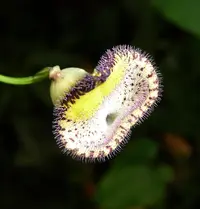
This species produces triangular, mottled flowers that emit a faint scent attracting small flies, which become temporarily trapped and dusted with pollen before being released, an example of brood-site mimicry in pollination biology.

Twining tropical liana

Aristolochia triangularis is a vigorous, woody climber native to tropical regions of Central and South America, using twining stems to scramble over shrubs and trees in warm, humid forests.

Host for specialized insects

Like several other Aristolochia species, this plant serves as a larval food source for certain swallowtail butterflies in its native range, whose caterpillars have evolved mechanisms to tolerate aristolochic acids found in the foliage.

FAQs about Aristolochia triangularis

This species is a twining vine that climbs rather than creeping along the ground. It uses flexible stems that coil around supports. Without a trellis, fence, or similar structure, growth becomes tangled and may sprawl awkwardly.

Grow Healthy Plants with Botan Care

Keep your plants happy and healthy with plant identification, disease detection, and easy care guidance.

Botan plant care app — identify plants on mobile

Explore More Plants