Strawberry Pear Care (Selenicereus triangularis)

Strawberry Pear

About Strawberry Pear

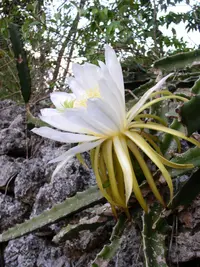
Strawberry pear (Selenicereus triangularis) is a climbing cactus with flat, triangular, jointed stems and large, showy night-blooming flowers. In suitable conditions it may also form small, edible fruits. Native to tropical regions of Central and South America, it often grows on trees or rocks as an epiphyte, using its roots mainly for support rather than for heavy feeding. This growth habit makes the plant relatively tolerant of brief dryness and light, airy substrates. It is generally considered moderate in difficulty, as it prefers bright light, good drainage, and stable warmth. With these basics in place, it is straightforward to care for Strawberry Pear indoors or in a protected outdoor spot in warm climates.

Main Plant Requirements

Care Difficulty

Moderate Care

Light Preference

Partial Sun

Water Requirements

Low Water

Temperature Preference

Tropical / Frost Sensitive

Hardiness Zone

10–11

Soil Texture

Sandy, Loamy, Rocky

Soil pH

Slightly acidic (6.5–7.0), Neutral (7.0)

Soil Drainage

Well-drained

Fertilization

Light (every 4–6 weeks)

Get Personalized Care Plan

Scan your plant to receive care tips personalized for your specific plant

Available on iOS and Android

How to Care for the Strawberry Pear

This climbing cactus prefers bright, indirect light with some gentle direct sun for strongest growth.

  • Provide 4–6 hours of morning sun or late-afternoon sun, with filtered or dappled light at midday to prevent scorching of stems.
  • It tolerates partial shade, but in deep shade Strawberry Pear produces weak, elongated growth and fewer flowers, so gradually increase light if stems stretch.
  • Outdoors, give more shade in hot summer regions with harsh afternoon sun; in cooler or overcast seasons, allow a bit more direct exposure to maintain compact growth.

Watering should mimic an epiphytic cactus: thorough but infrequent, with fast drainage and clear dry periods.

  • Wait until the top 3–5 cm of soil feel completely dry before watering; then water deeply so excess drains away from the root zone.
  • In spring and summer, expect to water more often as temperatures rise and growth speeds up; in fall and winter, reduce frequency once growth slows.
  • Watch for shriveling or limp, thin stems as a sign of underwatering, and for yellowing, soft, or blackened stem bases as a warning of overwatering plus poor drainage.

This species favors warm, frost-free conditions that resemble a mild subtropical climate.

  • Aim for active growth temperatures of 65–85°F (18–29°C), where metabolism and root activity remain steady without heat stress.
  • Short dips to 45–50°F (7–10°C) are usually tolerated if the soil is fairly dry, but repeated exposure slows growth and increases rot risk.
  • Protect from frost and hard freezes below 32°F (0°C), and in heat above 95°F (35°C) give extra shade and airflow to prevent stem sunburn and stress.

This cactus tolerates a wide humidity range but benefits from slightly moderate indoor levels.

  • Aim for 30–50% humidity, which suits typical home conditions for Strawberry Pear.
  • Dry air is usually tolerated, but very arid conditions can slow growth and cause slightly shriveled, dull stems.
  • If stems wrinkle or brown at the edges despite proper watering, raise humidity by grouping plants or using a small tray of water and pebbles nearby.

Selenicereus triangularis prefers a fast-draining, airy substrate similar to epiphytic cactus or orchid mixes.

  • Use a mix of roughly 40% cactus potting mix, 40% coarse materials (perlite, pumice, or chunky bark), and 20% organic matter such as composted pine fines.
  • Ensure the soil feels loose and gritty, not compacted, so oxygen can reach roots and excess water drains within a few minutes of watering.
  • Keep pH slightly acidic to neutral, around 6.0–7.0, avoiding strongly alkaline mixes that can limit nutrient uptake.
  • Avoid dense, peat-heavy, or clay-rich soils that stay wet for many hours, as this promotes root rot and stem base rot.

This species is well suited to container growing, especially with support for its climbing stems.

  • Choose a pot heavy enough (such as thick terracotta or ceramic) to counterbalance long, trailing or climbing stems and prevent tipping.
  • Select a container that is wider than it is deep to allow lateral root spread while keeping the root zone from staying waterlogged.
  • Ensure large, unobstructed drainage holes and keep a saucer emptied promptly so water does not pool around the base.

This cactus benefits from light, controlled feeding during the warm growing season to support healthy stems and flowering when caring for Strawberry Pear.

  • Use a balanced cactus-safe fertilizer (for example 10-10-10) diluted to 25–50% strength in spring and summer.
  • Apply every 4–6 weeks while actively growing, only onto moist soil to avoid root burn.
  • Skip compost-heavy mixes that stay wet; choose a low-organic, well-drained substrate instead.
  • Reduce feeding to 1 very light application or none at all in fall and winter when growth slows.

Pruning Selenicereus triangularis helps manage size, improve light penetration, and maintain flowering performance.

  • Carry out main pruning in late winter or early spring before vigorous growth starts.
  • Use clean, sharp pruners to remove dead, damaged, or diseased stems at the base.
  • Thin crowded or tangled stems to open the plant’s structure and reduce rot risk.
  • Shorten overly long stems to control spread, preserving healthy, younger growth for flowers.

This species tolerates being slightly rootbound, so repotting is infrequent but still important over time.

  • Check for roots circling the pot, pushing through drainage holes, or unexplained slow growth as repotting signals.
  • Plan to repot every 2–3 years in late spring, after the risk of frost has passed.
  • Choose a container 2–3 cm wider with excellent drainage and a coarse cactus mix.
  • Gently loosen roots, remove old soggy soil, and water lightly after repotting to limit shock.

Selenicereus triangularis is most often propagated from stem cuttings, which root reliably in warm conditions.

  • Take 10–15 cm healthy stem segments in late spring or early summer using clean, sharp tools.
  • Allow cut surfaces to callus for 2–5 days in a dry, shaded place to reduce rot risk.
  • Insert cuttings upright into a gritty, barely moist cactus mix and keep at 70–80°F with bright, indirect light.
  • Water sparingly until firm new growth appears, then gradually shift to normal care conditions.

This cactus is frost-sensitive and needs protection wherever temperatures drop near or below freezing.

  • Aim to keep plants above 40–45°F; extended exposure to 32°F or below can damage tissues.
  • Move container plants indoors or into a bright, frost-free greenhouse before first frost.
  • Reduce watering significantly in winter, allowing soil to dry more fully between light waterings.
  • In mild climates, mulch lightly around outdoor roots while ensuring stems do not sit in wet conditions.

Care Tips

Vertical support training

Install a sturdy trellis, wire grid, or hanging chain and gently tie new triangular stems every 15–20 cm, which keeps the plant upright, improves light distribution, and prevents heavy segments from snapping at the base.

Segment propagation refresh

Every 2–3 years, prune a few healthy 10–15 cm stem segments, let the cut ends callus for 3–5 days, then root them in fresh, fast-draining mix to create backup plants and maintain a vigorous, youthful clump.

Night bloom readiness

In late spring and summer, avoid moving or rotating the plant once flower buds appear, since stable orientation and minimal disturbance help the large night-blooming flowers develop and open fully.

Calcium and support management

As stems lengthen and become heavier, periodically check attachments and upgrade to thicker stakes or wall anchors so that the weight of mature, woody tissue is supported and joints do not crack.

Targeted pest scouting

Inspect the ribbed edges and areoles (small bump-like points) of the stems every 1–2 weeks with a flashlight, since mealybugs and scale often hide in these creases, and treat early with isopropyl alcohol swabs or a labeled horticultural soap when caring for Strawberry Pear.

Common Pests and Diseases

Mealybugs

This pest often hides in stem angles and along the ribbed edges, sucking sap and causing yellowing, stunting, and sticky honeydew on stems. Symptoms include cottony white clusters especially where stems branch or near aerial roots.

Solution

Remove visible clusters with a cotton swab dipped in 70% isopropyl alcohol, then gently rinse stems with lukewarm water to dislodge remaining insects. For larger infestations, apply a ready-to-use insecticidal soap or neem oil spray every 7–10 days, and isolate the plant until no new mealybugs are seen.

Scale insects

These insects attach firmly to the succulent stems, appearing as small tan, brown, or gray bumps that do not rub off easily. This pest weakens growth and can cause yellow patches and sticky residue that attracts sooty mold.

Solution

Scrape or wipe individual scales off with a soft toothbrush or cloth, then spray stems thoroughly with insecticidal soap or a light horticultural oil, ensuring good coverage along ribs and crevices. Repeat treatments every 7–10 days for several cycles and maintain good light and air movement to support recovery when caring for Strawberry Pear.

Spider mites

This pest thrives in hot, dry indoor conditions, causing fine stippling, dull patches, and webbing between stems or along ribs. Symptoms include slowed growth and a dusty, faded appearance on the green stems.

Solution

Rinse stems thoroughly under a gentle shower or hose, focusing on joints and any webbing, then apply insecticidal soap or neem oil to all surfaces. Increase humidity slightly, improve air circulation, and inspect weekly with a hand lens, repeating treatment if any mites or webbing reappear.

Corky stem scab

This disease causes rough, brown, corky patches on the green stems, often following minor injury, sunburn, or irregular watering. Symptoms include hard, dry lesions that may crack but usually do not feel soft or mushy.

Solution

Prune out badly affected stem sections with a sterile blade and discard them, then adjust care by avoiding sudden changes in moisture and protecting the plant from intense midday sun. Ensure the potting mix drains quickly, water only when the mix is mostly dry, and keep stems dry during cool periods to limit new lesions.

Bacterial soft rot

This disease develops in overly wet or damaged stem sections, leading to soft, water-soaked, foul-smelling areas that collapse quickly. Symptoms include dark, mushy patches that may ooze liquid when pressed.

Solution

Cut away all affected tissue well into healthy, firm stem with a sterile knife, then let cut surfaces dry and callus in bright, indirect light for several days before replanting. Discard any waterlogged soil, repot in a fresh, sharply draining cactus mix, reduce watering, and keep water off stems to prevent reinfection.

Interesting Facts

Night-blooming bat ally

This climbing cactus opens its large white flowers only at night and is visited mainly by nectar-feeding bats, which are attracted by the strong nocturnal fragrance and pale floral color that show up well in low light.

Triangular climbing stems

The stems have a distinctive 3-angled cross-section with shallow wings and small clusters of spines along the ribs, an adaptation that increases surface area for photosynthesis while keeping the plant lightweight for climbing on trees or supports.

Epiphytic forest cactus

In nature it often grows as an epiphyte on tree trunks and branches in tropical forests, anchoring with aerial roots and absorbing moisture and nutrients from rain, debris, and humid air rather than from soil alone.

Botan icon

Did you know?

The fruit of this species resembles a small dragon fruit, with a scaly outer surface and edible pulp, reflecting its close relationship to commercially grown dragon fruit species in the same cactus tribe.

FAQs about Strawberry Pear

Lack of blooms usually comes from insufficient light, a pot that is too small, or the plant being too young. Cool, slightly drier rest periods also encourage bud formation, while excess nitrogen fertilizer can keep it focused on stems instead of flowers.

Grow Healthy Plants with Botan Care

Keep your plants happy and healthy with plant identification, disease detection, and easy care guidance.

Botan plant care app — identify plants on mobile

Explore More Plants