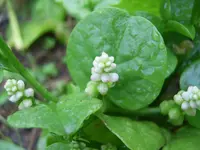
Giant bramble Care (Rubus alceifolius)

Giant bramble

About Giant bramble

Giant bramble (Rubus alceifolius) is a vigorous, scrambling shrub in the rose family, known for its long arching canes and stout thorns. It produces large, lobed leaves and small white flowers that develop into edible red to dark purple berries. Native to parts of Southeast Asia, it has become invasive in some tropical and subtropical regions, where it forms dense thickets. The plant is fast growing and resilient, which makes it hardy but difficult to control in open ground. Those who want to care for Giant bramble should allow plenty of space and use well-drained soil with good light and regular moisture.

Main Plant Requirements

Care Difficulty

Easy Care

Light Preference

Full Sun

Water Requirements

Moderate Water

Temperature Preference

Warm Climate

Hardiness Zone

8–11

Soil Texture

Sandy, Loamy, Organic-rich

Soil pH

Acidic (5.5–6.5), Slightly acidic (6.5–7.0)

Soil Drainage

Moist but well-drained

Fertilization

Minimal (feed rarely)

Get Personalized Care Plan

Scan your plant to receive care tips personalized for your specific plant

Available on iOS and Android

How to Care for the Giant bramble

Rubus alceifolius grows best with strong outdoor light while avoiding extreme afternoon scorch.

  • Provide 6–8 hours of direct sun daily, ideally with morning sun and light afternoon shade to reduce leaf scorch risk.
  • Tolerates partial shade, but stems of Giant bramble may elongate and fruiting can decline if it receives under 4–5 hours of sun.
  • In hot summers, use filtered light or dappled shade during 12–4 pm, while in cooler seasons allow more open exposure to maximize growth.

Rubus alceifolius prefers consistently moist but not saturated soil in the root zone.

  • Water when the top 3–5 cm of soil feel dry, aiming for deep soaking that moistens at least 15–20 cm into the ground.
  • Choose well-drained soil or sloped ground; persistent puddling, sour smell, or yellowing soft leaves indicate overwatering and poor aeration.
  • In spring and summer, check moisture more often; in cooler or rainy periods, extend intervals and watch for wilting tips and dry, crisp leaves as underwatering signs.

This bramble tolerates a wide temperature range but grows most actively in mild conditions.

  • Optimal growth occurs around 65–80°F (18–27°C), with strong vegetative growth and reliable flowering in this band.
  • Plants generally survive short drops to about 20–25°F (-6 to -4°C), but young shoots and flowers can be damaged by late frosts.
  • Heat above 90°F (32°C) can stress plants; provide mulch to cool roots and expect slowed growth or leaf scorch in prolonged extremes.

This species tolerates a wide humidity range and usually needs no special humidity management outdoors.

Rubus alceifolius prefers loose, well-drained, moderately fertile soil that supports fast root spread without waterlogging.

  • Use a loamy or sandy-loam structure enriched with 20–30% organic matter such as compost or well-rotted manure.
  • Aim for slightly acidic to neutral pH around 6.0–7.0, avoiding strongly alkaline or saline conditions that limit nutrient uptake.
  • Improve drainage and aeration by incorporating coarse sand or fine gravel on heavier sites, especially in areas with high rainfall.
  • Avoid compacted clay, standing water, or heavily mulched zones that stay saturated, since roots are prone to rot in anaerobic conditions.

This vigorous, spreading bramble is generally unsuitable for long-term container culture due to its invasive growth habit and strong root system.

Rubus alceifolius grows vigorously and usually needs only light, targeted feeding in typical garden soil.

  • Use a balanced slow-release fertilizer (around 10-10-10) or well-rotted compost in early spring to support new growth.
  • Apply once per year in the ground; container plants may benefit from a half-strength liquid balanced feed every 4–6 weeks in the growing season.
  • Reduce feeding in late summer and stop during winter dormancy to avoid weak, frost-sensitive shoots.
  • Water before and after fertilizing Giant bramble to limit root burn and improve nutrient uptake.

Pruning Rubus alceifolius is important for controlling spread, maintaining structure, and encouraging healthy new canes.

  • Cut out dead, diseased, or damaged canes at ground level at the end of winter or very early spring.
  • Remove weak, crossing, or crowded stems to improve airflow and reduce fungal disease risk.
  • Shorten overly long canes to manage size and shape, guiding growth along supports if used.
  • Use sharp, clean bypass pruners and wear thick gloves to handle the thorny stems safely.

This vigorous shrub is usually grown in the ground, so focus on careful transplanting rather than frequent repotting.

  • Transplant in late fall or early spring when growth is slow and temperatures are mild to limit stress.
  • Look for signs such as dense, circling roots in containers or poor growth where plants are overcrowded.
  • Dig a wide planting hole, disturb and spread the outer roots gently, and set the crown at soil level.
  • Water thoroughly after transplanting, then keep soil evenly moist and shaded for 1–2 weeks to support recovery.

Rubus alceifolius is commonly propagated because it roots and spreads readily under suitable conditions.

  • Use tip layering in spring or early summer, burying a flexible cane tip under 5–8 cm of soil until roots form.
  • Take semi-ripe stem cuttings in summer, placing them in a moist, free-draining mix under bright, indirect light.
  • Divide young clumps in early spring or fall, ensuring each division has several healthy buds and roots.
  • Sow fresh seed outdoors in fall or stratified seed in late winter, as cold exposure improves germination.

In many mild to moderate climates this bramble is fairly cold tolerant and needs only limited winter care.

  • Mulch the root zone with 5–8 cm of organic material in late fall to buffer temperature swings and conserve moisture.
  • In colder regions, tie and loosely wrap young canes with breathable fabric where severe frost is expected.
  • Move container-grown plants into a sheltered, unheated area to reduce freeze–thaw stress on roots.

Care Tips

Install strong supports

Use heavy-duty wires or a rigid trellis and tie new canes loosely with soft ties so the vigorous growth is directed and kept off the ground, which improves airflow and reduces disease pressure when growing Giant bramble.

Manage suckers promptly

Inspect the base and surrounding soil regularly and cut or grub out new suckers at ground level before they harden, preventing the plant from spreading aggressively into paths or neighboring beds.

Rotate harvesting zones

Mark canes by year and harvest systematically from different sections, then remove fruited 2-year-old canes right after harvest to maintain productivity and avoid a dense, unmanageable thicket.

Use weed-suppressing mulch

Apply a 5–8 cm layer of coarse organic mulch such as wood chips or shredded bark around but not against the crowns to suppress competing weeds and keep fruit cleaner by reducing soil splash.

Plan safe access paths

Designate and maintain clear access lanes between rows with mowed grass or compacted mulch so pruning, tying, and picking can be done without excessive snagging on the long, thorny canes.

Common Pests and Diseases

Raspberry leaf spot

This disease causes small, round, tan to light gray spots on leaves that can merge and lead to premature leaf drop, especially in dense thickets. Symptoms include weakened canes and reduced vigor in heavily infested stands.

Solution

Prune and thin canes to improve air circulation, then remove and destroy badly affected leaves and canes. Avoid overhead irrigation, keep foliage as dry as possible, and if the problem is persistent, apply a labeled copper or chlorothalonil fungicide in early spring when new leaves emerge, repeating as directed.

Raspberry rust

This disease produces yellow to orange powdery pustules on the undersides of leaves and can also affect young canes. Symptoms include distorted growth and early leaf drop under severe infections.

Solution

Cut out and destroy infected canes and fallen leaves to reduce spore sources, and avoid watering foliage. In plantings where rust recurs, use a preventive fungicide labeled for caneberries at bud break and again while new leaves are expanding, and maintain good spacing and airflow to limit humidity around the foliage.

Cane blight

This disease causes dark, sunken lesions on canes, often starting near pruning cuts or mechanical wounds. Symptoms include wilted side shoots, poor fruiting, and dieback above the infected area.

Solution

Prune canes during dry weather, making clean cuts and removing any canes showing lesions or dieback, then destroy all prunings. Reduce plant stress by avoiding excessive nitrogen fertilization, keep plantings well spaced, and in severe cases protect new canes with a labeled fungicide spray shortly after pruning.

Spider mites

These pests feed on the underside of leaves, causing fine stippling, a dull or bronzed appearance, and in heavy infestations fine webbing between leaves and stems. Symptoms include reduced vigor during hot, dry weather when mite populations build quickly.

Solution

Increase humidity around plants where possible, hose down foliage with a firm water spray to remove mites, and encourage natural predators like lady beetles by avoiding broad-spectrum insecticides. If populations remain high, use insecticidal soap or a horticultural oil, ensuring thorough coverage of leaf undersides and repeating at 5–7 day intervals as needed.

Spotted wing drosophila

These insects lay eggs in ripening fruits, leading to soft, collapsing berries contaminated with small white larvae. Symptoms include rapid fruit breakdown and a high proportion of unmarketable berries, especially in warm, humid conditions.

Solution

Harvest fruit frequently and remove overripe or damaged berries from the area to break the insect life cycle. Use fine-mesh netting to exclude adults where practical, deploy vinegar or yeast-based monitoring traps to detect activity, and if necessary apply a targeted fruit-fly insecticide according to local guidelines, timing sprays just before and during the main ripening period of the berries.

Interesting Facts

Aggressive smothering growth

This species forms dense, fast-growing thickets with long arching canes that layer and root wherever they touch the ground, allowing it to quickly blanket and shade out native vegetation in tropical and subtropical areas where it is introduced.

Winged seed dispersal

Its fruits contain seeds that are dispersed both by birds and by gravity, but the species also produces flattened, wing-like structures on some reproductive shoots that help vegetative fragments spread when they break off and are moved downslope or by water.

Shade-tolerant invader

Unlike many other brambles that prefer open, sunny habitats, this plant can invade and persist under partial forest shade, giving it a competitive advantage in disturbed forest margins and secondary forests in places such as Réunion and parts of Southeast Asia.

Botan icon

Did you know?

In Réunion Island, this species became one of the most notorious invasive plants after being introduced in the 19th century, prompting long-term, large-scale biological control programs that include the deliberate release of specialized insects to reduce its growth and reproduction.

FAQs about Giant bramble

This species spreads very aggressively by long arching canes and rooting tips, plus abundant seeds. In many warm, humid regions it quickly forms dense thickets that outcompete other plants and is often regarded as invasive.

Grow Healthy Plants with Botan Care

Keep your plants happy and healthy with plant identification, disease detection, and easy care guidance.

Botan plant care app — identify plants on mobile

Explore More Plants