


Encourage Cross-Pollination
Plant at least 2 genetically different shrubs within 3–5 m of each other or graft a second cultivar onto an existing plant to significantly increase fruit set and yield.

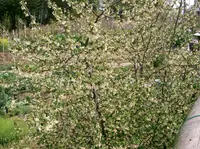
Cherry silverberry, Elaeagnus multiflora, is a hardy deciduous shrub grown for its edible, tangy red berries and silvery-speckled foliage. It typically forms a bushy, rounded shape with arching branches and small, lightly fragrant spring flowers.
The species is native to East Asia, especially China, Korea, and Japan, and adapts well to many temperate garden climates. It tolerates poor soils because its roots host nitrogen-fixing bacteria, which makes it relatively easy to establish.
Cherry silverberry prefers sun to light shade and well-drained soil, and usually copes well with wind and urban conditions. These traits make it straightforward to care for cherry silverberry in many home gardens.

Care Difficulty
Easy Care

Light Preference
Full Sun

Water Requirements
Moderate Water

Temperature Preference
Cold Hardy

Hardiness Zone
4–8

Soil Texture
Sandy, Loamy, Clay

Soil pH
Acidic (5.5–6.5), Slightly acidic (6.5–7.0)

Soil Drainage
Well-drained

Fertilization
Minimal (feed rarely)
Scan your plant to receive care tips personalized for your specific plant
Available on iOS and Android
Elaeagnus multiflora performs best in bright, direct outdoor light with some protection from extreme afternoon heat.
Watering should support deep root growth while allowing the soil around Elaeagnus multiflora to dry slightly between soakings.
This shrub is quite hardy and tolerates a wide temperature range when established in the landscape.
Humidity is not a critical factor for Elaeagnus multiflora, which handles a wide range of ambient conditions.
Elaeagnus multiflora prefers moderately fertile, well-drained mineral soils to support strong root and fruit development.
This species can be grown in containers if the pot is large and stable enough for its shrub-like habit.
Elaeagnus multiflora is modest in its nutrient needs, so light, balanced feeding is sufficient for healthy growth when caring for cherry silverberry.
Elaeagnus multiflora responds well to thoughtful pruning that maintains structure and fruiting wood.
Elaeagnus multiflora is usually grown in the ground, so management focuses on transplanting rather than frequent repotting.
Elaeagnus multiflora is commonly propagated from semi-ripe cuttings, seeds, or by simple layering.
Elaeagnus multiflora is generally cold hardy in much of the US and needs only modest winter attention.

Plant Health Check
Not sure what's wrong with your plant? Check your plant's health inside the app.
This species forms root nodules with actinobacteria in the genus Frankia, allowing it to fix atmospheric nitrogen and improve soil fertility around it.
The ripe fruits are red with distinctive silver speckles, have a thin edible skin, and contain a single elongated seed that makes them visually and morphologically different from many common garden berries.
Its small, tube-shaped, pale yellow flowers open in mid to late spring and provide an important early nectar and pollen source for bees and other pollinating insects.

This shrub is native to East Asia, especially Japan, Korea, and parts of China, and was introduced to North America and Europe mainly for its edible fruit and as a multifunctional plant for Elaeagnus multiflora plant care research, erosion control, and wildlife habitat plantings.
The fruits are edible when fully ripe and are commonly used fresh, in jams, or for preserves. They have a tart, slightly sweet flavor and are rich in vitamins and antioxidants. Unripe fruits taste more astringent.
Keep your plants happy and healthy with plant identification, disease detection, and easy care guidance.

Prostrate snowberry
Gaultheria macrostigma
Winter Squash
Cucurbita maxima 'Blue Hubbard'
peach palm
Bactris gasipaes
Portuguese prickly juniper
Juniperus navicularis
naranjilla
Solanum quitoense

Transvaal Red Milkwood
Mimusops zeyheri
White-stemmed Bramble
Rubus cockburnianus
yellow Himalayan raspberry
Rubus ellipticus