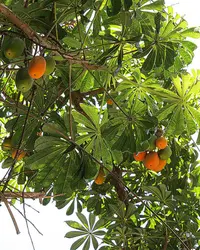
Torchwood Care (Balanites maughamii)

Also known as: manduro, greenthorn, Torch-Fruit Tree
Torchwood

About Torchwood

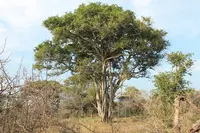
Torchwood, Balanites maughamii, is a small to medium tree from dry woodland and savanna regions of eastern and southern Africa. It is often grown as an ornamental in warm climates.

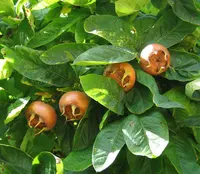
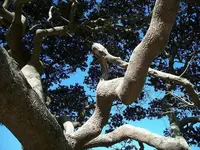
The tree has a rounded crown, paired thorns, and fleshy, olive-like fruits, giving it a distinctive, lightly armored look. Its grey-green leaves and rough bark suit arid, open landscapes.

Torchwood tolerates drought and poor, sandy or loamy soils but resents prolonged cold and waterlogged conditions, which influences how easy it is to grow. Those who care for Torchwood should provide bright light, good drainage, and protection from frost.

Its slow to moderate growth and strong tolerance of heat make it more suitable for experienced growers or dedicated beginners in suitable climates.


Main Plant Requirements

Care Difficulty

Moderate Care

Light Preference

Full Sun

Water Requirements

Low Water

Temperature Preference

Tropical / Frost Sensitive

Hardiness Zone

10–11

Soil Texture

Sandy, Loamy, Rocky

Soil pH

Slightly acidic (6.5–7.0), Slightly alkaline (7.0–7.5)

Soil Drainage

Well-drained

Fertilization

Minimal (feed rarely)

Get Personalized Care Plan

Scan your plant to receive care tips personalized for your specific plant

Available on iOS and Android

How to Care for the Torchwood

Balanites maughamii grows best in bright, open positions with strong sun exposure.

  • Provide 6–8 hours of direct sun daily; full sun is ideal, though light afternoon shade is helpful in very hot, dry climates.
  • Young trees tolerate light or dappled shade, but long-term low light reduces branching density and slows growth.
  • In summer, monitor for leaf scorch on exposed, reflected-heat sites; in cooler months, choose the sunniest, least-shaded position available for Torchwood.

This drought-tolerant tree prefers deep, infrequent watering once established.

  • Allow the top 5–10 cm of soil to dry before watering; soil should feel dry to slightly dry, not wet or muddy.
  • During hot, dry periods, water thoroughly but infrequently, watching for dull, folding leaves or tip dieback as signs of prolonged drought stress.
  • Ensure very free-draining, sandy or gravelly soil; yellowing, soft leaves or persistent surface dampness indicate overwatering and poor drainage for Balanites maughamii.

This species prefers warm to hot conditions and is sensitive to frost.

  • Ideal growing temperatures are 70–90°F (21–32°C), where shoot and root growth are most active.
  • The tree tolerates short drops to about 30–32°F (-1–0°C) but young plants can be damaged; protect from any hard frost.
  • In hot regions, it handles 100–105°F (38–41°C) if soil is not waterlogged; avoid planting in frost pockets or low-lying cold air basins.

This dryland tree tolerates a wide humidity range and rarely needs special humidity management indoors or outdoors.

  • Target 30–50% humidity, which aligns with most heated or air-conditioned homes and many outdoor climates in arid or semi-arid regions.
  • Torchwood handles dry air well, but prolonged exposure to very low humidity plus high heat can cause browning on new leaf tips and edges.
  • If leaf scorch appears in very dry rooms, group plants together or place the container on a pebble tray with water below the pot base to raise local humidity slightly.

This species prefers sharply drained, sandy to loamy mineral soil that does not stay wet after irrigation or rain.

  • Use a mix of roughly 50–60% coarse sand, 20–30% loam or regular potting mix, and 10–20% fine gravel to mimic the free-draining soils where Balanites maughamii naturally grows.
  • Aim for slightly acidic to neutral conditions, around pH 6.5–7.5, avoiding highly acidic or strongly alkaline mixes that can limit nutrient availability.
  • Increase aeration and drainage by blending in inorganic materials such as pumice, perlite, or crushed granite instead of relying only on compost or peat.
  • Avoid heavy clay, dense peat-based mixes, or any soil that compacts and forms a slick surface, as this raises root-rot risk and reduces oxygen to the root zone.

This tree can be grown in containers when young or as a long-term specimen if root space and stability are carefully managed.

  • Choose a deep, heavy pot to counterbalance the developing trunk and canopy so wind or accidental bumps do not tip it over.
  • Select containers with wide, unobstructed drainage holes so coarse, sandy mixes can release water rapidly without pooling at the base.
  • If the container stands on a hard surface, elevate it slightly on pot feet or bricks so runoff escapes quickly and does not reabsorb into the root zone.

Balanites maughamii grows naturally in poor soils and usually needs only light, infrequent feeding in cultivation.

  • Use a balanced, slow-release fertilizer (around 10-10-10) or thin layer of compost once at the start of the warm growing season.
  • Apply at half the label rate to avoid excessive, weak growth and salt buildup in the root zone.
  • Skip or greatly reduce feeding in winter or any cool dormant period, especially for container-grown Torchwood.
  • Always water before and after feeding so nutrients disperse evenly and roots do not burn.

Pruning Balanites maughamii is mainly structural and hygienic, aimed at maintaining a safe, open crown.

  • Carry out main pruning in late winter or very early spring before active growth resumes.
  • Remove dead, diseased, crossing, or storm-damaged branches with clean, sharp bypass pruners or a pruning saw.
  • Thin congested inner branches to improve light penetration and airflow, which supports healthier foliage.
  • Limit heavy cuts; guide shape gradually over several seasons to reduce stress and prevent large wounds.

This tree is usually grown in the ground, so focus on careful transplanting rather than frequent repotting.

  • Transplant young plants in late spring when soil is warm and frost risk has passed, ideally on a mild, overcast day.
  • Look for roots circling a nursery container or noticeably slowed growth as signs it has outgrown its pot.
  • Handle the root ball gently, loosening only lightly; plant at the same depth in a well-drained, sandy soil mix.
  • Water deeply after planting, then keep soil evenly moist but not waterlogged for several weeks to limit transplant shock.

Propagation of Balanites maughamii is most often done from seed and tends to be slow but reliable under warm conditions.

  • Collect fully ripe fruits, remove the pulp, and scarify the hard seeds lightly to improve water uptake.
  • Sow in late spring to early summer in a freely draining sandy mix kept at 70–80°F.
  • Maintain consistent, light moisture and bright light; germination can be slow and staggered over several weeks or months.
  • Label seed trays clearly and avoid disturbing young taproots, which are sensitive to rough handling.

This species is a warmth-loving tree that does best in frost-free or very mild winter climates and benefits from basic cold-season precautions.

  • In regions below about 28–30°F, grow in containers so plants can be shifted to a bright, frost-free space for winter.
  • Use a 5–8 cm layer of dry mulch around the root zone in the ground, keeping it slightly away from the trunk.
  • Reduce watering significantly in cool weather, keeping soil just barely moist to reflect the natural dry-season rest.

Care Tips

Early framework pruning

Shape a single strong leader and 3–5 well-spaced primary branches in the first 2–3 years by lightly heading back competing shoots at the end of the dry or cool season to build a stable canopy that can carry the heavy, thorny branches safely.

Thorn-safe placement

Site young trees at least 2–3 m from walkways, driveways, play areas, and property lines so mature thorny branches do not require excessive corrective pruning or become a hazard.

Root zone protection

Keep a 60–90 cm grass- and weed-free mulch ring around the trunk, using a 5–8 cm layer of inert mulch kept 5–8 cm away from the bark, to reduce competition and protect the shallow feeder roots from heat and mechanical damage.

Dry-season monitoring

In regions with distinct dry seasons, monitor for fine twig dieback and sunscald on the upper branches, removing only clearly dead twigs with clean tools and avoiding heavy structural pruning until active growth resumes.

Salt and drought screening

When growing Torchwood in coastal or arid areas, start 2–3 seedlings or young trees in slightly different exposures and soil spots, then keep the individual that shows the best vigor, leaf retention, and minimal tip burn under local stress conditions.

Common Pests and Diseases

Scale insects

This pest attaches to stems and branches, sucking sap and causing yellowing, reduced vigor, and sticky honeydew deposits that can lead to sooty mold on torchwood trees.

Solution

Prune out heavily infested twigs, then wipe or gently scrub remaining scales from branches with a soft brush and mild soapy water; for persistent infestations on outdoor specimens, use a targeted horticultural oil spray during mild weather, ensuring full coverage of stems and the underside of branches.

Bark borers

These insects tunnel into the woody stems and trunk, causing dieback of branches, sparse foliage, and small entry holes often accompanied by frass (sawdust-like material).

Solution

Cut out and destroy severely affected branches, then improve tree vigor through proper watering and balanced fertilization; for valuable landscape trees, consult a local arborist about timing and use of systemic insecticides applied to the soil or trunk when adults are active.

Leaf miners

This pest lives inside the leaves, creating pale winding trails or blotches that reduce photosynthetic area and may cause premature leaf drop under heavy pressure.

Solution

Remove and dispose of affected leaves to reduce larvae, then encourage natural predators by avoiding broad-spectrum insecticides; if needed, apply a systemic insecticide labeled for leaf miners during periods of new leaf flush, following local regulations and label instructions.

Powdery mildew

This disease causes white, powdery patches on leaves and young shoots, which can lead to distorted growth and reduced vigor in crowded or humid conditions.

Solution

Improve air movement around the tree with careful pruning, avoid overhead watering, and remove badly affected leaves; for recurrent problems, apply a sulfur or potassium bicarbonate-based fungicide at the first sign of symptoms, repeating as directed on the label as part of general Balanites maughamii care.

Interesting Facts

Oil-rich edible kernel

The seeds contain an oil-rich kernel that is locally eaten after careful processing and has been used traditionally as a supplementary food and oil source in parts of eastern and southern Africa.

Spiny elephant food tree

In its native range, this tree is an important browse species for large herbivores such as elephants and giraffes, which feed on its foliage and fruits despite its long, stout spines.

Saline and drought tolerance

This species naturally occurs on alkaline and sometimes saline soils in hot, semi-arid regions and shows notable tolerance to drought and soil salinity compared with many other woodland trees.

Botan icon

Did you know?

The yellowish resin exuded by the bark and stems of this tree has been documented as a traditional ingredient in making strong cordage and as a component in fishing lines and nets in some African communities, due to its adhesive and binding properties.

FAQs about Torchwood

This tree becomes quite large, with a strong taproot and sharp thorns, so it is poorly suited to long‑term indoor decoration. Torchwood indoor care is possible only for very young plants in large, bright, well‑ventilated spaces.

Grow Healthy Plants with Botan Care

Keep your plants happy and healthy with plant identification, disease detection, and easy care guidance.

Botan plant care app — identify plants on mobile

Explore More Plants