Root flare check
When planting or inspecting established plants, ensure the top of the root flare sits just at or slightly above the soil surface, since burying the trunk base increases risk of rot and reduces long-term stability.

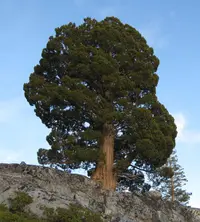
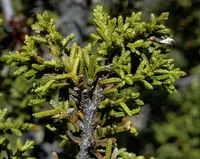
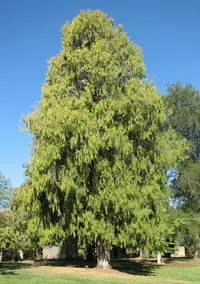
Sierra juniper, Juniperus grandis, is a long-lived coniferous tree native to high-elevation slopes of the Sierra Nevada in California and nearby regions. It typically forms a rugged, irregular crown with dense, scale-like foliage and fibrous reddish-brown bark.
Mature trees often develop twisted trunks and broad, weathered forms that reflect their harsh mountain habitat. The foliage is evergreen and bears small, berry-like cones that provide seasonal interest.
This species is adapted to full sun, rocky or sandy soils, and relatively low to moderate moisture, which can make it resilient in dry, well-drained landscapes. For gardeners, understanding how to care for Sierra juniper starts with replicating its natural, open, and well-drained growing conditions.

Care Difficulty
Moderate Care

Light Preference
Full Sun

Water Requirements
Low Water

Temperature Preference
Cold Hardy

Hardiness Zone
5–8

Soil Texture
Sandy, Loamy, Rocky

Soil pH
Slightly acidic (6.5–7.0), Neutral (7.0)

Soil Drainage
Well-drained

Fertilization
Minimal (feed rarely)
Scan your plant to receive care tips personalized for your specific plant
Available on iOS and Android
This high-elevation conifer thrives in strong sun but can adapt to some shade in harsh climates.
This species is drought-tolerant and prefers infrequent, deep watering once established.
This hardy conifer is adapted to cold mountain climates with hot, dry summers.
Humidity is rarely a limiting factor for Sierra juniper, which thrives in dry air.
Juniperus grandis prefers lean, mineral, sharply drained soil that never stays waterlogged.
This species can be grown in containers for a time, but it is naturally large and best suited to spacious, outdoor settings.
Juniperus grandis in the ground usually needs minimal feeding, but light fertilization can support growth in poor soils or containers.
Juniperus grandis benefits from light, targeted pruning to maintain structure and remove problem wood.
This species is usually grown in the ground, so focus on careful transplanting rather than frequent repotting.
Juniperus grandis is typically propagated by cuttings or seeds, but success can be slow and variable.
Mature Juniperus grandis is very cold hardy and usually needs little specific winter care in the landscape.

Plant Health Check
Not sure what's wrong with your plant? Check your plant's health inside the app.
This species is naturally restricted to high, dry montane slopes of the central Sierra Nevada in California, where it grows on exposed, rocky sites with intense sun and significant snow cover.
Mature trees often develop very broad, heavy crowns with thick, contorted primary branches that can spread almost as wide as the tree is tall, a form that helps them withstand snow loads and strong mountain winds.
Although long treated as a form of Juniperus occidentalis, this species is now recognized as Juniperus grandis based on consistent differences in cone (berry) size, leaf scale morphology, and genetic data.

Some individuals of Juniperus grandis are estimated, based on growth ring studies of related populations and size-age correlations, to reach many centuries in age, making them among the oldest woody plants in the Sierra Nevada forests.
Growth is generally slow. In natural conditions, this species often adds only 5–15 cm of height per year. The rate depends on age, site elevation, soil depth, and water availability, especially in dry mountain locations.
Keep your plants happy and healthy with plant identification, disease detection, and easy care guidance.