Norway Maple Care (Acer platanoides 'Crimson King')

Also known as: European Maple, Maple
Norway Maple

About Norway Maple

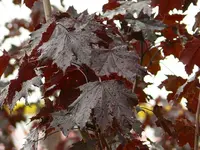
Acer platanoides 'Crimson King' is a deciduous shade tree valued for its deep purple to burgundy foliage that holds color from spring through fall. It forms a broad, rounded crown and is usually grown as a feature or street tree in larger gardens and landscapes.

This cultivar originates from the Norway maple, which is native to parts of Europe and western Asia but is widely planted in North America. It is generally vigorous and tolerant, which makes it relatively straightforward to care for Norway Maple in suitable climates.

The tree adapts to many soil types, handles urban conditions, and copes with some drought once established, though it grows best in full sun with evenly moist, well-drained soil.

Main Plant Requirements

Care Difficulty

Easy Care

Light Preference

Full Sun

Water Requirements

Moderate Water

Temperature Preference

Cold Hardy

Hardiness Zone

3–7

Soil Texture

Loamy, Clay, Silty

Soil pH

Slightly acidic (6.5–7.0), Slightly alkaline (7.0–7.5)

Soil Drainage

Moist but well-drained

Fertilization

Minimal (feed rarely)

Get Personalized Care Plan

Scan your plant to receive care tips personalized for your specific plant

Available on iOS and Android

How to Care for the Norway Maple

Acer platanoides 'Crimson King' develops best color and structure in consistent full sun to light partial shade outdoors.

  • Provide 6–8 hours of direct sun daily; full sun promotes the deepest purple foliage, though young trees benefit from some light afternoon shade in hotter regions.
  • Tolerates partial shade with 3–5 hours of direct light, but leaves may turn more green and canopy density may decrease, especially on shaded lower branches of this Norway Maple.
  • In hot summers, protect from intense late-afternoon sun on exposed, dry sites to reduce leaf scorch; in cooler climates, open, unshaded positions are generally safe and encourage even coloring.

Acer platanoides 'Crimson King' prefers evenly moist, well-drained soil once established in the landscape.

  • During the first 2–3 years after planting, water when the top 5–8 cm of soil feels dry, applying a slow, deep soak to reach the full root zone rather than frequent light sprinkling.
  • Mature trees usually rely on rainfall, but in dry spells longer than 10–14 days with no significant rain, check soil under the mulch and water if it is dry and crumbly at spade depth.
  • Avoid waterlogged sites; persistent puddling, sour smell, or mossy, slick soil suggests poor drainage, while dull, browning leaf edges and early leaf drop suggest ongoing drought stress.

This maple is a hardy, temperate-climate tree that tolerates cold winters and moderate summer heat once established.

  • Active growth is strongest in spring and early summer at about 60–80°F (16–27°C), when soil moisture is steady and roots can expand without heat stress.
  • Dormant trees tolerate winter lows near -30°F (-34°C) in suitable regions, but young specimens benefit from wind protection and mulched roots in exposed, freezing sites.
  • In hot summers above 90°F (32°C), combine deep watering with mulch and, if possible, light afternoon shade to reduce heat stress and marginal leaf scorch on sun-exposed crowns.

This maple tolerates a wide humidity range and does not need special humidity management outdoors.

Acer platanoides 'Crimson King' grows best in deep, moisture-retentive but well-drained soil with stable structure.

  • Use a loamy soil with a mix of mineral particles and organic matter, such as native soil amended with 20–30% compost.
  • Aim for slightly acidic to neutral pH around 6.0–7.5, avoiding strongly alkaline or saline conditions that restrict nutrient uptake.
  • Improve drainage and aeration in heavy clay by incorporating coarse sand or fine gravel plus organic matter through the top 30–40 cm.
  • Avoid compacted, waterlogged, or very shallow soils, which limit root spread and increase risk of root rot and windthrow.

This large, vigorous tree is generally unsuitable for long-term container growing beyond its juvenile stage.

Acer platanoides 'Crimson King' grows well in average garden soil and usually needs only light feeding.

  • Apply a balanced slow-release tree fertilizer (for example 10-10-10) once in early spring for young or newly transplanted trees.
  • Use a low dose, at about half the label rate, spread evenly over the root zone and watered in well.
  • Avoid fertilizing in late summer or fall to prevent tender growth before winter; do not feed dormant trees in winter.
  • Improve soil health long term with a 5–8 cm layer of composted mulch over the root area, kept away from the trunk, which supports caring for Norway Maple in most yards.

Pruning Acer platanoides 'Crimson King' is mainly done to maintain structure, clearance, and tree health.

  • Carry out main pruning in late winter to very early spring before bud break, avoiding heavy cuts in late summer.
  • Remove dead, diseased, and damaged branches first, then thin crossing or rubbing shoots to reduce future wounds.
  • Use sharp, clean bypass pruners or loppers, making cuts just outside the branch collar to support proper healing.
  • Limit canopy reduction to small, well-placed cuts that refine shape and maintain strong scaffold branches rather than drastic topping.

This maple is usually grown in the ground, so transplanting young trees correctly is more important than repotting.

  • Transplant in early spring or fall when the tree is dormant, choosing a site with enough space for mature height and spread.
  • Look for signs such as roots circling the container, poor drainage, or slow growth as cues a nursery plant must be moved up or out.
  • Gently loosen or slice circling roots before planting, then set the root flare at soil level and backfill with native soil, not rich potting mix.
  • Water deeply after transplanting and maintain consistent moisture for the first 1–2 growing seasons to reduce root stress and improve establishment.

Propagation of Acer platanoides 'Crimson King' is specialized and usually left to professional growers due to cultivar traits.

  • Most plants are produced by grafting Crimson King scions onto vigorous Acer platanoides rootstocks in late winter while dormant.
  • Seed from this cultivar does not come true, so seedlings rarely match parent foliage color or growth habit.
  • Softwood cuttings taken in early summer root only under controlled conditions with mist, bottom heat, and rooting hormone.
  • Home gardeners typically purchase young grafted trees instead of trying to start new plants from seed or cuttings.

Mature Acer platanoides 'Crimson King' is fully hardy in most temperate climates and usually needs minimal winter care.

  • Apply a 5–8 cm layer of organic mulch around the root zone in late fall, keeping it a few cm away from the trunk to stabilize soil temperature.
  • Water young trees well in late fall during dry weather so roots enter winter fully hydrated.
  • In very cold or exposed sites, stake young trees and use a breathable trunk wrap to limit sunscald and rodent damage.

Care Tips

Early leader selection

In the first 3–5 years, choose a single strong central leader and remove competing upright stems on a dry day to develop a stable, wind-resistant canopy.

Protect from trunk scorch

On young trees with full sun exposure, use a breathable tree guard or light-colored trunk wrap from fall to early spring to reduce bark cracking and sunscald on the southwest side.

Surface root management

When shallow roots begin to lift lawn or paving, add a 2–5 cm layer of mulch over the root zone instead of adding soil, and keep turfgrass away from the trunk to prevent mower damage.

Under-canopy planting strategy

Choose drought-tolerant, shade-adapted groundcovers or use mulch rather than lawn directly under the canopy, since dense surface roots and heavy shade make turf establishment difficult when growing Norway Maple.

Storm and ice assessment

Before winter in colder regions, inspect for weak crotch angles and crossing branches, then selectively thin or shorten them to reduce breakage from ice or heavy wet snow.

Common Pests and Diseases

Norway maple aphid

This pest feeds on the undersides of leaves, causing curling, distortion, and sticky honeydew that can lead to sooty mold. Symptoms include slowed growth and heavy insect presence on tender shoots.

Solution

Spray foliage thoroughly with a strong stream of water to dislodge colonies, then use insecticidal soap or a horticultural oil labeled for maples if populations remain high. Encouraging natural predators like lady beetles and avoiding excessive nitrogen fertilization helps reduce recurring outbreaks when caring for Norway Maple.

Verticillium wilt

This disease is caused by a soilborne fungus that blocks water-conducting tissues, leading to sudden wilting, branch dieback, and sometimes one-sided canopy decline. Symptoms include olive-green to brown discoloration in the sapwood when branches are cut.

Solution

Prune out affected branches well into healthy wood, disinfecting tools between cuts, and ensure the tree is well watered during dry periods without waterlogging the soil. Severely affected trees often decline over time and may need removal; avoid replanting susceptible maples in the same spot and choose resistant replacement species instead.

Tar spot

This disease produces yellow spots on leaves that develop into raised, black, tar-like lesions by late summer. Symptoms include heavy leaf spotting and early leaf drop, but little long-term harm to established trees.

Solution

Rake and remove fallen leaves in autumn to reduce the amount of fungus that overwinters and reinfects in spring. Where the problem is chronic and highly cosmetic, improve air circulation around the canopy and avoid overhead irrigation that keeps foliage wet for long periods.

Galls from maple spindle gall mite

These mites cause small, narrow, spindle-shaped galls that protrude from the upper leaf surface, often in large numbers. Symptoms include rough or bumpy leaves but usually little effect on overall tree health.

Solution

No chemical treatment is usually needed; focus on general tree vigor with proper watering and mulching. For severe, recurring issues, consult a local arborist about timing of a dormant-season horticultural oil to reduce overwintering mite populations.

Leaf scorch

This disorder occurs when water supply to the leaves cannot keep up with transpiration, causing browning along leaf edges and between veins, often on exposed or upper branches. Symptoms include crispy margins, especially during hot, dry, or windy weather or in compacted, shallow soils.

Solution

Provide deep, infrequent watering during prolonged dry periods, and maintain a 5–8 cm layer of organic mulch over the root zone, keeping it away from the trunk. Avoid heavy soil compaction and limit high-salt or high-nitrogen fertilization, which can increase stress and scorch severity.

Interesting Facts

Stable purple foliage

This cultivar maintains deep purple foliage throughout the growing season, rather than turning green in summer like many other purple-leaved maples, because it produces high levels of anthocyanin pigments in its leaves.

Seedling color variation

Although the parent tree has dark purple leaves, seedlings grown from its winged seeds often revert to green or mottled foliage, because the purple trait is not reliably passed on by sexual reproduction and is usually preserved only by grafting.

Strong urban tolerance

This tree is widely planted along streets and in parking lots because it tolerates air pollution, road salt, compacted soils, and short periods of drought better than many other ornamental maples, making it a common choice in urban planting schemes when planning for growing Norway Maple.

Botan icon

Did you know?

This cultivar was selected in the mid-20th century in Europe specifically for its combination of long-lasting purple foliage and vigorous growth, and it helped popularize dark-leaved shade trees in city landscapes across North America and Western Europe.

FAQs about Norway Maple

Leaf browning often results from drought stress, compacted soil, road salt, or leaf scorch from reflected heat. Check soil moisture, mulch the root zone, avoid heavy foot or vehicle traffic over roots, and prune only dead or damaged branches.

Grow Healthy Plants with Botan Care

Keep your plants happy and healthy with plant identification, disease detection, and easy care guidance.

Botan plant care app — identify plants on mobile

Explore More Plants