Rootstock selection
When establishing an orchard or windbreak, choose disease-resistant, locally adapted rootstock or seedlings from regional seed sources to improve long-term vigor and cold tolerance.

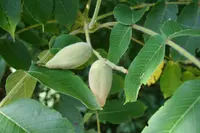
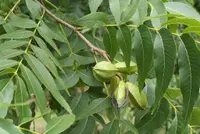
Manchurian walnut, Juglans mandshurica, is a hardy deciduous tree grown mainly for its edible nuts and attractive, long, feather-like leaves. It develops a broad crown and can become a large landscape tree, so it suits spacious gardens rather than small yards.
This species is native to northeastern Asia, including parts of China, Korea, and the Russian Far East, where it grows in cool temperate forests. It prefers full sun, moist but well-drained soil, and does best in regions with cold winters.
Growth is relatively fast and the tree is tough once established, but it needs room for its deep roots and large canopy. Understanding how to care for Manchurian walnut helps prevent problems with competition from nearby plants and ensures steady nut production.

Care Difficulty
Moderate Care

Light Preference
Full Sun

Water Requirements
Moderate Water

Temperature Preference
Cold Hardy

Hardiness Zone
3–7

Soil Texture
Loamy, Sandy, Clay

Soil pH
Acidic (5.5–6.5), Slightly acidic (6.5–7.0)

Soil Drainage
Moist but well-drained

Fertilization
Minimal (feed rarely)
Scan your plant to receive care tips personalized for your specific plant
Available on iOS and Android
This hardy deciduous tree develops best with strong outdoor light exposure and open sky.
This deep-rooted tree prefers steadily moist, well-drained soil rather than frequent shallow watering.
This cold-hardy species thrives in temperate climates with distinct seasons.
Humidity is rarely a limiting factor for Juglans mandshurica in typical outdoor conditions.
This species prefers deep, moist, well-drained mineral soils with stable structure.
This tree is generally unsuitable for long-term container growing and is best kept in the ground.
This hardy tree needs minimal feeding but benefits from light nutrition on poor soils during early growth.
Pruning focuses on structural training and removal of problem wood rather than frequent shaping.
This tree is usually grown in the ground and should be transplanted carefully while still young.
Propagation is most reliable from seed, as vegetative methods are less common and more difficult.
This species is cold hardy in many temperate climates and usually needs only basic winter care once established.

Plant Health Check
Not sure what's wrong with your plant? Check your plant's health inside the app.
This species survives winter temperatures below −30°F, which allows it to grow naturally in northeastern Asia where many other walnut relatives cannot persist.
Like other walnuts it releases the chemical juglone into the soil, but this species is noted for especially strong growth suppression on nearby sensitive plants, influencing which understory species can coexist with it.
Its leaves are among the most finely divided in the walnut genus, often with 15–19 leaflets, creating a light, filtered shade pattern that affects undergrowth light conditions in forests and in landscapes where people grow Juglans mandshurica.

Manchurian walnut hybridizes readily with other walnut species, and its cold-hardiness genes have been used in breeding programs to develop hardier timber and nut trees for regions with severe winters.
Young trees usually grow 30–60 cm per year once established, slowing with age. Growth rate depends on climate, soil fertility, moisture, and root space. Cooler climates and compacted or dry soils noticeably reduce annual extension growth.
Keep your plants happy and healthy with plant identification, disease detection, and easy care guidance.