Wind‑firm training
Stake young trees on the windward side for the first 2–3 years and loosen the ties annually so the trunk can flex and develop strong taper without rubbing damage.

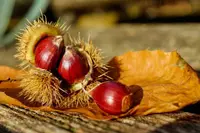
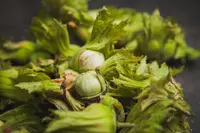
Sweet chestnut, Castanea sativa, is a large deciduous tree grown for its edible nuts and attractive, textured bark. It forms a broad, rounded crown with long, serrated leaves and showy catkin flowers followed by spiny burs containing the chestnuts.
This species is native to southern Europe and western Asia but is widely cultivated in temperate regions for both crops and shade. It prefers sunny, open sites with deep, well-drained, slightly acidic soils and steady moisture.
Growth is vigorous and long-lived, but young trees need space, protection from strong winds, and consistent care for Sweet Chestnut to establish well. Once mature and well-sited, it is relatively resilient and low-maintenance.

Care Difficulty
Moderate Care

Light Preference
Full Sun

Water Requirements
Moderate Water

Temperature Preference
Cold Hardy

Hardiness Zone
5–8

Soil Texture
Sandy, Loamy, Organic-rich

Soil pH
Strongly acidic (4.5–5.5), Acidic (5.5–6.5)

Soil Drainage
Moist but well-drained

Fertilization
Minimal (feed rarely)
Scan your plant to receive care tips personalized for your specific plant
Available on iOS and Android
Castanea sativa needs ample direct light outdoors for strong growth and nut production.
Castanea sativa prefers evenly moist, well-drained soil and reacts poorly to standing water.
This tree is cold hardy yet needs moderate warmth for reliable flowering and nut set.
Castanea sativa handles a broad humidity range but grows best in moderately humid outdoor air.
Castanea sativa prefers deep, well-aerated, slightly acidic mineral soils.
This species can be grown in containers only for the short to medium term, as growth eventually outpaces pot volume.
Castanea sativa grown in the ground usually needs only modest feeding once established.
Pruning Castanea sativa focuses on structural strength, safety, and light penetration rather than frequent shaping.
Castanea sativa is usually grown outdoors and is transplanted rather than kept long term in containers.
Propagation of Castanea sativa is usually done from seed or by grafting selected cultivars onto seedling rootstocks.
Established Castanea sativa trees are cold hardy in much of the US and usually need minimal winter attention.

Plant Health Check
Not sure what's wrong with your plant? Check your plant's health inside the app.
Castanea sativa was widely cultivated by the Romans, who selectively planted it for reliable nut production across southern and central Europe, shaping many present-day chestnut forests.
Mature sweet chestnut trees can live for many centuries and develop massive, hollow trunks, allowing them to remain structurally stable and biologically active even after the heartwood has decayed.
The nuts of this species are unusually high in starch compared with most other tree nuts, which makes them closer in composition to cereal grains and explains their historical use as a staple food and flour source.

Some of the oldest known sweet chestnut trees, such as the famous specimens in Sicily and on the slopes of Mount Etna, are estimated from historical records and trunk size to be well over 1,000 years old, making this species one of Europe’s most long-lived cultivated trees.
Growth is relatively rapid in youth, often 30–60 cm per year under good conditions, then slowing with age. Rate depends on climate, soil fertility, water availability, and space. Pruning and competition from other trees also influence vigor.
Keep your plants happy and healthy with plant identification, disease detection, and easy care guidance.