Plan root distance
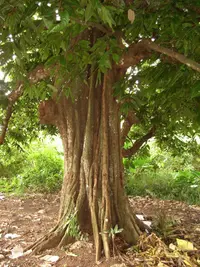
Plant at least 15–20 m away from buildings, drains, and septic systems, since the very aggressive root system will seek out moisture and can damage underground infrastructure.


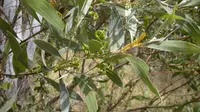
The weeping willow, Salix babylonica, is a fast-growing deciduous tree known for its long, pendulous branches and narrow, lance-shaped leaves. It forms a broad, fountain-like crown that creates deep shade and a strong visual focal point in larger gardens and landscapes.
This species naturally occurs in parts of northern China but has been widely planted in temperate regions, especially near ponds, rivers, and low-lying damp ground. It prefers full sun, consistently moist soil, and ample rooting space, which are key points when planning how to care for weeping willow.
Its rapid growth and tolerance of wet or heavy soils make it relatively easy to establish, but the brittle wood and extensive root system can require thoughtful site selection and ongoing structural pruning.

Care Difficulty
Moderate Care

Light Preference
Full Sun

Water Requirements
Keep Soil Moist

Temperature Preference
Cold Hardy

Hardiness Zone
4–9

Soil Texture
Loamy, Silty, Clay

Soil pH
Acidic (5.5–6.5), Slightly acidic (6.5–7.0)

Soil Drainage
Waterlogged tolerant

Fertilization
Minimal (feed rarely)
Scan your plant to receive care tips personalized for your specific plant
Available on iOS and Android
This fast-growing tree needs abundant, consistent sunlight to support vigorous canopy and root development.
This moisture-loving tree thrives in consistently damp soil but still benefits from some drainage control.
This species is cold hardy yet also tolerates warm summers when soil moisture is stable.
Salix babylonica grows best in moderate humidity but is usually more limited by soil moisture than by air moisture.
Salix babylonica prefers deep, moisture-retentive soil that still allows air to reach the roots.
This species can be grown in containers only as a short-term or dwarf specimen due to its vigorous root system.
Salix babylonica benefits from modest, well-timed feeding rather than heavy fertilization.
Salix babylonica responds well to structured pruning that maintains a strong framework and flowing shape.
This species is usually grown in-ground, so focus on careful transplanting rather than frequent repotting.
Salix babylonica is commonly propagated from hardwood or softwood cuttings taken in the active season.
Established Salix babylonica trees are moderately cold hardy and need limited winter care in most mild climates.

Plant Health Check
Not sure what's wrong with your plant? Check your plant's health inside the app.
Despite the epithet babylonica, this species is native to northern China, not to the historical region of Babylon; the name arose from a mistranslation of biblical references to willows by rivers of Babylon.
The tree forms long, slender branchlets that hang in dense curtains, a growth pattern genetically fixed in S. babylonica and responsible for its characteristic umbrella-shaped crown.
Under suitable conditions this species can reach small-tree size only a few years after planting, a growth strategy that allows it to rapidly colonize moist riverbanks and disturbed wet soils.

Historically, S. babylonica was widely planted along waterways and in parks across Eurasia and North America as a living symbol of mourning and melancholy, influencing poetry, painting, and cemetery design for centuries due to its pronounced drooping silhouette.
This species is very fast-growing, often adding 1.5–2.5 ft per year in suitable conditions, sometimes more when young. Rapid growth depends on consistent moisture, full sun, and ample root space away from compacted or heavily disturbed soil.
Keep your plants happy and healthy with plant identification, disease detection, and easy care guidance.