Wind-hardening young trees
During the first 2–3 seasons, gradually expose young plants to stronger, unsheltered wind so trunks and roots develop sturdier tissue before facing full site conditions.

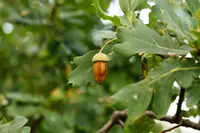
Cork oak, Quercus suber, is a long-lived evergreen tree known for its thick, spongy bark that is harvested to make natural cork. It has leathery, dark green leaves with a pale underside and a broad, rounded crown when mature.
This species is native to the western Mediterranean, where it grows in dry, warm woodlands with poor, sandy or rocky soils. It grows slowly but becomes very large over time, so it suits long-term landscapes more than small gardens.
Understanding how to care for cork oak starts with providing full sun, well-drained soil, and protection from very cold winters, especially for young trees or container-grown specimens.

Care Difficulty
Moderate Care

Light Preference
Full Sun

Water Requirements
Low Water

Temperature Preference
Warm Climate

Hardiness Zone
8–10

Soil Texture
Sandy, Loamy, Rocky

Soil pH
Slightly acidic (6.5–7.0), Neutral (7.0)

Soil Drainage
Well-drained

Fertilization
Minimal (feed rarely)
Scan your plant to receive care tips personalized for your specific plant
Available on iOS and Android
This Mediterranean evergreen oak thrives with abundant direct sun and only limited shade.
This drought-tolerant oak prefers deep, infrequent watering once established rather than frequent light applications.
This species is adapted to mild, Mediterranean-type climates with warm, dry summers and cool, damp winters.
Humidity is rarely critical for Quercus suber, which naturally tolerates fairly dry air.
Quercus suber prefers mineral, well-aerated soil that drains quickly but retains some moisture at depth.
This species can be grown in containers for many years when root space and stability are carefully managed.
Quercus suber is adapted to low-nutrient soils, so fertilization should be light and targeted.
Quercus suber benefits from thoughtful structural pruning rather than frequent cutting back.
Cork oak is usually grown in the ground, so the focus is on careful transplanting of young trees.
Propagation of Quercus suber is mainly done from seed and is moderately demanding for home growers.
Mature cork oak trees are fairly cold tolerant in mild-winter regions and need limited winter care.

Plant Health Check
Not sure what's wrong with your plant? Check your plant's health inside the app.
The bark of this species can be harvested for cork every 9–12 years without killing the tree because the cork layer regenerates from a living tissue called the phellogen, or cork cambium.
Its thick, insulating cork bark helps protect the living tissues from wildfires, allowing many mature trees to survive burns that would kill most other broadleaf species in the same habitat.
In traditional cork oak woodlands, known as montados and dehesas in the western Mediterranean, this species forms open forests that support high biodiversity, including endangered birds, invertebrates, and grazing livestock.

Individual cork oaks can live for several centuries, and a single tree may be harvested for cork repeatedly over much of its lifespan, with commercial-quality cork often obtained only after the first 2–3 harvest cycles once the tree is mature.
Growth is slow to moderate. Young trees often add about 20–30 cm per year, sometimes up to 45 cm in ideal conditions. Rate depends on climate, soil quality, water availability, and root space.
Keep your plants happy and healthy with plant identification, disease detection, and easy care guidance.