English oak Care (Quercus robur)

Also known as: English Oak, Truffle Oak, European Oak, French oak, common oak, Acorn Tree
English oak

About English oak

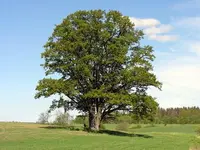
English oak, Quercus robur, is a long-lived deciduous tree best known for its sturdy trunk, broad crown, and deeply lobed leaves. It develops a strong, wide root system and forms a dense, spreading canopy as it matures.

This species is native to much of Europe and parts of western Asia, where it dominates many natural woodlands and park landscapes. It produces acorns that support wildlife and help regenerate new trees.

Quercus robur grows slowly when young and needs space, patience, and consistent conditions, which can make it challenging for small gardens. Those learning how to care for English oak should know it prefers full sun, moderately moist but well-drained soil, and stable outdoor conditions.

Main Plant Requirements

Care Difficulty

Moderate Care

Light Preference

Full Sun

Water Requirements

Moderate Water

Temperature Preference

Cold Hardy

Hardiness Zone

4–8

Soil Texture

Sandy, Loamy, Clay

Soil pH

Acidic (5.5–6.5), Slightly acidic (6.5–7.0)

Soil Drainage

Moist but well-drained

Fertilization

Minimal (feed rarely)

Get Personalized Care Plan

Scan your plant to receive care tips personalized for your specific plant

Available on iOS and Android

How to Care for the English oak

This species thrives as a full-sun tree but adapts modestly to light shade, especially when young.

  • Provide 6–8 hours of direct sun daily for strongest growth, with at least 4 hours of unshaded midday or afternoon light in open sites.
  • Young English oak trees tolerate light or dappled shade, but dense shade leads to thin crowns, longer, weaker shoots, and reduced acorn production.
  • In hot, dry regions, some afternoon shade reduces leaf scorch, while in cool climates full sun all day promotes dense branching and sturdy wood.

This deep-rooted oak prefers evenly moist, well-drained soil during establishment, then becomes drought-tolerant.

  • During the first 2–3 growing seasons, water deeply when the top 5–8 cm of soil are dry, aiming to moisten the top 30–45 cm of soil profile.
  • In established trees, rely mainly on rainfall, watering only in prolonged dry spells when leaves dull, curl slightly at edges, or new growth stalls.
  • Avoid standing water or compacted clay; signs of overwatering include yellowing leaves, dieback of small twigs, and persistent wet soil around surface roots.

This temperate-climate oak tolerates a wide temperature range, with strongest growth in mild summers and cold winters.

  • Active growth is best around 60–77°F (16–25°C), with cool, moist springs supporting healthy leaf and root development.
  • Mature trees tolerate winter lows near -20°F (-29°C) once established, but newly planted specimens benefit from mulch to buffer freeze–thaw cycles.
  • Heat tolerance is good up to about 95°F (35°C) if soil moisture is adequate; extended extreme heat plus drought can cause leaf scorch and early leaf drop.

This species tolerates a wide humidity range and does not need special humidity management outdoors.

This oak prefers deep, fertile, moderately moist soil with strong structure and consistent aeration.

  • Use a loamy mix with 40–60% mineral soil and 20–40% mature compost to support long-term root development.
  • Aim for slightly acidic to neutral pH around 6.0–7.0; avoid strongly acidic or alkaline sites that restrict nutrient uptake.
  • Ensure drainage is steady, not rapid; avoid waterlogged clay and very shallow, compacted ground that suffocates roots.
  • For container starts of Quercus robur, blend loam, compost, and coarse sand or fine grit in roughly equal parts to balance moisture retention and drainage.

This species can be grown in containers only for its juvenile stages and stays healthiest when kept as a temporary potted tree.

  • Select a tall, heavy container to anchor the increasingly top-heavy canopy and reduce tipping in strong winds.
  • Use a coarse, mineral-rich mix that resists long-term compaction so deep taproot growth remains aerated.
  • Position the pot where roots are shaded from intense sun to limit overheating and rapid moisture loss in summer.

This species is usually self-sufficient on reasonably fertile soil, so fertilization is only helpful on very poor or depleted sites when caring for English oak.

  • Use a balanced slow-release fertilizer (for example 10-10-10) or well-rotted compost applied thinly over the root zone in early spring.
  • Feed once in spring and, if growth is weak, once again in early summer; avoid late-summer applications that stimulate tender growth.
  • Apply at half the package rate for trees, keeping granules away from direct contact with trunk and main roots.
  • Do not fertilize during winter dormancy; focus instead on watering during dry spells and maintaining a natural mulch layer.

Quercus robur benefits from light, well-timed pruning to maintain structure and safety rather than tight shaping.

  • Carry out main pruning in late winter to very early spring, before bud break, to reduce sap bleeding and disease risk.
  • Remove dead, diseased, crossing, or storm-damaged branches using clean, sharp bypass pruners or a handsaw for thicker wood.
  • Thin congested inner branches carefully to improve light penetration and airflow while preserving the tree’s natural outline.
  • Avoid heavy crown reduction; instead, make targeted cuts to guide strong framework branches and stable long-term growth.

Young plants of this species may start in containers, but long-term management focuses on timely transplanting to open ground.

  • Transplant when roots circle the pot, growth slows despite good care, or the tree becomes unstable in its container.
  • Plan moves for late fall or very early spring, when the tree is dormant and soil is workable but not waterlogged.
  • Expect container-grown trees to need a larger pot or ground planting every 2–3 years in the first decade.
  • Water thoroughly before and after moving, keep the root ball intact, backfill with existing soil, and mulch to reduce root stress and moisture loss.

Quercus robur is most practically propagated from seed, with vegetative methods used mainly in specialized settings.

  • Collect healthy acorns in fall, discarding any with holes or obvious damage, and sow fresh for best viability.
  • Cold stratify acorns for 6–12 weeks at about 34–41°F in slightly moist medium to break dormancy.
  • Sow into deep containers or nursery beds in a free-draining mix, placing acorns on their side and covering lightly.
  • Keep substrate evenly moist, protect from rodents, and grow seedlings on in full sun to light shade for 1–2 years before field planting.

This species is cold hardy across most temperate climates and usually needs minimal winter care once established in the ground.

  • Young or recently transplanted trees benefit from 5–8 cm of organic mulch over the root zone, kept away from the trunk.
  • Container-grown specimens should be placed in a sheltered, unheated but frost-free area or sunk pot and all into the ground.
  • Avoid winter fertilization; focus on soil moisture monitoring during dry, frost-free periods to prevent root desiccation.

Care Tips

Early leader training

In the first 3–5 years, select one strong central leader and remove or shorten competing upright shoots during late winter to build a stable, storm-resistant crown.

Wide staking method

If planting in a windy site, use 2–3 low, flexible stakes set outside the root ball with soft ties, allowing slight trunk movement that encourages a stronger root system and taper.

Root flare protection

Keep mulch and soil pulled back 5–10 cm from the trunk so the root flare is visible, which reduces risk of rot, girdling roots, and bark damage.

Branch spacing management

Gradually thin closely spaced or steeply angled branches on the main trunk while the tree is young, aiming for well-spaced lateral branches that are 20–50 cm apart vertically to improve long-term structure.

Acorn and seedling control

In landscapes where self-seeding is not desired, promptly rake up acorns in fall and remove unwanted seedlings in spring while small, which is a practical part of caring for English oak in managed gardens.

Common Pests and Diseases

Oak powdery mildew

This disease causes a white, powdery coating on young leaves, shoots, and sometimes acorns, often leading to distorted, stunted growth. Symptoms include reduced vigor in heavily affected young trees, especially in shaded or damp sites.

Solution

Prune and dispose of infected young shoots to reduce inoculum, and improve light and air movement around the canopy by thinning nearby vegetation. For high-value specimens, targeted applications of a labeled fungicide during leaf expansion can reduce infection; avoid excess nitrogen fertilization, which encourages soft, susceptible growth.

Oak mildew (Erysiphe alphitoides)

This disease is a specific powdery mildew on English oak seedlings and saplings, producing dense white patches on the upper leaf surface and sometimes causing premature leaf drop. Symptoms include heavily mildewed flushes of new leaves in late spring and summer, especially in crowded nursery or landscape settings.

Solution

Remove and destroy badly infected leaves and shoots and avoid overhead watering that increases humidity around foliage. In nurseries or young plantings, increase spacing, improve airflow, and, if needed, use a suitable systemic fungicide timed to new leaf flush to protect the most vulnerable growth while following local regulations for Quercus robur care.

Oak processionary moth

This pest defoliates English oak by feeding on leaves in late spring and early summer, and the caterpillars carry irritating hairs that affect humans and animals. Symptoms include bare branches, ragged foliage, and visible nests of silk on trunks and branches in affected regions.

Solution

Do not handle caterpillars or nests; contact local forestry, public health, or tree care authorities where this species is established to arrange safe removal. For individual trees, a certified arborist can remove nests mechanically or apply targeted biological treatments (such as Bacillus thuringiensis) at early larval stages to limit defoliation and health risks.

Oak leaf blister

This disease causes raised, blister-like swellings on leaves that start pale green or yellow and later turn brown, often giving foliage a puckered appearance. Symptoms include scattered deformed leaves but usually little direct impact on overall tree health.

Solution

Rake and remove fallen leaves in autumn to reduce overwintering spores, especially around young or stressed trees. In landscapes where appearance is important, a preventive fungicide spray early in spring as buds break can limit infection, but it is rarely needed on established, healthy trees if good sanitation and general cultural care are maintained.

Acorn weevil

These insects lay eggs inside developing acorns, where larvae feed and hollow out the seeds, reducing viable acorn production and natural regeneration. Symptoms include acorns with small exit holes and many acorns that are light, crumbly, or empty when opened.

Solution

Gather and destroy fallen acorns in late summer and autumn to interrupt the life cycle and reduce local populations. For managed landscapes or seed production, combine ground sanitation with encouraging natural predators such as birds and ground beetles, and avoid storing infested acorns, which allows larvae to complete development and re-emerge near trees.

Interesting Facts

Iconic European keystone

This species is one of the most important keystone trees in temperate Europe, supporting hundreds of insect, lichen, moss, and fungal species that depend specifically on its wood, bark, and leaves.

High tannin foliage

Its leaves and bark are rich in tannins, a group of bitter polyphenols that slow decomposition and help protect the tree against many herbivores and microbial pathogens.

Distinctive lobed leaves

The leaves have rounded lobes with short, almost invisible stalks and small ear-like lobes at the base, a combination that helps distinguish it from closely related oak species in the wild.

Botan icon

Did you know?

Some individual English oaks in Europe are estimated, based on historical records and growth patterns, to be well over 1,000 years old, making them living historical landmarks that have persisted through major human cultural and climatic changes.

FAQs about English oak

Growth is slow to moderate. Young trees usually add about 20–40 cm of height per year, sometimes up to 60 cm in ideal conditions. Growth slows noticeably with age as energy shifts to trunk thickening and crown development.

Grow Healthy Plants with Botan Care

Keep your plants happy and healthy with plant identification, disease detection, and easy care guidance.

Botan plant care app — identify plants on mobile

Explore More Plants