Early leader training
In the first 3–5 years, select one strong central leader and remove competing upright shoots during late winter to build a stable crown and reduce future storm breakage.

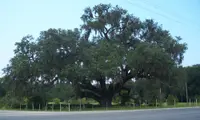
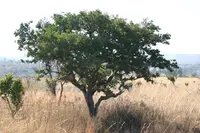
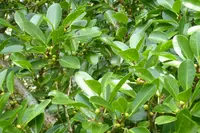
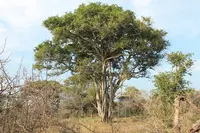
Live oak, Quercus virginiana, is a long-lived, evergreen to semi-evergreen tree native to the southeastern United States and coastal areas. It forms a wide, spreading crown with strong, arching branches and dense, glossy foliage that stays green in mild winters.
In landscapes it becomes a large shade tree, valued for its high wind resistance and durable wood. Its slow to moderate growth and eventual size mean it needs ample space, but established trees are relatively low-maintenance.
It prefers full sun, well-drained soil, and moderate moisture, which helps explain how to care for live oak in most home gardens.

Care Difficulty
Moderate Care

Light Preference
Full Sun

Water Requirements
Low Water

Temperature Preference
Warm Climate

Hardiness Zone
8–10

Soil Texture
Sandy, Loamy, Clay

Soil pH
Acidic (5.5–6.5), Slightly acidic (6.5–7.0)

Soil Drainage
Well-drained

Fertilization
Minimal (feed rarely)
Scan your plant to receive care tips personalized for your specific plant
Available on iOS and Android
This species develops best as a sun-loving canopy tree with high light exposure in open landscapes.
This long-lived oak prefers deep, infrequent watering that encourages an extensive root system.
This oak is adapted to warm temperate and subtropical climates with moderate seasonal variation.
Humidity is rarely critical for Quercus virginiana, which adapts well to typical outdoor air levels in its range.
Quercus virginiana prefers deep, well‑structured mineral soils that drain freely but retain some moisture.
This species is not well suited to long‑term container growing due to its eventual size and extensive root system.
Mature Quercus virginiana growing in the ground usually needs little fertilization if soil is reasonably fertile.
Thoughtful pruning keeps Quercus virginiana structurally sound and safe without disturbing its natural form.
Quercus virginiana is usually transplanted from nursery containers into the landscape while still young.
Quercus virginiana is most often propagated by seed, with vegetative methods used mainly in specialized production.
Established Quercus virginiana in suitable climates is generally cold hardy and needs minimal winter care.

Plant Health Check
Not sure what's wrong with your plant? Check your plant's health inside the app.
This live oak keeps its canopy green all winter but actually sheds and replaces most of its leaves in early spring, a pattern called facultative evergreen behavior in mild climates.
Its low, wide crown and extremely strong, dense wood help it withstand hurricane‑force winds and salt spray, which is why it is a dominant tree in many maritime forests of the southeastern United States.
The tree’s heavy acorn crops and dense branching structure provide food and shelter for many birds, small mammals, and invertebrates, making it a keystone species in coastal oak hammocks.

Live oak timber from this species was so valued for its natural strength and curved limb shapes that it formed the structural framework of historic wooden warships such as the USS Constitution, whose hull famously resisted cannon fire.
Growth is moderate when young, often 30–60 cm per year under good conditions, then slowing with age. It can take 40–80 years to approach mature size, depending on soil quality, climate, and watering consistency.
Keep your plants happy and healthy with plant identification, disease detection, and easy care guidance.