eastern white pine Care (Pinus strobus)

Also known as: Weymouth Pine, white pine, strobus pine, pumpkin pine
eastern white pine

About eastern white pine

Eastern white pine, Pinus strobus, is a long-lived coniferous tree valued for its soft needles and graceful, open form. It is typically grown as a landscape tree rather than a houseplant.

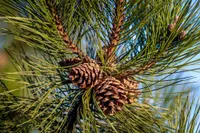
This species has blue-green needles in bundles of five and smooth gray bark that becomes furrowed with age. It naturally occurs in eastern North America, often forming mixed or pure stands in cool, well-drained forests.

Pinus strobus grows quickly in youth and can reach substantial height, so it suits large gardens and parks. It is generally adaptable but performs best in full sun, evenly moist, acidic soil, and sheltered sites.

Understanding how to care for eastern white pine starts with choosing an appropriate location, since space, wind exposure, and soil conditions strongly influence long-term health.

Main Plant Requirements

Care Difficulty

Easy Care

Light Preference

Full Sun

Water Requirements

Moderate Water

Temperature Preference

Cold Hardy

Hardiness Zone

3–8

Soil Texture

Sandy, Loamy, Rocky

Soil pH

Strongly acidic (4.5–5.5), Acidic (5.5–6.5)

Soil Drainage

Well-drained

Fertilization

Minimal (feed rarely)

Get Personalized Care Plan

Scan your plant to receive care tips personalized for your specific plant

Available on iOS and Android

How to Care for the eastern white pine

This species prefers full sun in most landscapes but tolerates some light shade.

  • Provide 6–8 hours of direct sun daily; 4–6 hours plus bright open sky is usually enough for healthy eastern white pine growth.
  • Allow light afternoon shade in hotter climates to reduce needle scorch, especially on young or newly transplanted trees.
  • Avoid dense shade under larger trees or buildings, which leads to sparse, elongated growth and increased susceptibility to disease over several seasons.

Pinus strobus prefers evenly moist, well-drained soil once established.

  • At planting and during the first 1–2 years, water deeply when the top 5–8 cm of soil feels dry, then soak the root zone rather than giving frequent shallow splashes.
  • In established trees, prioritize natural rainfall; water only during extended dry spells when needles dull, curl slightly, or small twigs begin to wilt.
  • Ensure sharply draining soil or a sloped site to prevent standing water, which causes root rot, yellowing needles, and dieback on lower branches.

This hardy conifer is adapted to cool to temperate climates with cold winters.

  • Optimal growth occurs around 55–75°F (13–24°C), with strong performance in regions that have distinct seasons and cool nights.
  • Mature trees tolerate winter lows near -30°F (-34°C); young plants benefit from wind protection and mulch to reduce freeze–thaw stress.
  • In hot regions, prolonged periods above 90°F (32°C) can stress the tree, so combine cooler site placement with soil moisture management and some afternoon shade.

This species is adapted to outdoor conditions and does not require special humidity control in most climates.

  • Ideal humidity is 30–60%, similar to typical outdoor air in its native range.
  • Tolerates dry air well, but prolonged hot, very dry winds can brown needle tips.
  • If grown in a very arid microclimate, shelter from wind and provide deep, regular soil watering instead of misting.

Pinus strobus prefers loose, well-drained, slightly acidic soil that stays evenly moist but not saturated.

  • Use a sandy or sandy-loam mix with 30–50% coarse mineral material such as sharp sand or fine grit for drainage.
  • Aim for pH 5.0–6.5, avoiding strongly alkaline soils that cause nutrient lockout and yellowing needles.
  • In containers or improved beds, combine pine bark fines, coarse sand, and a small portion of compost to add structure without creating heaviness.
  • Avoid compacted clay, standing water, or heavily peat-based mixes that hold water around the roots and reduce aeration.

This conifer can be grown in containers for a limited time, especially as a young tree or dwarf selection.

  • Choose a deep, heavy pot that resists tipping as the top growth becomes taller and more wind-exposed.
  • Select a container volume that allows a wide root zone, since lateral roots develop more than a single taproot in pots.
  • Use a sharply draining, gritty mix and elevate the pot on feet or blocks so drainage holes never sit in collected water.

This conifer grows well in average soil and usually needs only modest feeding once established.

  • In the ground, apply a light layer of compost or well-rotted organic mulch over the root zone each spring for Pinus strobus.
  • For containers or poor soils, use a balanced slow-release fertilizer (around 10-10-10) at label rates in early spring.
  • During the growing season, avoid repeated high-strength feeds; use diluted liquid fertilizer at 1/2 strength only if growth appears weak.
  • Do not fertilize in late summer or winter, as feeding outside active growth can encourage tender, frost-prone shoots.

Pruning Pinus strobus focuses on safety, structure, and removing problem wood rather than frequent shaping.

  • Best timing is late winter to very early spring, before new growth begins.
  • Remove dead, diseased, storm-damaged, or crossing branches with clean, sharp bypass pruners or a pruning saw.
  • Limit cuts to smaller branches to maintain natural form; avoid removing the central leader to prevent deformity.
  • Lightly reduce crowded interior branches to improve light and airflow, but do not cut back into bare, older wood that lacks green needles.

Pinus strobus is mainly a landscape tree, so transplanting young plants correctly is more important than frequent repotting.

  • Transplant in early spring or early fall when temperatures are mild and soil is workable.
  • Choose a site with well-drained, slightly acidic soil and full sun, planting at the same depth as in the nursery container or field.
  • Minimize root stress by keeping the root ball intact, handling it gently, and watering slowly and deeply after planting.
  • Container-grown trees need larger pots only when roots circle the container or growth stalls, usually every several years at most.

Propagation of Pinus strobus for home gardeners is typically done from seed and requires patience and specific conditions.

  • Collect ripe cones, extract seeds, and cold stratify them in moist medium at 35–40°F for about 60–90 days.
  • Sow stratified seeds in spring in a free-draining, slightly acidic mix, just barely covered, and keep evenly moist.
  • Maintain bright light, good air circulation, and cool to moderate temperatures to reduce damping-off, a fungal seedling disease.
  • Cuttings are rarely successful in home conditions; seed-grown plants are standard for long-term vigor and natural form.

This species is naturally cold hardy and usually needs minimal winter care once established in the ground.

  • Young trees benefit from 5–8 cm of organic mulch over the root zone, kept a few cm away from the trunk.
  • In very windy or exposed sites, use a breathable windbreak to limit winter desiccation of needles.
  • Container-grown trees are more vulnerable; move pots into a sheltered, unheated area or bury containers to insulate roots.

Care Tips

Establish strong leader

Inspect the central trunk annually and, if two leaders form, prune out the weaker one in late winter to maintain a single straight leader and prevent future splitting under snow or wind load.

Wind and snow planning

Position young trees away from dominant winter winds and heavy roof-shed snow, or install a temporary windbreak for the first 3–5 years to reduce leader breakage and uneven crown development.

Mulch for root protection

Apply a 5–8 cm ring of arborist wood chips or pine bark, keeping it 5–8 cm away from the trunk, to moderate soil temperature, reduce mowing damage, and encourage fine root growth near the surface.

Monitor for blister rust

In regions where white pine blister rust occurs, avoid planting near Ribes species (currants and gooseberries) and regularly inspect needles and stems for yellow-orange spots so infected material can be removed early.

Long-term spacing strategy

When growing eastern white pine in mixed plantings, allow at least 6–8 m of lateral space and plan to remove or transplant nearby shrubs as the tree matures so lower branches can develop a balanced, healthy canopy.

Common Pests and Diseases

White pine blister rust

This disease causes cankers, yellowing needles, and dieback on branches and stems, often leading to branch death over several years.

Solution

Prune out infected branches well below visible cankers during dry weather and destroy removed material, avoid planting Ribes species (currants and gooseberries) nearby, and choose resistant cultivars when possible as part of long-term Pinus strobus care instructions.

White pine weevil

This pest attacks the terminal leader, causing wilting, curling, and death of the top shoot, which can result in a crooked or forked main stem.

Solution

In early spring, monitor the top leader for wilting, prune and destroy infested leaders as soon as symptoms appear, and consider using a targeted trunk or leader spray at bud break if the tree has a history of severe attacks.

Pine needle scale

These insects appear as tiny white, elongated bumps on needles and cause yellowing, needle drop, and a generally thin, stressed canopy.

Solution

For light infestations, remove and discard heavily infested branches and encourage natural predators; for heavier problems, apply horticultural oil during the crawler stage according to label instructions, ensuring thorough coverage of needles.

Pine bark adelgid

This pest forms white, cottony clusters on bark and smaller branches and can cause thinning foliage and reduced vigor when populations are high.

Solution

Brush off small colonies with a soft brush or strong water spray, prune out heavily infested twigs, and if needed apply horticultural oil in late winter or early spring to smother overwintering stages.

Diplodia tip blight

This disease causes browning and death of new shoots, especially in the lower crown, and may lead to stunted growth and scattered branch dieback over time.

Solution

Prune and destroy infected tips and cones, disinfect pruning tools between cuts, improve air circulation around the tree, and in high-risk sites consider preventive fungicide sprays to new growth in spring following local extension recommendations.

Interesting Facts

Soft five-needle bundles

This species carries its needles in bundles of five that are long, flexible, and noticeably softer than most other North American pines, which helps distinguish it from similar species at a glance.

Key eastern forest pioneer

Eastern white pine historically dominated large areas of northeastern North America and often acts as a pioneer or early successional tree, quickly colonizing open or disturbed sites and forming tall, light-catching canopies.

Historic ship mast timber

In colonial North America, straight, tall trunks of this species were highly valued for ship masts, leading to special marking laws and heavy logging that drastically reduced old-growth stands.

Botan icon

Did you know?

Individual eastern white pines can live for 200–400 years, and some documented old-growth specimens have exceeded 45 m (150 ft) in height, making them among the tallest native trees in eastern North America.

FAQs about eastern white pine

This species grows relatively quickly, often 30–60 cm per year in youth, slowing with age. Growth rate depends on genetics, site exposure, and competition from other trees, rather than detailed Pinus strobus care practices.

Grow Healthy Plants with Botan Care

Keep your plants happy and healthy with plant identification, disease detection, and easy care guidance.

Botan plant care app — identify plants on mobile

Explore More Plants