Plan for maturity
Site the tree where it has room to reach full size, keeping at least 6–8 ft from buildings or hardscape to avoid future root and branch conflicts as it matures.

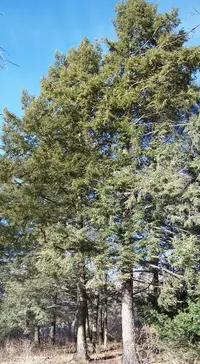
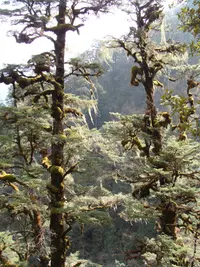
Eastern hemlock, Tsuga canadensis, is a long-lived, shade-tolerant conifer native to cool, moist forests of eastern North America. It commonly forms graceful evergreens in mixed woodlands and along stream valleys.
The tree has soft, flat needles, small hanging cones, and a pyramidal crown that becomes more irregular with age. In gardens and landscapes it is valued for its fine texture and ability to create cool, dense shade.
Growth is relatively slow and the shallow root system dislikes heat, drought, and soil compaction, which can make it more demanding in urban sites. It prefers consistent moisture, good drainage, and protection from strong drying winds, so these factors are central when planning how to care for eastern hemlock.

Care Difficulty
Moderate Care

Light Preference
Partial Shade

Water Requirements
Regular Water

Temperature Preference
Cold Hardy

Hardiness Zone
3–7

Soil Texture
Loamy, Sandy, Organic-rich

Soil pH
Strongly acidic (4.5–5.5), Acidic (5.5–6.5)

Soil Drainage
Moist but well-drained

Fertilization
Minimal (feed rarely)
Scan your plant to receive care tips personalized for your specific plant
Available on iOS and Android
This shade-tolerant conifer prefers cool, filtered light and protection from intense afternoon sun.
This species prefers consistently moist, cool soil but reacts poorly to both drought and standing water.
This conifer is strongly cold-hardy but can struggle in prolonged heat, especially with dry soil and full sun exposure.
This conifer prefers consistently cool, moist air and suffers in hot, dry conditions.
Tsuga canadensis grows best in cool, moist, aerated soil that resists both compaction and waterlogging.
This species can be grown in containers for some years, mainly as a dwarf or young specimen in cool climates.
Tsuga canadensis is light-feeding and usually needs only modest nutrition in landscape settings.
Tsuga canadensis responds well to light, thoughtful pruning that maintains its natural form.
Tsuga canadensis is usually grown in-ground, so care focuses on careful transplanting rather than frequent repotting.
Tsuga canadensis is commonly propagated by semi-hardwood cuttings and by seed in nursery production.
Tsuga canadensis is cold hardy in much of its range and usually needs minimal winter care once established.

Plant Health Check
Not sure what's wrong with your plant? Check your plant's health inside the app.
Eastern hemlock is one of the most shade-tolerant conifers in North America, able to regenerate and grow under its own dense canopy where many other tree species cannot establish.
This species forms cool, sheltered understories and dense cover that provide important winter habitat for species such as white-tailed deer and many forest birds in eastern North America.
Its needle litter decomposes slowly and tends to acidify surface soils, which can favor hemlock and a distinct suite of understory plants while discouraging some competing tree species.
Long-lived individuals of eastern hemlock can exceed 500 years of age, and some old-growth stands in eastern North America contain trees that began growing before European colonization, making them important natural archives of past climate and forest conditions.
Brown foliage often results from spider mites, winter burn, drought stress, or salt exposure. Check for fine webbing, dry soil, or browning on the windward side. Improve moisture, mulch the root zone, and reduce salt or wind exposure.
Keep your plants happy and healthy with plant identification, disease detection, and easy care guidance.