Bernier's araucaria Care (Araucaria bernieri)

Bernier's araucaria

About Bernier's araucaria

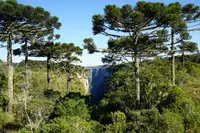
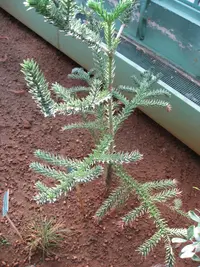
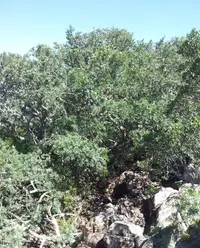
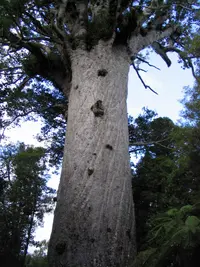
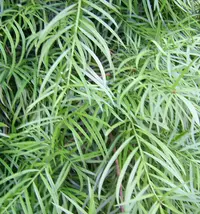
Bernier's araucaria (Araucaria bernieri) is a rare coniferous tree from New Caledonia, valued mainly by collectors and botanical gardens. It forms a straight trunk with regular, tiered branches and stiff, scale-like leaves that give it a strongly architectural look.

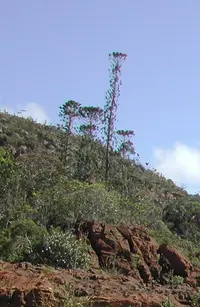
In nature it grows in subtropical to tropical conditions, often on poor, rocky soils. Growth is generally slow, which can help manage its size in cultivation but also demands patience.

Because it is adapted to mild, stable climates, it can be challenging outside suitable regions and is usually grown as a specialty outdoor specimen rather than a casual houseplant. Anyone who wants to learn how to care for Bernier's araucaria should focus on providing good light, well-drained soil, and even moisture without waterlogging.

Main Plant Requirements

Care Difficulty

Hard Care

Light Preference

Full Sun

Water Requirements

Moderate Water

Temperature Preference

Tropical / Frost Sensitive

Hardiness Zone

11–12

Soil Texture

Sandy, Loamy, Organic-rich

Soil pH

Acidic (5.5–6.5)

Soil Drainage

Well-drained

Fertilization

Minimal (feed rarely)

Get Personalized Care Plan

Scan your plant to receive care tips personalized for your specific plant

Available on iOS and Android

How to Care for the Bernier's araucaria

This species prefers bright, gentle sun with some protection during the hottest hours.

  • Provide 4–6 hours of morning sun with light afternoon shade; coastal sites can tolerate more direct exposure than inland sites.
  • Use dappled or filtered light under taller trees to protect Bernier's araucaria foliage from scorch in strong midday sun.
  • In summer, monitor for yellowing or bronzing on the south or west side as a sign of excess sun; in winter, avoid dense shade that causes sparse, leggy growth.

This conifer prefers evenly moist but not saturated soil, especially while establishing.

  • Before watering, let the top 3–5 cm of soil dry; check by pressing a finger into the soil rather than following a fixed schedule.
  • During the first 2–3 growing seasons, water deeply so moisture reaches the root zone, then allow partial drying; reduce frequency in cool or rainy weather.
  • Watch for soft, browning roots or a sour smell as signs of overwatering, and for drooping, brittle needles and dry soil as signs of underwatering; always use sharply drained, slightly sandy soil.

This species grows best in mild, frost-free climates with stable temperatures.

  • Aim for 65–80°F (18–27°C) for strongest growth, with slightly cooler nights aiding overall vigor.
  • Protect Araucaria bernieri from frost; brief dips to 40°F (4°C) may be tolerated, but foliage and young shoots can be damaged near 32°F (0°C).
  • In hot regions, plants can handle short periods up to about 90°F (32°C) if soil moisture is adequate and roots are mulched; avoid reflected heat from walls or pavement during heatwaves.

This conifer prefers moderate air moisture and usually adapts well to typical indoor humidity.

  • Aim for 40–60% humidity; avoid prolonged levels below 30%, especially near heating vents.
  • Dry air stress shows as browning or crisping at needle tips and edges while the soil remains adequately moist.
  • Increase humidity by grouping plants together, placing the pot on a pebble tray with water, or running a nearby humidifier.

Soil for Araucaria bernieri must be free-draining yet moisture-retentive enough to stay evenly damp.

  • Use a sandy-loam mix such as 50% pine bark fines, 30% coarse sand, and 20% perlite to combine structure and drainage.
  • Maintain slightly acidic to neutral pH around 6.0–7.0, avoiding strongly alkaline mixes that can limit nutrient uptake.
  • Improve aeration by using chunky components (bark, pumice, coarse perlite) and avoiding compacting the mix when filling the container.
  • Avoid heavy clay, peat-only, or waterlogged conditions, which promote root rot and reduce oxygen around the roots.

This species can be grown in containers for many years if its tall, eventually tree-like habit is managed carefully.

  • Choose a deep, wide, and heavy pot that stabilizes the tall, top-heavy trunk against wind or accidental bumps.
  • Select a container material with some weight, such as ceramic or thick-walled terracotta, to reduce tipping risk as the canopy enlarges.
  • Leave several centimeters of clearance between root ball and pot wall to buffer moisture swings while still allowing the mix to dry between waterings.

Nutrient needs are modest, so fertilizing Bernier's araucaria should stay light and conservative.

  • Use a balanced slow-release fertilizer (for example 10-10-10) or well-aged compost mixed into the topsoil in spring.
  • Feed once at the start of the growing season; container plants can receive a second light dose mid-summer.
  • For liquid products, apply at 1/2–1/4 the label rate to avoid salt buildup and root burn.
  • Stop feeding in late summer so new growth can harden before cooler weather.

Araucaria bernieri needs minimal pruning, focused mainly on health and structural safety.

  • Carry out any corrective work in late winter or very early spring, before active growth begins.
  • Remove only dead, diseased, storm-damaged, or crossing branches using clean, sharp bypass pruners or a pruning saw.
  • Avoid cutting the central leader; maintaining this single trunk preserves natural symmetrical form.
  • Limit green branch removal to small sections at a time, as heavy pruning can stress the tree and reduce vigor.

Transplanting is infrequent, as this species prefers stable conditions and does not like root disturbance.

  • Plan transplanting for cool, mild weather in early spring or early fall to reduce water stress.
  • Look for circling roots, a pot-bound rootball, or stalled growth in containers as cues to move Araucaria bernieri to a larger space.
  • Shift up only 1 pot size, handling the rootball gently and disturbing roots as little as possible.
  • Water thoroughly after planting, then keep soil evenly moist and shaded for 1–2 weeks to support recovery.

Propagation of Araucaria bernieri is specialized and usually handled by seed in professional or conservation settings.

  • Collect fresh, viable seeds and sow them in late winter to early spring for best germination.
  • Use a deep tray with a well-drained, slightly acidic mix, keeping it evenly moist but never waterlogged.
  • Maintain warm conditions around 68–77°F and bright, indirect light; germination can be slow and uneven.
  • Seedlings should be grown on in individual pots with minimal root disturbance and gradual acclimation to brighter light.

This species prefers mild, frost-free climates and benefits from thoughtful winter planning in cooler regions.

  • In-ground trees in marginal climates need a 5–8 cm layer of mulch over the root zone, kept away from the trunk.
  • Young plants and container specimens should be moved into a bright, cool, frost-free space if temperatures drop below 32°F.
  • Shelter outdoor containers beside a building and wrap pots with insulating material to limit root freezing.

Care Tips

Wind acclimation

If moving a plant from sheltered nursery conditions to a breezier site, gradually expose it to wind over 2–3 weeks to strengthen stems and reduce the risk of leader breakage.

Protect central leader

Install a discreet stake alongside the main trunk while young and loosely tie the central leader so it grows straight and is less likely to snap in storms or under accidental pressure.

Root zone mulching

Apply a 5–8 cm layer of coarse, well-drained mulch such as pine bark over the root zone, keeping it 5–8 cm away from the trunk, to stabilize soil moisture and protect surface feeder roots.

Avoid root disturbance

Plan planting location carefully and avoid digging, edging, or frequent foot traffic directly over the root zone, since this species dislikes compaction and heavy disturbance near its shallow roots.

Storm damage management

After strong winds, inspect branches for cracks or partial breaks and make clean pruning cuts just outside the branch collar to prevent tearing and reduce entry points for decay.

Common Pests and Diseases

Scale insects

This pest often settles on stems and older needles, sucking sap and causing yellowing, weak growth, and sticky honeydew on nearby surfaces.

Solution

Inspect stems and needle bases regularly, scrape or wipe off visible scales with a cotton pad dipped in alcohol, then wash the plant with lukewarm soapy water and improve light and air movement; in heavier infestations use a systemic insecticide labeled for conifers and repeat treatments according to label directions to interrupt the life cycle.

Spider mites

These insects thrive in warm, dry air and cause fine speckling, dull foliage, and in advanced cases fine webbing between twigs and needles.

Solution

Increase humidity around the plant, hose down or shower the foliage thoroughly to dislodge mites, and if needed apply a labeled miticide or insecticidal soap to all needle surfaces, repeating every 7–10 days until new growth appears clean.

Needle blight

This disease affects needles from the inner canopy outward, causing browning, banding, and premature needle drop that can leave branches thin and bare.

Solution

Prune out and discard affected shoots, avoid overhead watering, increase spacing and airflow, and in persistent cases apply a copper-based or other fungicide labeled for conifer needle blights at the start of new growth, repeating as directed to protect emerging needles.

Canker disease

This disease produces sunken, resinous lesions on branches or the trunk, leading to dieback of distal shoots and in severe cases girdling of entire limbs.

Solution

Cut out infected branches several cm below visible cankers and destroy the debris, disinfect tools between cuts, reduce plant stress through appropriate watering and nutrition, and in high-risk areas consider preventative fungicide sprays on pruning wounds and during wet seasons.

Interesting Facts

New Caledonia endemic

This conifer is naturally restricted to New Caledonia, where it grows in lowland to mid‑elevation forests on ultramafic substrates that are rich in heavy metals and poor in nutrients.

Ultramafic soil specialist

The roots tolerate ultramafic soils that contain high levels of nickel and magnesium, a harsh environment that excludes many other tree species and shapes distinctive plant communities.

Critically endangered status

It is listed as Critically Endangered on the IUCN Red List due to habitat loss, mining activities on ultramafic rocks, and its fragmented, declining populations in the wild.
Botan icon

Did you know?

Araucaria bernieri has separate male and female cones on the same tree (a condition called monoecy), and its heavy, rounded seed cones can take around 2 years to mature before releasing large, winged seeds adapted for short-distance wind dispersal.

FAQs about Bernier's araucaria

This species is evergreen, keeping its foliage year-round in suitable conditions. Individual leaves can persist for several years before shedding, so the tree maintains a stable, dense canopy rather than going through a bare winter phase.

Grow Healthy Plants with Botan Care

Keep your plants happy and healthy with plant identification, disease detection, and easy care guidance.

Botan plant care app — identify plants on mobile

Explore More Plants