Protective wind shelter
In exposed sites, install temporary windbreak cloth or plant a shelterbelt of tougher shrubs on the windward side to reduce salt-laden or drying winds that distort young kauri shoots and slow establishment.

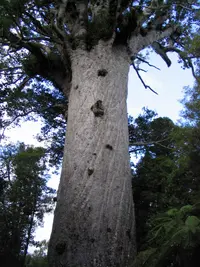
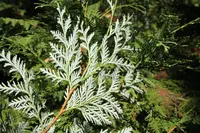
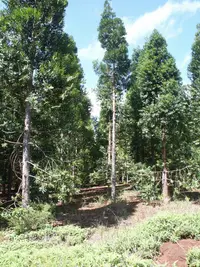
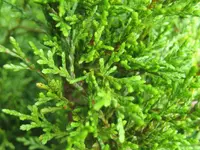
Kauri, Agathis australis, is a long-lived coniferous tree native to the northern regions of New Zealand. It is one of the largest and most impressive evergreen trees in the world. Mature trees develop a straight trunk with smooth, pale bark and a broad, rounded crown. The foliage is dense, with flat, leathery leaves that stay green year-round. In cultivation, kauri grows slowly and needs ample space, so it is usually kept as a long-term landscape tree rather than a small garden specimen. It prefers mild climates, well-drained soil, and consistent moisture. Understanding how to care for kauri early on helps support its gradual, steady growth.

Care Difficulty
Hard Care

Light Preference
Full Sun

Water Requirements
Moderate Water

Temperature Preference
Warm Climate

Hardiness Zone
10–11

Soil Texture
Sandy, Loamy, Organic-rich

Soil pH
Acidic (5.5–6.5), Slightly acidic (6.5–7.0)

Soil Drainage
Moist but well-drained

Fertilization
Minimal (feed rarely)
Scan your plant to receive care tips personalized for your specific plant
Available on iOS and Android
This species prefers bright, gentle light similar to an open forest edge.
This species prefers steadily moist but not saturated soil.
This conifer prefers mild, frost-free conditions for steady growth.
This species tolerates a wide humidity range and does not usually need special humidity management indoors.
Agathis australis prefers deep, well‑structured mineral soils that drain freely yet retain moderate moisture.
This conifer can be grown in containers for many years, especially as a slow juvenile tree.
Agathis australis grows slowly and needs only modest, careful feeding in cultivation.
Agathis australis needs minimal pruning, mainly to maintain safety and structure.
Agathis australis is rarely grown long term in containers, so focus on careful early transplanting.
This species is usually propagated from seed and can be slow and specialized.
In mild coastal climates, Agathis australis needs little winter care once established.

Plant Health Check
Not sure what's wrong with your plant? Check your plant's health inside the app.
This species is naturally confined to the northern parts of New Zealand’s North Island, where it forms distinctive kauri forests on well-drained, often podzolized soils that it helps create over time through its leaf litter and resin-rich organic matter.
Kauri wood is straight-grained, durable, and rich in resin, and both the timber and fossilized resin (kauri gum) supported major logging and gum-digging industries in the 19th and early 20th centuries, which drastically reduced old-growth kauri forests.
Kauri dieback is caused by the soil-borne oomycete Phytophthora agathidicida, which infects roots and disrupts water and nutrient transport, and strict track hygiene and soil disturbance control are used to slow its spread in remaining natural stands.

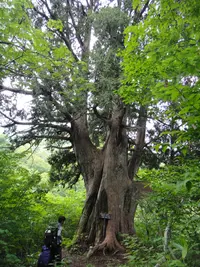
Individual Agathis australis trees can live for well over a thousand years, and some of the largest known specimens, such as Tāne Mahuta and Te Matua Ngahere, are among the oldest and most massive living trees in New Zealand’s forests.
Growth is slow in the first years, often 5–20 cm per year, then may increase slightly under ideal outdoor conditions. In cultivation it usually stays much smaller than wild trees, especially when container-grown or pruned regularly.
Keep your plants happy and healthy with plant identification, disease detection, and easy care guidance.