Root confinement strategy
In the ground or in large containers, use a root barrier or heavy-duty root pruning container to limit aggressive root spread and reduce the risk of damage to paving or pipes as the tree matures.


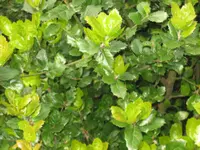
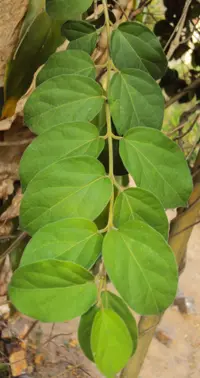
White fig (Ficus virens) is a fast-growing evergreen tree from the mulberry family, often seen as a large shade or avenue tree in tropical and subtropical regions. It develops a broad, spreading crown with dense, glossy green leaves and smooth, pale bark, sometimes forming aerial roots in very humid sites.
In nature it occurs from the Indian subcontinent through Southeast Asia to northern Australia, usually in warm, moist lowland forests and urban landscapes. Its vigorous growth, strong root system, and tolerance of pruning make it robust but less suitable for small gardens or tight spaces. It prefers bright light, consistent moisture, and well-drained soil, and these traits guide how to care for White fig in home or landscape settings.

Care Difficulty
Moderate Care

Light Preference
Partial Sun

Water Requirements
Moderate Water

Temperature Preference
Tropical / Frost Sensitive

Hardiness Zone
10–12

Soil Texture
Sandy, Loamy, Organic-rich

Soil pH
Acidic (5.5–6.5), Slightly acidic (6.5–7.0)

Soil Drainage
Moist but well-drained

Fertilization
Minimal (feed rarely)
Scan your plant to receive care tips personalized for your specific plant
Available on iOS and Android
Ficus virens thrives in bright, indirect light with some gentle direct sun each day.
Ficus virens prefers evenly moist, well-drained soil rather than constant saturation.
This species prefers warm, stable conditions and does poorly in cold or frosty climates.
This species prefers moderately humid air but usually adapts to typical indoor levels if not extremely dry.
Ficus virens grows best in a loose, well-drained, organic-rich medium that still holds steady moisture.
This fig can be grown successfully in containers when the pot is chosen and managed for its vigorous root system.
Ficus virens benefits from moderate feeding in containers, while established landscape trees often manage with minimal fertilizer if soil is reasonably fertile.
Ficus virens responds well to controlled pruning, which helps manage size and structure in landscapes or large containers.
This species is usually grown as a landscape tree, so focus on careful transplanting of young Ficus virens rather than frequent repotting.
Ficus virens is commonly propagated for landscaping by cuttings or seeds when controlled production is needed.
This tropical to subtropical tree is frost-sensitive and needs winter protection in regions with freezing temperatures.

Plant Health Check
Not sure what's wrong with your plant? Check your plant's health inside the app.
Ficus virens often begins life as an epiphyte high in another tree’s canopy, sending roots downward that gradually envelop and may eventually kill the host tree, after which its own root system forms a massive self-supporting trunk network.
In parts of its native range, this species is briefly deciduous, shedding most leaves and then flushing with very pale, often reddish or pink-tinted new foliage that gives the crown a noticeably lighter appearance for a short period.
Its figs are pollinated by tiny species-specific fig wasps that can reproduce only inside these figs, while the tree can set viable seed only when visited by its matching wasp, forming a tight mutualism between plant and insect.

In some regions of South and Southeast Asia, old Ficus virens trees with extensive buttress roots and aerial prop roots are used as informal community gathering spaces, with platforms or small shrines built among the roots and under the canopy, integrating the living tree into local social and religious life.
Growth is relatively fast in warm climates, often 60–90 cm per year once established. In cooler or drier areas, growth slows. Root space, soil fertility, and pruning practices strongly influence overall size and extension rate.
Keep your plants happy and healthy with plant identification, disease detection, and easy care guidance.

-200x133.webp)