Cyphophoenix fulcita Care

About Cyphophoenix fulcita

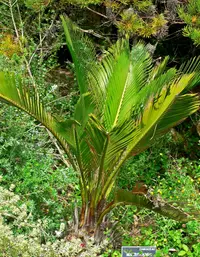
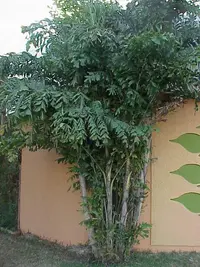
Cyphophoenix fulcita is a rare, slow-growing palm from New Caledonia, valued mainly by collectors and advanced palm enthusiasts. It forms a slender, upright trunk crowned with neatly arranged, arching fronds that give a clean, architectural look.

In nature it grows in humid, tropical forests, often on well-drained but consistently moist soils. Its slow growth and sensitivity to cold make it more challenging than common landscape palms.

Stable warmth, shelter from strong winds, and evenly moist, free-draining soil are key themes in how to care for Cyphophoenix fulcita. In cultivation it is best suited to mild, frost-free climates or protected collections such as greenhouses.

Main Plant Requirements

Care Difficulty

Hard Care

Light Preference

Partial Shade

Water Requirements

Moderate Water

Temperature Preference

Tropical / Frost Sensitive

Hardiness Zone

Unknown

Soil Texture

Sandy, Loamy, Organic-rich

Soil pH

Acidic (5.5–6.5)

Soil Drainage

Moist but well-drained

Fertilization

Minimal (feed rarely)

Get Personalized Care Plan

Scan your plant to receive care tips personalized for your specific plant

Available on iOS and Android

How to Care for the Cyphophoenix fulcita

This palm prefers bright, gentle light that mimics a lightly shaded tropical forest edge.

  • Provide 3–5 hours of soft morning sun with bright, filtered light the rest of the day for Cyphophoenix fulcita, avoiding harsh midday exposure.
  • Grow in partial shade under high tree canopies, shade cloth, or on an east-facing side of a building to reduce leaf scorch risk.
  • In summer, increase shade during heatwaves; in winter, allow more direct morning sun so foliage stays compact and does not stretch.

This species prefers consistently moist but not saturated soil around its root zone.

  • Water when the top 3–5 cm of soil feels dry, allowing deeper soil to stay slightly damp to support steady root growth.
  • Use deep, infrequent watering so moisture reaches 15–20 cm down, and rely on fast-draining, organically rich soil to prevent root rot.
  • In cooler seasons reduce frequency as evaporation slows; watch for yellowing, limp fronds from overwatering or crisp, browning tips from underwatering.

This palm favors warm, stable conditions with protection from cold snaps and extreme heat.

  • Aim for 70–85°F (21–29°C) during active growth, which supports steady leaf production and healthy root activity.
  • Protect from temperatures below 45°F (7°C); brief dips to 40°F (4°C) may be tolerated, but freezing conditions can damage or kill the growing point.
  • In hot spells above 90°F (32°C), increase shade and soil moisture while ensuring airflow to limit heat stress and leaf scorch.

This palm prefers moderately humid air and reacts poorly to very dry interiors.

  • Aim for 50–70% humidity, using a hygrometer to monitor levels near the fronds.
  • Crisping leaflet tips, stalled growth, and increased spider mites indicate humidity stress.
  • Increase humidity with a nearby humidifier, grouped plants, and a wide pebble tray that allows air flow around the pot.

This species needs a loose, fast-draining but moisture-retentive mix to avoid root suffocation and rot.

  • Use a palm-style mix of 40% peat or coco coir, 30% pine bark fines, and 30% perlite or pumice for structure and aeration.
  • Ensure water drains freely within seconds; add extra perlite or coarse sand if the mix stays wet or heavy for more than 2–3 days.
  • Keep pH slightly acidic to neutral, around 6.0–7.0, avoiding strongly alkaline mixes that can reduce nutrient availability.
  • Avoid compacted clay, unamended garden soil, or mixes heavy in fine compost that hold water around the roots.

This palm can be grown in containers for many years if the pot supports its deep, slowly expanding root system.

  • Choose a tall, heavy container shape that resists tipping as the palm gains height and leaf mass.
  • Select thick-walled clay or concrete if outdoor exposure to wind is expected, as these materials stabilize both moisture and weight.
  • Use a pot with large, unobstructed drainage holes, elevating it slightly on feet so excess water clears instead of pooling under the base.

This slow-growing palm benefits from light, consistent nutrition during warm months but reacts poorly to heavy feeding.

  • Use a balanced, palm-appropriate slow-release fertilizer or dilute balanced liquid feed at 1/2 strength.
  • Apply during spring–summer every 6–8 weeks for container plants; in-ground specimens need less frequent feeding.
  • Skip or greatly reduce feeding in late fall and winter when growth slows.
  • Water before and after feeding to prevent root burn and distribute nutrients evenly.

Pruning needs for Cyphophoenix fulcita are minimal and focus on cleanliness and safety rather than shaping.

  • Best time is late winter to early spring, before strong new growth starts.
  • Remove only dead, diseased, or badly damaged fronds using clean, sharp bypass pruners or loppers.
  • Cut fronds close to the trunk without injuring living tissue; avoid cutting green, healthy leaves.
  • Limited pruning maintains the natural crown form and supports steady, healthy growth.

This palm resents frequent disturbance, so transplant or repot only when clearly necessary.

  • Look for roots circling the pot, pushing through drainage holes, or noticeably slowed growth as cues to repot.
  • Aim to repot or transplant in late spring, every 3–5 years for containers, using a free-draining, slightly acidic mix.
  • Shift only 1 pot size up to limit shock and keep the root ball as intact as possible.
  • Water thoroughly after moving Cyphophoenix fulcita, then keep shaded and sheltered for 1–2 weeks to reduce stress.

Propagation of this palm is almost always done from seed and is considered slow and specialized.

  • Use fresh, ripe seeds, as older seed loses viability quickly.
  • Sow in warm conditions around 77–86°F with high humidity and a sterile, free-draining medium.
  • Germination can take many months; keep the medium just moist, never waterlogged.
  • Transplant seedlings gently once several true leaves develop, disturbing roots as little as possible.

This tropical palm is frost sensitive and needs thoughtful winter management in most temperate climates.

  • Avoid exposure to temperatures below about 40°F; container plants are best overwintered indoors or in a heated greenhouse.
  • Mulch the root zone with 5–8 cm of organic material in mild-winter regions to buffer soil temperature.
  • For borderline climates, wrap the trunk and crown with breathable frost cloth during cold snaps.

Care Tips

Stabilize young trunk

Stake young plants with two or three soft ties positioned above the root flare to keep the slender trunk stable in wind while still allowing slight movement that encourages strong tissue development.

Protect emerging spear

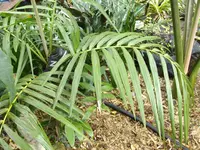
Check the central emerging spear monthly and remove trapped debris or standing water with a soft brush or cloth, since rot in this single growing point can kill the whole palm.

Gradual light hardening

When moving a plant from indoor conditions or shade to brighter exposure, increase light levels in 1–2 week steps to prevent sun scorch on the tender leaflets.

Cold event preparation

Before a forecast cold snap, water the root zone thoroughly the day before and add a thick mulch layer over the root area, which helps buffer short-term drops near the lower temperature tolerance of this species.

Root zone monitoring

Use a slim soil probe or dull chopstick pushed 10–15 cm into the root zone every few weeks to check for compaction or sour smell, then gently aerate and refresh only the upper layer if needed to avoid disturbing deeper roots while caring for Cyphophoenix fulcita.

Common Pests and Diseases

Red spider mites

This pest thrives on Cyphophoenix foliage in warm, dry and sheltered conditions, causing fine stippling, dull fronds, and webbing along leaf undersides and rachis. Symptoms include gradual yellowing and a dusty appearance on affected fronds.

Solution

Increase humidity around the palm, regularly hose down fronds (especially undersides), and isolate the plant from other palms during treatment. If infestation persists, use a targeted miticide or insecticidal soap labeled for mites, repeating applications as directed and ensuring good coverage of all frond surfaces.

Mealybugs

These insects shelter in leaf bases and crown areas, sucking sap and excreting sticky honeydew that can support sooty mold. Symptoms include cottony white clusters at leaflet bases and slowed growth in young Cyphophoenix plants.

Solution

Manually remove visible mealybugs with cotton swabs dipped in isopropyl alcohol, then rinse the plant thoroughly, directing water into leaf bases and crown. For ongoing issues, apply insecticidal soap or a systemic insecticide suitable for palms, and reduce plant stress by maintaining stable warmth and moderate, not excessive, fertilization.

Leaf spot

This disease often appears in humid, low-airflow conditions, producing small brown or tan lesions on leaflets that may coalesce into larger patches. Symptoms include spotting along the midrib and older fronds showing the most damage first.

Solution

Remove and discard heavily spotted fronds, keeping cuts clean and tools disinfected. Improve airflow and avoid wetting the foliage, and if spotting advances, apply a palm-safe fungicide labeled for leaf spot, following label intervals and focusing on new and recently emerged fronds.

Pink rot

This disease affects the crown and bases of fronds, especially on stressed or overwatered Cyphophoenix palms, leading to collapsing new growth and a soft, sometimes pinkish or salmon discoloration at infected tissue. Symptoms include spear leaf failure, with the central new frond pulling out easily and showing decay at the base.

Solution

Carefully remove and discard all obviously rotted tissue and collapsed fronds, keeping the crown area as dry as possible. Improve drainage, avoid overhead watering, and apply a systemic fungicide labeled for palm pink rot or Phytophthora-like crown rots, while also correcting cultural stress such as low light, nutrient deficiency, or chronic overwatering.

Interesting Facts

Endemic New Caledonian palm

This species occurs naturally only on New Caledonia, where it grows in a very restricted area on the main island, making it geographically specialized and vulnerable to habitat disturbance.

Montane rainforest specialist

In its native range it is associated with humid montane forests on ultramafic or other nutrient-poor substrates, showing adaptation to leached, low-fertility soils and high rainfall conditions.

Slender solitary crownshaft

The palm forms a single, unbranched trunk topped by a prominent green crownshaft and a relatively small, neat crown of pinnate leaves, which has attracted interest among collectors focused on Cyphophoenix fulcita plant care.

FAQs about Cyphophoenix fulcita

This palm is technically suitable indoors but is challenging long term. It needs high light, warm stable temperatures, and good humidity. It usually performs better in bright, sheltered outdoor spots in mild, frost-free climates.

Grow Healthy Plants with Botan Care

Keep your plants happy and healthy with plant identification, disease detection, and easy care guidance.

Botan plant care app — identify plants on mobile

Explore More Plants