Zamia Palm Care (Macrozamia riedlei)

Zamia Palm

About Zamia Palm

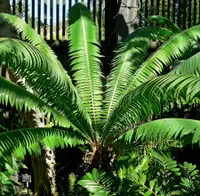
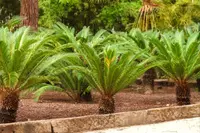
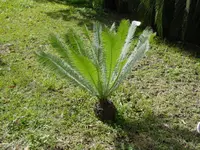
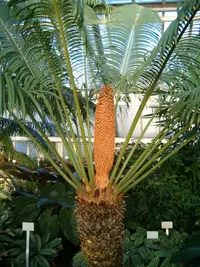
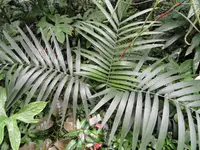
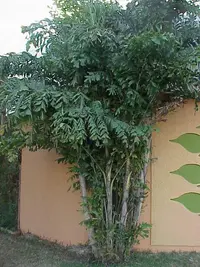
Macrozamia riedlei, often called Zamia palm, is a cycad, not a true palm. It has a stout trunk with stiff, glossy, feather-like fronds forming a dense crown. New leaves emerge from the center and expand slowly, giving the plant a sculptural, architectural look.

This species is native to southwestern Australia, where it grows in dry woodlands and heath. It is naturally slow-growing and long-lived, so it suits patient plant owners who enjoy gradual progress.

Its tough leaves, drought tolerance, and preference for well-drained soil make it moderately easy to manage once established. Understanding how to care for Zamia Palm mainly involves respecting its slow growth and avoiding overwatering.

Main Plant Requirements

Care Difficulty

Moderate Care

Light Preference

Partial Sun

Water Requirements

Moderate Water

Temperature Preference

Warm Climate

Hardiness Zone

9–11

Soil Texture

Sandy, Loamy, Rocky

Soil pH

Slightly acidic (6.5–7.0)

Soil Drainage

Well-drained

Fertilization

Minimal (feed rarely)

Get Personalized Care Plan

Scan your plant to receive care tips personalized for your specific plant

Available on iOS and Android

How to Care for the Zamia Palm

Macrozamia riedlei prefers bright, indirect light and can adapt to a range of outdoor exposures in mild climates.

  • Provide 4–6 hours of morning sun with light afternoon shade, or bright filtered light under high tree canopy.
  • Tolerates partial shade but growth slows if light drops below roughly 3–4 hours of bright exposure per day.
  • Avoid intense afternoon sun in hot climates, which can scorch leaflets; monitor summer light and add shade cloth if fronds pale or crisp at edges.

This cycad prefers deep, infrequent watering that mimics dry-season and wet-season cycles.

  • Outdoors in well-drained soil, water only when the top 5–8 cm feels dry, then soak the root zone thoroughly and allow excess to drain away.
  • Reduce watering in cool months, especially below 60°F (16°C), as Macrozamia riedlei becomes semi-dormant and uses less moisture.
  • Watch for overwatering signs such as soft crown tissue, yellowing lower fronds, or a sour soil smell, and improve drainage immediately.

This species favors mild, Mediterranean-type conditions with warm, dry summers and cool but not harsh winters.

  • Ideal growing temperatures are 65–80°F (18–27°C), with good airflow and low to moderate humidity.
  • Tolerates brief drops to about 28–30°F (-2 to -1°C) once established, but young plants are more easily damaged and benefit from protection.
  • In hot spells above 95°F (35°C), provide afternoon shade and mulch the root zone to buffer soil temperatures and reduce stress.

This species tolerates a broad humidity range and rarely needs special humidity management indoors.

  • Aim for 30–60% relative humidity; typical indoor levels suit Zamia Palm without adjustment.
  • Leaf tips browning while soil moisture is correct usually indicates very dry air or heat from nearby vents.
  • If air is consistently under 30%, group plants together or place the pot on a pebble tray with water below the pot base.

Macrozamia riedlei prefers sharply drained, mineral-based soil that stays aerated around the roots.

  • Use a sandy, gritty mix such as 50–60% coarse sand or fine gravel blended with 40–50% loam or cactus mix.
  • Keep drainage fast; excess water must pass through within seconds to prevent root and caudex rot.
  • Maintain slightly acidic to neutral pH around 6.0–7.0 for stable nutrient availability and root health.
  • Improve aeration further by adding pumice or perlite and avoid heavy peat, clay, or water-retentive potting blends.

This cycad can adapt well to container culture when the pot is chosen to support deep, slow root development.

  • Select a deep, heavy container to anchor the slowly enlarging subterranean stem and prevent tipping in wind.
  • Choose thick-walled terracotta if extra evaporation is needed in wet climates, as it reduces waterlogging risk.
  • Leave a vertical buffer space between soil surface and pot rim so top-watering does not overflow and disturb the root zone.

Macrozamia riedlei grows slowly and needs only light, infrequent feeding in cultivation.

  • Use a balanced slow-release fertilizer (around 10-10-10 NPK) or well-aged compost worked lightly into the topsoil.
  • Feed once in spring and, in mild climates, again in midsummer during active growth for Zamia Palm indoor care.
  • Apply at 50–75% of the label rate to avoid root and leaflet burn in this nutrient-sensitive cycad.
  • Stop feeding in late fall and through winter dormancy so new, tender growth is not forced in low light.

Macrozamia riedlei needs minimal pruning, mainly to maintain cleanliness and safety around the stiff fronds.

  • Best time for any pruning is late winter to early spring, before new flushes of fronds emerge.
  • Remove only dead, yellowing, diseased, or badly damaged fronds at the base using clean, sharp bypass pruners or a pruning saw.
  • Avoid cutting green, healthy fronds, since this reduces photosynthesis and can slow the plant’s already slow growth.
  • Discard pruned material promptly to reduce pest habitat and keep the plant’s outline open and symmetrical.

This cycad dislikes disturbance, so repotting or transplanting Macrozamia riedlei should be infrequent and deliberate.

  • Check for roots circling the pot, pushing through drainage holes, or very slow growth as signals that a larger container or planting site is needed.
  • Plan any move for late spring to early summer when soil is warm, and aim for no more than every 4–6 years in containers.
  • Handle the heavy caudex and roots gently, transferring with as much original root ball and soil intact as possible to limit shock.
  • Replant at the same depth in a free-draining, slightly sandy mix, water thoroughly once, then keep evenly moist but not saturated while it re-establishes.

Macrozamia riedlei is usually propagated from seed and is slow and technically demanding for most home growers.

  • Collect ripe seeds from mature cones, cleaning off all pulp to reduce fungal problems before sowing.
  • Sow in late spring to early summer in a very well-drained, sandy mix, keeping temperatures around 70–80°F for germination.
  • Maintain evenly moist but never waterlogged conditions, with bright, indirect light and good air movement around trays or pots.
  • Expect long timelines; seeds may take many months to germinate and seedlings develop slowly, requiring patience and stable care.

Macrozamia riedlei prefers mild, frost-free winters and benefits from simple protective measures in colder areas.

  • In the ground, add 5–8 cm of dry mulch around the root zone in late fall, keeping it slightly away from the caudex.
  • Where frost below about 28°F is expected, wrap the crown loosely with breathable horticultural fleece on the coldest nights.
  • Container plants in cool climates should be moved indoors or into a bright, frost-free greenhouse for winter.

Care Tips

Root zone protection

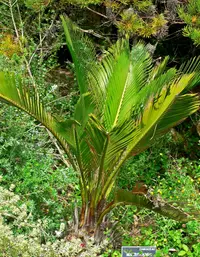
Apply a 5–8 cm layer of coarse mulch around the root zone, keeping it 3–5 cm away from the trunk base to stabilize soil temperature and protect the shallow roots from mechanical damage.

Cycad cone management

Inspect for developing cones at the center of the crown and remove unwanted or damaged cones with clean, sharp tools to reduce energy drain and keep airflow through the crown.

Frond support strategy

On exposed or windy sites, use low, discreet stakes or a flexible strap around several frond bases to prevent snapping, ensuring any ties are loose enough not to cut into the tissue as the plant thickens.

Salt and wind planning

In coastal gardens, position plants behind windbreaks such as walls, hedges, or larger shrubs to limit salt-laden winds that can scorch leaflets and cause uneven growth.

Transplant timing

Schedule any transplanting or major root disturbance for late spring to early summer when soil is warm, and keep the root ball as intact as possible to support recovery when you grow Zamia Palm in open ground.

Common Pests and Diseases

Cycad scale

This pest forms clusters of tiny white to brown bumps on fronds and petioles, often causing yellow mottling and a general decline in vigor. Heavy infestations can weaken Macrozamia riedlei over time and slow new growth.

Solution

Physically wipe or brush off accessible scales and prune heavily infested fronds, then wash foliage with a strong but gentle stream of water. Follow with repeated applications of horticultural oil or insecticidal soap, ensuring thorough coverage of leaf undersides and crown tissue, and improve plant vigor with proper light and watering as part of Macrozamia riedlei plant care.

Mealybugs

These insects appear as white, cottony clusters in leaf bases, along leaflet midribs, and in the crown, often accompanied by sticky honeydew and sooty mold. Infestations interfere with sap flow and can stunt new fronds.

Solution

Isolate the plant, then dab visible mealybugs with cotton swabs dipped in isopropyl alcohol and rinse the plant with lukewarm water. For recurring problems, use insecticidal soap or horticultural oil at 7–10 day intervals and reduce overcrowding around the plant to improve airflow and inspection access.

Crown and collar rot

This disease affects the basal stem and crown tissues, leading to soft, discolored areas, frond yellowing, and eventual collapse of the central growing point. Symptoms include a foul smell and rotting tissue at or just below the soil line when the infection is advanced.

Solution

Remove and discard all soft, rotted tissue and any dead fronds, and allow remaining tissue to dry in well-aerated conditions. Improve drainage, avoid water collecting around the crown, use a free-draining, gritty mix, and in valuable specimens consider a targeted fungicide labeled for crown or collar rot while adjusting watering to keep the root zone just barely moist.

Leaf spot fungi

This disease causes small brown to dark purple spots on older leaflets that may merge into irregular patches, sometimes with a yellow halo. In humid or crowded conditions, lesions can spread along the frond and reduce photosynthetic area.

Solution

Prune and discard affected fronds or leaflet sections, then increase spacing and airflow around the plant to keep foliage drier. Water at the soil level rather than overhead and, if spotting continues to spread, apply a broad-spectrum fungicide labeled for ornamental cycads according to label directions.

Interesting Facts

Toxic yet traditional food

Seeds and stems of this cycad are naturally highly toxic, but Indigenous Noongar people of southwestern Australia developed complex leaching and processing methods to safely eat the starch as a seasonal food source.

Fire-adapted life cycle

In its native Western Australian shrublands, this species often survives bushfires by resprouting from its underground stem and is thought to benefit from post-fire conditions that open the canopy and stimulate new growth.

Specialist insect partners

Like many cycads, this plant relies on specific beetle pollinators that move between male and female cones, carrying pollen as they feed and shelter inside the cone structures.

Botan icon

Did you know?

This species can live for many decades, with individual plants slowly forming substantial subterranean stems and leaf crowns that persist through multiple fire cycles, making them long-lived components of Western Australia’s ancient flora.

FAQs about Zamia Palm

Yellow leaflets often result from natural aging of older fronds, chronic overwatering, or compacted, poorly drained soil. Check the root zone, improve drainage, and allow the mix to dry more between waterings before removing completely yellow fronds.

Grow Healthy Plants with Botan Care

Keep your plants happy and healthy with plant identification, disease detection, and easy care guidance.

Botan plant care app — identify plants on mobile

Explore More Plants