Thunberg’s cycad Care (Encephalartos longifolius)

Also known as: Suurberg Cycad
Thunberg’s cycad

About Thunberg’s cycad

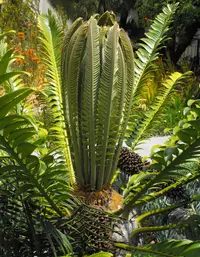
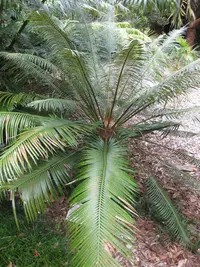
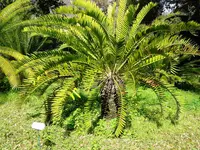
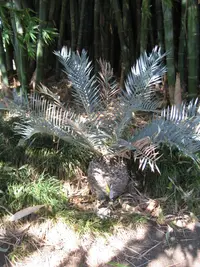
Encephalartos longifolius, commonly called Thunberg’s cycad, is an ancient cone-bearing plant with a thick trunk and strong, arching, blue-green fronds. It has a sculptural, almost palm-like form but grows slowly and remains relatively compact for many years.

This species is native to the Eastern and Western Cape regions of South Africa, where it grows in rocky, well-drained habitats. It is long-lived and tough but not beginner-friendly, because it dislikes overwatering and poorly drained soil.

Light, warmth, and excellent drainage are the main factors that determine how to care for Thunberg’s cycad successfully, especially in container or indoor collections.

Main Plant Requirements

Care Difficulty

Hard Care

Light Preference

Full Sun

Water Requirements

Low Water

Temperature Preference

Warm Climate

Hardiness Zone

9–11

Soil Texture

Sandy, Loamy, Rocky

Soil pH

Slightly acidic (6.5–7.0), Neutral (7.0)

Soil Drainage

Well-drained

Fertilization

Minimal (feed rarely)

Get Personalized Care Plan

Scan your plant to receive care tips personalized for your specific plant

Available on iOS and Android

How to Care for the Thunberg’s cycad

This South African cycad thrives in bright, open positions with strong but not extreme sun exposure.

  • Provide 6–8 hours of direct sun daily, ideally with morning sun and very light afternoon shade, especially in hot inland climates.
  • Young plants and Thunberg’s cycad grown in reflective sites benefit from filtered light during the hottest midday hours to prevent leaflet scorch.
  • In mild coastal or cooler regions, full sun all day is acceptable, but in deep shade fronds lengthen, turn dull bluish‑green, and new growth becomes sparse.

This drought-tolerant cycad prefers deep, infrequent watering that allows the soil to dry between soakings.

  • Outdoors in free-draining ground, water when the top 5–8 cm of soil is dry; this may mean weekly in summer and far less often in cool, rainy seasons.
  • Ensure very sharp drainage using sandy or gravelly soil; standing water around the caudex or crown greatly increases root and stem rot risk in Encephalartos longifolius.
  • Signs of overwatering include yellowing, soft leaf bases, and a sour soil smell; hard, browning leaf tips and rapid soil drying point to underwatering.

This species prefers warm, dry-summer conditions but tolerates a modest amount of cold if kept well drained.

  • Aim for active growth in 70–85°F (21–29°C); growth slows noticeably below about 60°F (16°C) but the plant remains stable if soil is not waterlogged.
  • Mature plants tolerate brief dips to 25–28°F (-4 to -2°C) with minor leaflet damage, but extended frost below 25°F (-4°C) can injure the crown.
  • In hot regions with summer highs of 95–105°F (35–40°C), provide some afternoon shade and airflow, as enclosed, windless spots raise heat and scorch risk.

Humidity is not critical for Encephalartos longifolius, but moderate levels support cleaner foliage and steadier growth.

  • Aim for 30–50% humidity; the plant tolerates drier air if soil moisture is stable.
  • Leaf tips browning and persistent edge crisping, despite correct watering, can signal low humidity stress in Thunberg’s cycad.
  • Increase humidity locally with a pebble tray or grouping plants, rather than misting, which adds little lasting moisture.

Encephalartos longifolius needs a sharply drained, mineral-rich mix that mimics rocky, gritty native soils.

  • Use a sandy or gritty loam with plenty of coarse mineral material to prevent waterlogging around the caudex and roots.
  • Aim for slightly acidic to neutral pH, around 6.0–7.0, which supports nutrient availability without stressing the roots.
  • Combine roughly 50–70% inorganic components (pumice, coarse sand, small gravel, perlite) with 30–50% organic matter such as composted bark or leaf mold.
  • Avoid heavy clay, peat-heavy mixes, and fine, compacting potting media that hold water for long periods and reduce aeration.

This species adapts well to container growing when its weight, drainage, and deep root system are considered.

  • Choose a deep, heavy pot that resists tipping as the stiff fronds lengthen and the caudex enlarges.
  • Select thick-walled terracotta or similar porous material to shed excess moisture and moderate temperature swings around the roots.
  • Raise the container slightly on pot feet so drainage holes stay clear and runoff cannot pool under the base.

This slow-growing cycad benefits from light, targeted feeding rather than heavy fertilization.

  • Use a balanced slow-release fertilizer (around 10-10-10) or well-aged compost applied to the soil surface in spring.
  • Feed Thunberg’s cycad 1–2 times during the warm growing season, avoiding midsummer heat extremes.
  • Apply at half the label rate for container plants to reduce salt buildup and root burn risk.
  • Stop feeding in fall and winter, when growth slows and the plant remains semi-dormant.

Pruning for Encephalartos longifolius is minimal and mainly focused on hygiene rather than shaping.

  • Carry out pruning in late winter or early spring before strong new growth begins.
  • Remove only dead, yellowed, diseased, or storm-damaged fronds at the base with clean, sharp loppers or a pruning saw.
  • Avoid cutting green, healthy fronds, as this reduces photosynthesis and can slow overall growth.
  • Trim old cones or spent reproductive structures if desired, but do not disturb the central crown.

This cycad prefers stable conditions and only occasional transplanting, especially when grown in the ground.

  • Consider moving a container plant when roots circle the pot, drainage slows, or growth becomes noticeably weak.
  • Plan repotting or transplanting for late spring to early summer, once soils are warm and frost risk has passed.
  • Expect to change to a slightly larger container only every 4–6 years, using a gritty, fast-draining mix.
  • Reduce root stress by keeping the root ball intact, watering well the day before, and shading the plant for 1–2 weeks afterward.

Propagation of this cycad is slow and specialized, most often done by seed or removal of basal offsets.

  • Use ripe seeds from mature cones; clean and sow in a sterile, very well-drained mix at 75–85°F.
  • Provide bright shade, consistent slight moisture, and patience, as germination can take many months.
  • For offsets, detach only well-formed pups with a clean saw during warm weather, then allow cut surfaces to dry.
  • Plant pups in a coarse mix, keep just slightly moist, and maintain warmth to encourage gradual root formation.

This species tolerates brief light frost but benefits from basic winter protection in colder regions.

  • In-ground plants usually handle down to about 25–28°F if soils drain well and cold snaps are short.
  • Apply a 5–8 cm mulch layer around the root zone in late fall, keeping it away from the crown.
  • Wrap the crown lightly with breathable frost cloth during hard freezes, especially for young specimens.
  • Move container plants into a bright, cool, frost-free spot and water sparingly until spring.

Care Tips

Prevent crown rot

Plant slightly raised above the surrounding soil and keep mulch pulled 5–8 cm away from the crown so water sheds off the base and does not sit around the growing point.

Secure heavy cones

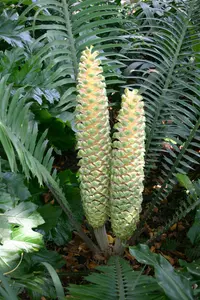
When female cones develop, support them with a padded stake or low sling to prevent mechanical damage to the crown or stem from their weight and wind movement.

Protect from frost

In regions with light frost, wrap the crown with breathable frost cloth and add a dry mulch ring around the root zone before cold nights, then remove coverings once temperatures rise above freezing.

Manage offset pups

Remove basal pups only when they show their own root development, using a sterile, sharp tool and allowing the cut surfaces on both mother plant and pup to dry and callus for several days before replanting.

Routine structural inspection

Inspect the trunk and leaflet bases 2–3 times per year for cracks, soft spots, or borer holes, and address any damage early, as this slow-growing cycad cannot quickly replace lost structural tissue when caring for Thunberg’s cycad.

Common Pests and Diseases

Cycad scale

This pest forms dense white or gray crust-like patches on fronds and leaf bases, often leading to yellowing and decline. This pest is particularly damaging to cycads and can spread quickly if not controlled.

Solution

Isolate the plant, then target both leaf surfaces and crown with repeated treatments of horticultural oil or insecticidal soap every 7–10 days, ensuring full coverage of all scale clusters. Severely infested fronds should be pruned and destroyed, and tools disinfected; this is a key step in Encephalartos longifolius care in collections where scale is present.

Mealybugs

These insects appear as white cottony clusters in leaf bases, along the rachis (central leaf stalk), and around the crown, causing distorted growth and sticky honeydew. Symptoms include sooty mold growing on the honeydew and general loss of vigor.

Solution

Remove visible clusters with a cotton swab dipped in 70% isopropyl alcohol, then wash fronds and crown thoroughly with a strong stream of water. Follow with 2–3 rounds of insecticidal soap or horticultural oil, and reduce excess nitrogen fertilization, which can encourage soft, mealybug-susceptible growth.

Cycad aphids

These insects feed in groups on new flushes of leaves, causing curling, yellowing, and sticky honeydew that can attract ants. This pest tends to concentrate on soft, emerging fronds and can weaken repeated flushes if unmanaged.

Solution

Hose off aphids from young fronds and undersides of leaves, then apply insecticidal soap to new growth every 5–7 days until populations drop. Manage nearby ant activity, since ants protect aphids, and avoid overwatering or overfertilizing, which promotes lush, aphid-prone tissue.

Crown rot

This disease affects the central growing point of the cycad, causing browning, softening, and eventual collapse of the crown while older leaves may initially remain green. Symptoms include a foul smell and dark, water-soaked tissue at the base of the fronds.

Solution

Remove all soft, discolored crown tissue with sterile tools until only firm, clean tissue remains, then allow the area to dry and apply a systemic fungicide labeled for crown and stem rots. Improve drainage, avoid water collecting in the crown, and keep watering moderate, especially in cool conditions, to reduce recurrence.

Leaf spot fungi

This disease causes scattered brown to black spots or blotches on leaflets, sometimes with yellow halos, which can coalesce and lead to premature leaflet death. Symptoms include cosmetic damage that can become more serious in persistently humid or crowded conditions.

Solution

Prune and discard heavily spotted fronds, improve spacing and airflow, and avoid wetting the foliage when watering. In humid climates or under greenhouse conditions, a preventative fungicide labeled for ornamental leaf spot can be applied at the start of a new leaf flush to protect developing fronds.

Interesting Facts

Blue-tinged leaf crowns

This species develops dense crowns of stiff, arching leaves that often show a distinct blue to blue-green hue, especially in full sun and drier conditions, due to waxy surface coatings that reduce water loss.

Sexes on separate plants

It is dioecious, meaning individual plants produce either male or female cones, not both, so seed formation in cultivation requires both a pollen-producing plant and a cone-bearing female plant.

Cape sandstone specialist

In the wild it is naturally restricted to parts of the Eastern and Western Cape in South Africa, where it grows on rocky sandstone slopes and ridges, often on poor, well-drained soils exposed to wind and seasonal drought.

Botan icon

Did you know?

This cycad is listed as Near Threatened on the IUCN Red List mainly because of over-collection from the wild, and many of the wild plants now seen in private and public collections were originally removed from natural populations in South Africa decades ago.

FAQs about Thunberg’s cycad

Yes, this species adapts well to large, heavy containers with excellent drainage. Use a gritty, mineral-rich mix and allow space for the expanding caudex. Repot only when rootbound to reduce transplant shock and leaf loss.

Grow Healthy Plants with Botan Care

Keep your plants happy and healthy with plant identification, disease detection, and easy care guidance.

Botan plant care app — identify plants on mobile

Explore More Plants