Root flare inspection
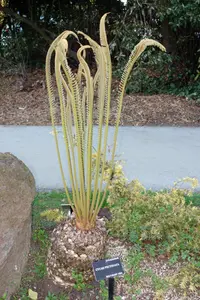
When potting or planting, keep the top of the caudex and root flare just at or slightly above soil level to reduce rot risk and allow you to monitor for soft spots or fungal issues over time.

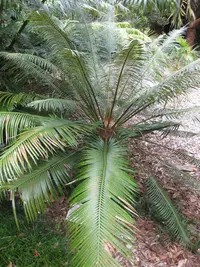
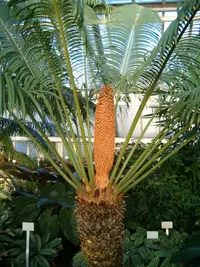
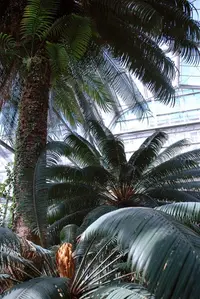
Cycas seemannii is a slow-growing cycad, an ancient group of seed plants that resemble small palms but are not true palms. It forms a stout trunk topped with a rosette of stiff, glossy, feather-like leaves.
In nature it occurs on Pacific islands, often in coastal areas with warm, humid conditions and well-drained soils. The plant is long-lived and slow to change, so any damage or mistakes in care show for a long time.
Because it grows slowly and prefers stable conditions, it can be moderately challenging for beginners. Understanding how to care for Cycad, especially its needs for bright light and good drainage, helps keep it healthy over many years.

Care Difficulty
Moderate Care

Light Preference
Full Sun

Water Requirements
Moderate Water

Temperature Preference
Tropical / Frost Sensitive

Hardiness Zone
10–12

Soil Texture
Sandy, Loamy, Organic-rich

Soil pH
Slightly acidic (6.5–7.0), Neutral (7.0)

Soil Drainage
Well-drained

Fertilization
Minimal (feed rarely)
Scan your plant to receive care tips personalized for your specific plant
Available on iOS and Android
Cycas seemannii prefers strong, filtered light that mimics open woodland or coastal exposure.
This species prefers evenly moist but never waterlogged soil, with brief drying between waterings.
This coastal cycad prefers warm, frost-free conditions with only mild seasonal variation.
This species tolerates a fairly wide humidity range but grows best with moderately moist air.
Cycas seemannii prefers a sharply draining, mineral-rich substrate that resists waterlogging.
This species is suitable for container growing when the pot is chosen to support its deep, slowly expanding root system.
Cycas seemannii grows slowly and needs modest, steady nutrition rather than heavy feeding.
Cycas seemannii needs minimal pruning focused on health and safety rather than shaping.
This cycad prefers stable conditions, so repotting or transplanting Cycas seemannii is done infrequently and with care.
Cycas seemannii is usually propagated slowly from seeds or from basal offsets, which requires patience and stable conditions.
This tropical cycad is frost-sensitive and needs thoughtful winter care in cooler climates.

Plant Health Check
Not sure what's wrong with your plant? Check your plant's health inside the app.
This species naturally grows on coastal limestone and coral substrates in Fiji, Vanuatu, Tonga, and nearby Pacific islands, often just above the high-tide line where few other woody plants tolerate salt spray and alkaline conditions.
In parts of Fiji, the stiff leaflets and central leaf ribs of this species have traditionally been used as tools in the preparation and serving of kava, giving it a practical role in local cultural ceremonies.
Although its seeds are rich in toxic compounds, several Pacific island cultures developed multi-step soaking and leaching methods to detoxify them for occasional use as an emergency starch food source, reflecting long-term ecological knowledge of the plant.

This species is thought to have dispersed naturally across scattered Pacific islands by ocean currents, with its large, buoyant seeds able to survive prolonged exposure to seawater and establish on new coastal sites once washed ashore.
Yellowing leaves often result from natural aging of older fronds, root stress from poor drainage, or nutrient imbalance, especially nitrogen or magnesium. Check for compacted soil, improve drainage, and apply a balanced, slow-release fertilizer formulated for cycads.
Keep your plants happy and healthy with plant identification, disease detection, and easy care guidance.