Rotate For Symmetry
Turn the container 90° every 4–6 weeks during active growth so all sides receive similar light, which keeps the crown balanced and prevents leaning or lopsided frond development.

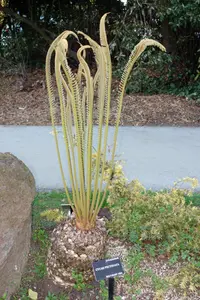
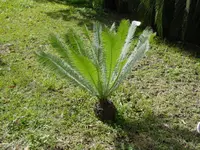
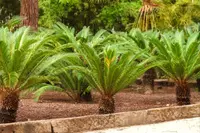
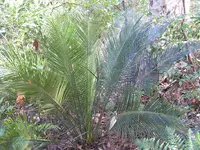
Cycas pectinata is a slow-growing cycad, an ancient group of seed plants that often resemble small palms but are unrelated to true palms. It forms a stout trunk topped with a symmetrical crown of stiff, glossy, feather-like leaves.
This species is native to parts of South and Southeast Asia, where it grows in warm, humid, often hilly habitats. In cultivation it is usually grown as an ornamental specimen for its architectural form and longevity.
Growth is slow and it does not like being moved or disturbed, which can make it challenging for impatient growers. Understanding how to care for Cycad includes providing bright light, good drainage, and protection from prolonged cold or waterlogging.

Care Difficulty
Moderate Care

Light Preference
Partial Sun

Water Requirements
Moderate Water

Temperature Preference
Warm Climate

Hardiness Zone
10–11

Soil Texture
Sandy, Loamy, Organic-rich

Soil pH
Acidic (5.5–6.5), Slightly acidic (6.5–7.0)

Soil Drainage
Well-drained

Fertilization
Minimal (feed rarely)
Scan your plant to receive care tips personalized for your specific plant
Available on iOS and Android
This species prefers bright, filtered light similar to open woodland edges.
Cycas pectinata prefers evenly moist but never saturated soil.
This species is a warm-temperate to subtropical plant with limited frost tolerance.
This species prefers moderately humid air but usually adapts to typical indoor and outdoor conditions.
Cycas pectinata grows best in coarse, sharply drained, mineral-rich substrates.
This species is well suited to container culture when planted in a stable, deep pot with excellent drainage.
Cycas pectinata benefits from light, controlled feeding rather than heavy fertilization.
Pruning Cycas pectinata is mainly corrective and hygienic rather than shaping-focused.
Cycas pectinata grows slowly and dislikes frequent disturbance, so repot or transplant only when clearly necessary.
Propagation of Cycas pectinata is possible but slow and better suited to patient growers.
Cycas pectinata is not fully hardy in cold climates and needs protection in regions with freezing winters.

Plant Health Check
Not sure what's wrong with your plant? Check your plant's health inside the app.
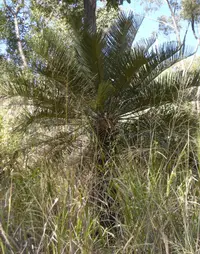
Mature individuals of this species can develop very thick pachycaulous trunks, sometimes exceeding those of many other Asian cycads, which allows storage of substantial water and nutrients for dry periods.
In its native range in northeastern India and Southeast Asia, this species is pollinated primarily by specific beetles that visit the male cones, a mutualism that has coevolved with many cycads over millions of years.
The species naturally occurs in moist to semi-moist tropical and subtropical forests, often on slopes and ridges at low to mid elevations, where it grows in partial shade under taller trees.

This species can live for several hundred years, and very old individuals may show a clear record of past growth in the form of visible trunk ring-like leaf-scar bands that document decades of leaf production.
Yellowing fronds usually come from natural aging, nutrient deficiency, root problems, or past overwatering. Remove only fully brown, older fronds, check drainage, and consider a slow-release, palm-type fertilizer as part of general Cycas pectinata care.
Keep your plants happy and healthy with plant identification, disease detection, and easy care guidance.