Encourage sturdy caudex
Rotate the pot 90° every 2–3 weeks so light hits different sides, which helps develop a symmetrical crown and a firm, balanced caudex that will not lean as it enlarges over the years.

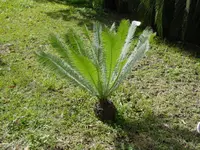
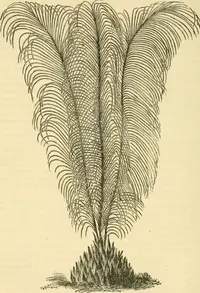
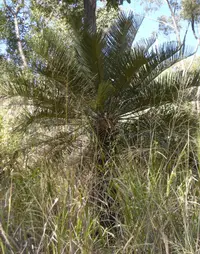
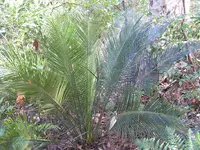
Chestnut dioon (Dioon edule) is a slow-growing cycad, an ancient group of plants that looks somewhat like a palm but is not related. It forms a thick trunk over time and a crown of stiff, arching, blue-green leaf fronds.
This species comes from dry, rocky regions of eastern Mexico, where it has adapted to strong light, seasonal drought, and well-drained, often poor soils. Its slow growth and tolerance of neglect make it long-lived but not fast to fill a space.
For those learning how to care for Chestnut dioon, its main needs are bright light, low to moderate watering, and sharply draining soil to prevent root problems.

Care Difficulty
Moderate Care

Light Preference
Full Sun

Water Requirements
Low Water

Temperature Preference
Warm Climate

Hardiness Zone
8–11

Soil Texture
Sandy, Loamy, Rocky

Soil pH
Slightly acidic (6.5–7.0), Slightly alkaline (7.0–7.5)

Soil Drainage
Well-drained

Fertilization
Minimal (feed rarely)
Scan your plant to receive care tips personalized for your specific plant
Available on iOS and Android
This cycad prefers bright, direct sun but adapts to a range of outdoor light conditions.
This drought-tolerant cycad prefers deep, infrequent watering and very sharp drainage.
This species thrives in warm, mild climates and reacts poorly to hard frost or extended cold.
This cycad handles a wide humidity range but grows best in moderately dry air.
Dioon edule prefers mineral, sharply drained soil that mimics its rocky native habitats.
This species adapts well to container culture when given a stable, well-drained setup.
Dioon edule grows slowly and needs modest feeding, especially when grown in containers as Chestnut dioon.
Dioon edule needs minimal pruning, focused on health and safety rather than shaping.
This cycad dislikes disturbance, so repotting or transplanting Dioon edule should be infrequent and deliberate.
Propagation of Dioon edule is slow and usually done by seeds or occasional offsets.
Dioon edule is relatively cold tolerant but benefits from simple winter protection in cooler climates.

Plant Health Check
Not sure what's wrong with your plant? Check your plant's health inside the app.
This species is a true cycad, an evolutionary relict whose lineage dates back to the time of early dinosaurs, although Dioon edule itself is not a fossil species. Its structure, with a stout trunk and stiff leaf crown, reflects this very conservative evolutionary design.
In its native range in eastern Mexico, its large, hard seeds are often moved and cached by small mammals such as rodents. Some forgotten seeds can germinate away from the parent plant, helping maintain scattered wild populations.
The plant survives long dry periods by storing water and nutrients in its thick caudex, a swollen stem base. Its tough, leathery leaflets reduce water loss and allow the plant to endure semi-arid habitats on rocky slopes and limestone soils.

Individual Dioon edule plants can live for many decades and sometimes more than a century, forming very slow-growing trunks that may take several decades to reach even modest heights, which makes old specimens valuable indicators of long-term habitat stability.
Growth is slow. In garden conditions, expect only 2–5 cm of trunk expansion per year and new leaves produced in flushes, not continuously. Patience is essential when growing this cycad, especially in cooler or drier climates.
Keep your plants happy and healthy with plant identification, disease detection, and easy care guidance.

-200x200.webp)