


Rot-prone tubers
When repotting, inspect the corms and roots, cutting away any soft, brown, or foul-smelling tissue with a sterile blade, then dust the cuts lightly with powdered sulfur or ground cinnamon to reduce rot risk.

Elephant ear Alocasia plumbea 'Nigra' is a tropical aroid grown mainly for its dramatic foliage. It forms upright clumps of large, metallic dark purple leaves with pronounced veins and a glossy surface. Native to humid tropical regions of Southeast Asia, it stays more compact than many other elephant ear types, which suits containers and indoor displays. This plant prefers warm temperatures, high humidity, and evenly moist but well-drained soil, so it can be challenging in dry homes. With stable warmth, bright filtered light, and attention to moisture, it is possible to care for Elephant Ear successfully indoors.

Care Difficulty
Moderate Care

Light Preference
Bright Indirect Light

Water Requirements
Keep Soil Moist

Temperature Preference
Tropical / Frost Sensitive

Hardiness Zone
10–11

Soil Texture
Loamy, Peaty, Organic-rich

Soil pH
Acidic (5.5–6.5), Slightly acidic (6.5–7.0)

Soil Drainage
Moist but well-drained

Fertilization
Moderate (every 2–4 weeks)
Scan your plant to receive care tips personalized for your specific plant
Available on iOS and Android
Alocasia plumbea 'Nigra' prefers bright, indirect light that mimics dappled tropical shade.
This plant prefers consistently moist but not saturated soil around its roots.
Stable warmth is important for strong growth and leaf health.
This plant prefers high, stable humidity to keep leaves large and healthy.
Alocasia plumbea 'Nigra' needs a loose, airy, organic-rich mix that drains quickly yet retains some moisture.
This species is well suited to container growing due to its controlled root zone and humidity management.
Alocasia plumbea 'Nigra' benefits from moderate, consistent feeding through its active growing season.
Alocasia plumbea 'Nigra' needs only light pruning to maintain health and appearance.
Container-grown plants benefit from periodic repotting to refresh soil and support steady growth.
This plant is most reliably propagated by division of its clumping rhizomes.
This tropical species is very frost-sensitive and needs warm, stable conditions in winter.

Plant Health Check
Not sure what's wrong with your plant? Check your plant's health inside the app.
The leaves show a distinct dark metallic or gunmetal sheen because of dense surface pigmentation and the way the upper epidermis reflects light, which makes the foliage appear almost black in moderate indoor light and more bronzy in strong shade outdoors.
The undersides of the leaves are typically deep purple to maroon, a coloration linked to anthocyanin pigments that can help protect photosynthetic tissues from excess light and short bursts of UV exposure.
In suitable warm, humid conditions, individual leaves can reach substantial size relative to the plant’s overall height, forming a bold architectural clump that is often used as a focal point in tropical-style plantings and for Elephant Ear indoor care discussions.
Brown tips or margins usually result from low humidity, underwatering, excess fertilizer salts, or cold or hot drafts. Use clean, room‑temperature water, rinse or leach the potting mix occasionally, and keep it away from vents and sudden temperature swings.
Keep your plants happy and healthy with plant identification, disease detection, and easy care guidance.


theobroma
Theobroma grandiflorum
 POPULAR
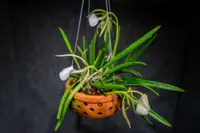
Lady of the Night Orchid
Brassavola nodosa
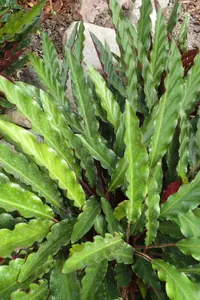
velvet calathea
Goeppertia rufibarba
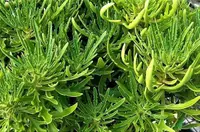
Christmastree plant
Kalanchoe laciniata

Cuban Oregano
Plectranthus parviflorus 'Variegatus'
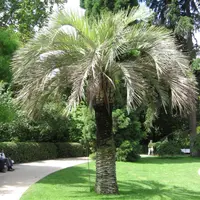
South American Jelly Palm
Butia odorata
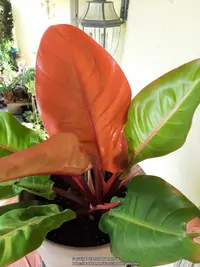
Philodendron
Philodendron 'Prince of Orange'
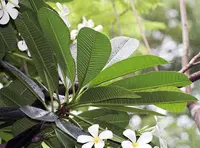
White frangipani
Plumeria obtusa