Tillandsia fendleri Care

Tillandsia fendleri

About Tillandsia fendleri

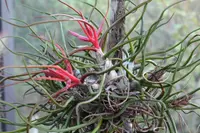
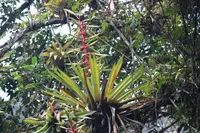
Tillandsia fendleri is an epiphytic air plant that usually grows on trees or rocks rather than in soil. It forms graceful rosettes of narrow, often slightly curling leaves.

In nature it occurs in parts of northern South America and the Caribbean, often in warm, humid mountain or cloud-forest habitats. Its ability to absorb water and nutrients through specialized leaf scales makes it relatively adaptable in cultivation.

Good air movement and bright, indirect light support healthy growth. Understanding how to care for Tillandsia fendleri mainly involves balancing moisture from misting or soaking with thorough drying afterward.

Main Plant Requirements

Care Difficulty

Moderate Care

Light Preference

Bright Indirect Light

Water Requirements

Low Water

Temperature Preference

Tropical / Frost Sensitive

Hardiness Zone

10–12

Soil Texture

Rocky, Sandy

Soil pH

Acidic (5.5–6.5)

Soil Drainage

Well-drained

Fertilization

Light (every 4–6 weeks)

Get Personalized Care Plan

Scan your plant to receive care tips personalized for your specific plant

Available on iOS and Android

How to Care for the Tillandsia fendleri

This epiphytic air plant prefers bright, indirect light with some gentle direct sun.

  • Provide 4–6 hours of bright, filtered light daily, such as dappled shade under a tree or morning sun with afternoon shade.
  • In hotter climates, protect Tillandsia fendleri from strong midday and afternoon sun, which can scorch leaves and cause bleaching or crispy tips.
  • If light is too low, growth slows and leaves darken; move the plant to a brighter spot, especially in winter when natural light intensity drops.

This air plant absorbs water through its leaves and needs thorough but fast-drying hydration.

  • Soak or heavily mist until the leaves are fully wet, then let the plant dry within 2–3 hours in good air movement to prevent rot.
  • Adjust frequency with conditions: in warm, dry weather water 2–4 times per week; in cool, humid weather reduce to 1–2 times per week.
  • Signs of underwatering include curling, brittle leaves; overwatering or poor drying leads to soft bases, dark spots, and leaf drop, so improve ventilation immediately.

This species prefers mild, frost-free conditions and stable temperatures.

  • Aim for 65–80°F (18–27°C) for active growth, with good air circulation to prevent heat buildup around the leaves.
  • Protect from cold below 45°F (7°C); short dips to 40°F (4°C) may be tolerated, but freezing conditions damage tissues quickly.
  • In hot spells above 90°F (32°C), increase shade and watering frequency so Tillandsia fendleri can cool through evaporation and avoid heat stress.

This species benefits from moderate to high humidity but tolerates typical indoor levels if watering is adjusted.

  • Aim for 50–70% humidity, as Tillandsia fendleri absorbs moisture through leaf surfaces rather than roots.
  • Brown leaf tips, curling, and slow growth indicate air is too dry or watering is insufficient.
  • Increase humidity by grouping plants, placing near a humidifier, or misting lightly in the morning while ensuring leaves dry within a few hours.

As an epiphytic air plant, this species does not need traditional soil and should never be buried in potting mix.

  • Mount the plant on cork, driftwood, or inert rock using waterproof glue or wire, allowing air to circulate freely around all leaf bases.
  • If placing in a decorative container, keep the base open and fill only with loose, airy materials like large bark, lava rock, or chunky charcoal.
  • Avoid peat-based potting mixes, compact moss, or any medium that stays wet, since trapped moisture around the base leads to rot.
  • Rinse mounting materials periodically to remove dust and salts, which can clog leaf surfaces and reduce efficient water and nutrient absorption.

This air plant adapts well to container or mounted displays when airflow and drainage are prioritized.

  • Use shallow, open containers or wire baskets that allow air movement from all sides rather than closed glass vessels.
  • Secure the plant so the base is slightly elevated on stones or bark, preventing water from pooling around the attachment point after misting or soaking.
  • Choose heavier containers or weighted bases for larger clumps to prevent tipping, especially when foliage becomes top-heavy after watering.

Air plants like Tillandsia fendleri need only light, occasional feeding to support healthy foliage and flowering.

  • Use a balanced water‑soluble orchid or bromeliad fertilizer at 1⁄4–1⁄2 strength, labeled for foliar feeding.
  • Apply every 3–4 weeks during the warm growing season after soaking or misting, not on completely dry leaves.
  • Avoid slow‑release granules and compost, which can burn foliage or trap excess moisture around the plant.
  • Reduce feeding to once every 6–8 weeks in winter, or pause entirely if growth is very slow.

Pruning needs are minimal and focus on grooming rather than reshaping the natural form of Tillandsia fendleri.

  • Trim only dead or brown leaves close to the base using small, clean scissors to limit tissue damage.
  • Remove spent flower spikes once fully dry to direct energy back into foliage and offsets.
  • Cut away shriveled or diseased sections promptly, leaving only firm, silver‑green tissue.
  • Thin crowded clumps lightly if needed to improve airflow, which lowers the risk of rot.

This air plant grows without traditional soil, so transplanting focuses on remounting or repositioning rather than classic repotting.

  • Remount when the clump outgrows its support, becomes unstable, or airflow is poor, typically every 3–5 years.
  • Choose late spring or early summer so Tillandsia fendleri can recover quickly in warm, bright conditions.
  • Gently detach the plant, keeping the base and any natural roots intact to reduce stress.
  • Secure onto bark, cork, or wire mesh using soft ties or non‑corrosive wire, then mist lightly for 1–2 weeks.

Propagation of Tillandsia fendleri is usually done by offsets rather than by seed in home conditions.

  • Wait until offsets (pups) reach about 1⁄3–1⁄2 the size of the parent before separating.
  • Carry out division in late spring or early summer when warmth and light support recovery.
  • Gently twist or cut pups from the parent at the base using sterile scissors if they do not separate cleanly.
  • Place divisions in bright, indirect light with good airflow and follow normal soaking or misting routines to encourage establishment.

This species is sensitive to prolonged cold and benefits from thoughtful winter care in most temperate climates.

  • Avoid exposure below 40°F; brief dips are tolerated, but freezing damages leaf tissues.
  • Move mounted or container plants indoors before frost and place in bright, indirect light.
  • Increase air circulation and let plants dry quickly after watering to prevent cold‑related rot.
  • In mild climates, site plants under overhead cover outdoors to keep them dry during cold, wet spells.

Care Tips

Mounting strategy

Attach plants to open, non-porous mounts like cork bark or hardwood using soft wire or plant-safe glue, leaving enough airflow around the base so trapped moisture does not rot the central tissues.

Air circulation management

Place plants where there is gentle but consistent air movement, such as near an oscillating fan on low, to help them dry within 3–4 hours after misting or soaking and reduce fungal issues.

Rainwater collection

If possible, collect and store rainwater in a clean container and use it for soaking or rinsing, as softer water with fewer dissolved salts is safer for long-term Tillandsia fendleri care.

Seasonal light repositioning

Shift plants slightly farther from bright windows in summer and closer in winter to maintain strong light while preventing scorching when the sun angle and intensity change through the year.

Routine salt flushing

Once every 4–6 weeks, give the plants a longer rinse or soak in low-mineral water, then dry thoroughly, to flush away accumulated fertilizer salts that can burn leaf tips over time when growing Tillandsia fendleri.

Common Pests and Diseases

Scale insects

This pest feeds on the leaf surfaces and at the leaf bases, sucking sap and weakening the rosette. Symptoms include sticky honeydew, sooty mold growth, and small dome-shaped bumps firmly attached to leaves or sheaths.

Solution

Remove affected plants from close contact with others, then gently scrub insects off with a soft brush or cotton swab dipped in diluted alcohol, taking care not to damage the trichomes. Improve air movement, avoid constant leaf wetness at night, and repeat physical cleaning weekly until no new insects appear; in larger collections, a targeted horticultural soap spray labeled safe for bromeliads can be used lightly and only in the cooler part of the day.

Mealybugs

These insects hide in leaf axils and around the base, forming white cottony clusters that stunt growth and deform new leaves. Symptoms include sticky residue, distorted emerging leaves, and slow decline despite adequate light and watering.

Solution

Inspect leaf bases and remove visible clusters with a cotton swab dipped in 70% isopropyl alcohol, allowing the plant to dry thoroughly afterward. Isolate heavily infested plants, increase airflow, and if needed use a light application of insecticidal soap directed into leaf axils, then rinse gently after a short contact time to protect the leaf surface structures important for growing Tillandsia fendleri.

Fungal leaf spot

This disease develops when moisture lingers on leaves under low airflow, causing small brown or black spots that may merge into patches. Symptoms include discolored, sunken lesions that can make foliage look patchy and dull.

Solution

Improve ventilation and reduce prolonged misting, especially in cool or dim conditions, so leaves dry within 2–3 hours after watering. Trim out badly marked leaves with sterile scissors, keep the plant on an open, airy mount rather than crowded surfaces, and if spots continue to expand, apply a light, bromeliad-safe fungicide spray according to label directions, followed by better spacing and drier overnight conditions.

Bacterial soft rot

This disease affects the inner leaf bases and central whorls, leading to watery, foul-smelling tissue and rapid collapse of affected parts. Symptoms include mushy leaf bases, a sour odor, and leaves that detach easily from the center.

Solution

Remove and discard any obviously rotting plants or sections to prevent spread, and avoid splashing water from diseased plants onto healthy ones. For mild, early cases on mounted plants, cut out soft tissue with sterile tools, allow the plant to dry in strong airflow, and adjust care by watering early in the day, keeping the central whorl from staying waterlogged, and lowering humidity slightly to reduce bacterial activity.

Spider mites

These insects are more common in very dry, warm indoor air and feed on leaf surfaces, causing a dull, stippled look and fine webbing in leaf crevices. Symptoms include faded or silvery areas on leaves and tiny moving dots when inspected closely.

Solution

Rinse the plant thoroughly under a gentle stream of lukewarm water, focusing on leaf undersides and bases, then let it dry quickly in bright, airy conditions. Increase humidity moderately, improve air circulation, and repeat rinsing every few days; if mites persist, use a mild miticidal or insecticidal soap spray safe for epiphytes, applied in the early morning and rinsed off after short contact to protect the foliage.

Interesting Facts

High-elevation epiphyte

This species naturally grows on trees and rocks in moist montane and cloud forests from Venezuela to northern South America, often at relatively high elevations with cool, humid air and frequent mists.

Distinctive violet bracts

Its inflorescence produces eye-catching violet to purplish floral bracts with tubular flowers that can attract hummingbirds in its native range, a typical pollination strategy in many bromeliads.

Pronounced leaf sheath bases

The leaves form noticeable sheath-like bases that wrap around the stem or substrate, helping anchor the plant securely in exposed, windy habitats.

FAQs about Tillandsia fendleri

Brown leaf tips usually result from low humidity, insufficient air movement, or mineral buildup from hard water. Improve airflow, rinse under soft or distilled water occasionally, and avoid leaving moisture trapped in the leaf bases.

Grow Healthy Plants with Botan Care

Keep your plants happy and healthy with plant identification, disease detection, and easy care guidance.

Botan plant care app — identify plants on mobile

Explore More Plants