Variegated Purple Heart Care (Tradescantia pallida 'Pink Stripe')

Also known as: Variegated Purple Queen, Wandering Jew
Variegated Purple Heart

About Variegated Purple Heart

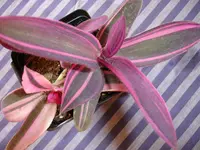
Tradescantia pallida 'Pink Stripe', often called variegated purple heart, is a tender perennial grown mainly as a houseplant or seasonal outdoor accent. It forms trailing stems with narrow purple leaves streaked in pink and cream.

This plant originates from northeastern Mexico, where it grows in warm, bright conditions. In cultivation it is usually compact and cascading, making it suitable for hanging baskets, mixed containers, or as a colorful edging.

It is considered easy to grow and quick to recover from minor neglect, which helps beginners learn how to care for Variegated Purple Heart. It generally prefers bright light, modest but regular moisture, and a free-draining potting mix.

Main Plant Requirements

Care Difficulty

Easy Care

Light Preference

Partial Sun

Water Requirements

Moderate Water

Temperature Preference

Tropical / Frost Sensitive

Hardiness Zone

9–11

Soil Texture

Sandy, Loamy, Organic-rich

Soil pH

Acidic (5.5–6.5), Slightly acidic (6.5–7.0)

Soil Drainage

Moist but well-drained

Fertilization

Light (every 4–6 weeks)

Get Personalized Care Plan

Scan your plant to receive care tips personalized for your specific plant

Available on iOS and Android

How to Care for the Variegated Purple Heart

Tradescantia pallida 'Pink Stripe' needs bright light to maintain strong color and compact growth.

  • Provide 4–6 hours of direct morning sun or bright filtered light, with protection from harsh afternoon sun in hot climates to avoid leaf scorch.
  • Tolerates light partial shade, but foliage may turn greener and stems stretch if grown in less than 3–4 hours of bright light daily, especially indoors.
  • Outdoors, position Variegated Purple Heart where winter sun is maximized and summer midday sun is filtered through a sheer curtain, pergola, or light canopy.

Tradescantia pallida 'Pink Stripe' prefers evenly moist but never waterlogged soil.

  • Water when the top 2–4 cm of soil feels dry, allowing a slight dry-down rather than following a fixed schedule, then soak thoroughly so excess drains away.
  • Use a free-draining mix and containers or beds with drainage holes to reduce root rot risk; soggy, yellowing leaves indicate overwatering issues.
  • In spring–summer, expect more frequent watering as growth is active; in fall–winter, extend the dry period, watching for limp, wrinkling leaves as a sign to water.

This plant grows best in warm conditions and is sensitive to frost and prolonged cold.

  • Aim for 65–80°F (18–27°C) for active growth, where Tradescantia pallida 'Pink Stripe' produces dense, colorful foliage.
  • Protect from temperatures below 40°F (4°C); foliage is often damaged or killed by light frost, and roots can die if exposed to a hard freeze.
  • In hot summers above 90°F (32°C), provide light shade and consistent soil moisture, as extreme heat with dry soil can cause leaf crisping and stunted growth.

This plant handles typical indoor humidity but benefits from slightly moist air for best foliage color.

  • Aim for 40–60% humidity to keep leaves plump and variegation clear on Variegated Purple Heart.
  • Tolerates short dry-air periods, but prolonged humidity below 30% can cause crispy tips and dull color.
  • Increase humidity by grouping plants, placing the pot on a pebble tray with water, or running a small room humidifier nearby.

Tradescantia pallida 'Pink Stripe' prefers a loose, airy mix that drains rapidly yet retains light, even moisture.

  • Use a soilless base such as all-purpose potting mix amended with 30–40% perlite or pumice for drainage.
  • Add a small portion of fine bark or coco coir to increase organic matter and keep the root zone evenly moist but not soggy.
  • Target slightly acidic to neutral pH around 6.0–7.0, which supports nutrient availability and healthy root growth.
  • Avoid dense garden soil, heavy clay, or mixes that stay wet for more than 2–3 days, as these promote root rot and stem collapse.

This species is very suitable for container growing due to its trailing, compact root system.

  • Choose a wide, shallow pot to accommodate spreading stems and allow quick surface drying of the mix.
  • Use a stable, heavier container if grown in hanging positions to prevent tipping from uneven trailing growth.
  • Select slightly porous materials such as unglazed terracotta when extra moisture loss is needed in humid or shaded locations.

Tradescantia pallida 'Pink Stripe' responds well to light, consistent feeding during active growth.

  • Use a balanced liquid fertilizer (for example 10-10-10 or 20-20-20) diluted to 1/4–1/2 strength.
  • Feed every 3–4 weeks in spring and summer while stems are elongating and foliage is colorful.
  • In fall and winter, reduce feeding to once every 6–8 weeks or pause if growth is very slow.
  • For Variegated Purple Heart in containers, avoid heavy compost or slow-release pellets that can cause salt buildup.

Pruning helps Tradescantia pallida 'Pink Stripe' stay compact, dense, and leafy along the stems.

  • Trim in spring and midsummer to shorten leggy stems and encourage branching at the nodes.
  • Remove dead, yellowing, or damaged shoots with clean scissors or small pruning shears.
  • Pinch soft tips regularly to thicken the plant and maintain a trailing or mounded shape.
  • Cut back sparse, woody stems to just above healthy leaf joints to refresh overall growth.

This plant tolerates slightly tight pots but benefits from occasional repotting to refresh soil and root space.

  • Check for roots circling the container, pushing through drainage holes, or slowed growth as signs it needs repotting.
  • Repot every 1–2 years in spring using a well-draining mix and a pot only 2–3 cm wider.
  • Gently loosen outer roots and remove a little old soil, avoiding aggressive root cutting to limit stress.
  • Water thoroughly after repotting, then keep in bright, indirect light for 3–7 days while roots re-establish.

New plants are commonly produced from stem cuttings taken from healthy Tradescantia pallida 'Pink Stripe' shoots.

  • Take 7–10 cm cuttings in spring or summer, cutting below a node with clean scissors.
  • Strip lower leaves, then root cuttings in water or directly in moist, well-draining potting mix.
  • Provide bright, indirect light and keep the rooting medium slightly moist, not waterlogged.
  • Once roots reach about 2–3 cm, pot cuttings up or group several in one container for a fuller plant.

This plant is frost-sensitive and needs protection in regions with cold winters.

  • Move containers indoors before temperatures drop near 40°F, placing them in bright, indirect light.
  • In mild climates, mulch outdoor root zones with 5–8 cm of loose material to buffer short cold spells.
  • Reduce watering in winter so the soil dries slightly between waterings, preventing cold, soggy conditions.
  • Expect slower growth and some thinning of foliage; resume stronger light and feeding in spring.

Care Tips

Pinch For Bushiness

Regularly pinch back the soft tips of stems every 3–4 weeks to encourage denser, cascading growth and reduce the risk of leggy, bare vines over time.

Refresh Leggy Stems

If stems become long and sparse, cut them back by 1/3–1/2 and replant the healthy cuttings into the same pot to instantly thicken the plant and refresh older growth.

Rotate For Even Color

Rotate the pot 1/4 turn every 1–2 weeks so all sides receive similar light, which helps maintain balanced variegation and prevents one-sided, stretched growth.

Quarantine New Plants

Keep new plants in a separate area for 10–14 days and inspect undersides of leaves and stem joints to avoid spreading mealybugs, spider mites, or thrips to an existing collection when growing Variegated Purple Heart.

Use Support Hooks

For hanging baskets, guide young vines along small hooks or the rim of the pot to create an even, full curtain of foliage instead of a few unevenly trailing stems.

Common Pests and Diseases

Spider mites

This pest often appears on dry, indoor plants and causes stippled, faded leaves and fine webbing along stems and undersides of foliage.

Solution

Rinse stems and leaf surfaces thoroughly with a strong, lukewarm shower, then increase humidity and reduce heat stress; for persistent infestations, apply insecticidal soap or a horticultural oil, repeating every 5–7 days until no new damage appears.

Mealybugs

These insects hide in leaf nodes and along stems, appearing as white cottony clusters that stunt growth and distort new shoots.

Solution

Remove visible insects with a cotton swab dipped in 70% isopropyl alcohol, then wash the plant and isolate it; continue spot-treating weekly and consider a systemic insecticide if mealybugs keep returning, especially on dense hanging baskets when caring for Variegated Purple Heart.

Aphids

These insects feed on tender new growth, causing curling, puckered leaves and sticky honeydew that can lead to sooty mold on the foliage.

Solution

Spray soft growth and stems with a firm stream of water to dislodge colonies, then treat remaining insects with insecticidal soap, making sure to cover the undersides of leaves and repeating applications as needed.

Leaf spot (fungal)

This disease produces small, water-soaked or brown spots that can merge into larger patches, often starting on older or lower leaves in dense, humid growth.

Solution

Remove and discard affected leaves, improve air circulation around the plant, and avoid wetting the foliage; if new spots keep appearing, apply a copper- or chlorothalonil-based fungicide according to label directions and keep the plant on the drier side between waterings.

Botrytis blight

This disease thrives in cool, stagnant, humid air and causes soft, grayish-brown patches on leaves and stems, sometimes covered with fuzzy gray mold.

Solution

Cut off and discard all affected tissue, increase airflow, and reduce overhead watering; allow the top of the soil to dry slightly between waterings and, in severe or recurring cases, use a labeled fungicide and avoid overcrowding plants in indoor groupings.

Interesting Facts

Stabilized Garden Sport

This cultivar originated as a naturally occurring variegated mutation (a sport) of the purple heart species and was stabilized through selection, so its pink and cream striping reliably passes on through cuttings.

Chimeric Leaf Variegation

Its pink and cream streaks result from a chimeric tissue pattern, where some cell layers lack chlorophyll, creating stable striping rather than random speckles.

Color Shift With Light

The balance of green, purple, and pink tones in the foliage shifts strongly with light intensity, with brighter light promoting more purple and pink pigmentation from anthocyanins, a group of protective plant pigments.

Botan icon

Did you know?

In mild climates where the parent species can survive outdoors, this variegated form rarely persists in landscape situations without human selection, because non-variegated shoots with more chlorophyll can outcompete the slower-growing pink-striped stems over time.

FAQs about Variegated Purple Heart

This species spreads by trailing stems that root where they touch the soil, forming dense mats over time. In warm climates it can creep beyond intended areas, so edging, containers, or regular trimming help keep it contained.

Grow Healthy Plants with Botan Care

Keep your plants happy and healthy with plant identification, disease detection, and easy care guidance.

Botan plant care app — identify plants on mobile

Explore More Plants