Golden Variegated Ctenanthe Care (Ctenanthe marantifolia 'Golden Mosaic')

About Golden Variegated Ctenanthe

Ctenanthe marantifolia 'Golden Mosaic', often called golden variegated ctenanthe, is a tropical, evergreen houseplant grown mainly for its patterned foliage. It belongs to the prayer plant group, with leaves that may slightly move in response to light changes.

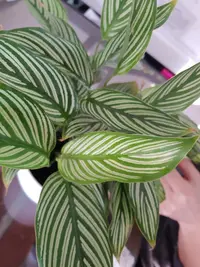
This plant forms low, bushy clumps with elongated leaves marked in green, cream, and yellow patches that give it a mosaic look. It is native to tropical regions of South America, where it grows in warm, shaded forest understorey.

Humidity, steady warmth, and avoidance of cold drafts strongly influence how easy it is to grow. Light that is bright but filtered, evenly moist soil, and a stable environment make it easier to care for Golden Variegated Ctenanthe.

Main Plant Requirements

Care Difficulty

Moderate Care

Light Preference

Bright Indirect Light

Water Requirements

Keep Soil Moist

Temperature Preference

Tropical / Frost Sensitive

Hardiness Zone

11–12

Soil Texture

Loamy, Peaty, Organic-rich

Soil pH

Acidic (5.5–6.5), Slightly acidic (6.5–7.0)

Soil Drainage

Moist but well-drained

Fertilization

Light (every 4–6 weeks)

Get Personalized Care Plan

Scan your plant to receive care tips personalized for your specific plant

Available on iOS and Android

How to Care for the Golden Variegated Ctenanthe

This plant prefers bright, indirect light with gentle sun exposure rather than intense, direct rays.

  • Provide 6–8 hours of bright, filtered light each day, such as near an east window or under light shade outdoors, to support strong variegation in Golden Variegated Ctenanthe.
  • Allow soft morning sun but protect from harsh midday and afternoon sun, which can cause yellowing, brown patches, or crispy leaf edges.
  • In winter, move slightly closer to the light source or supplement with grow lights if leaf patterns fade or new growth becomes sparse.

This plant prefers evenly moist soil that never stays soggy or dries out completely.

  • Water when the top 2–3 cm of soil feels dry, using enough water so some drains from the bottom, then discard any excess to avoid root rot.
  • Reduce watering slightly in winter, allowing the top 3–4 cm to dry, but do not let the entire root zone dry out or leaves may curl and droop.
  • Watch for yellowing, soft leaves as a sign of overwatering and crisp, brown edges or leaf rolling as an indicator of underwatering in Ctenanthe marantifolia 'Golden Mosaic'.

This tropical species prefers stable, warm conditions without cold drafts or sudden temperature swings.

  • Aim for 65–80°F (18–27°C) for active growth, with the most consistent performance around 70–75°F (21–24°C).
  • Protect the plant from temperatures below 55°F (13°C); brief exposure near this limit can slow growth, and frost will damage or kill foliage.
  • In hot weather above 85°F (29°C), increase humidity, provide shade from intense sun, and avoid placing the plant near heat vents or reflective surfaces.

This plant prefers consistently moist air and reacts quickly to dry indoor conditions.

  • Aim for 50–70% humidity to keep foliage expansion even and leaf edges smooth.
  • In dry air, expect brown, crispy margins, curled leaves, and stalled new growth on Golden Variegated Ctenanthe.
  • Increase humidity with a nearby humidifier, grouped plants, or a pebble tray, avoiding misting that leaves water sitting on leaves.

This species prefers a loose, aerated, organic-rich mix that drains freely yet holds steady moisture.

  • Use a peat- or coco-based mix with 30–40% perlite plus some fine bark to create a light, fibrous structure.
  • Target slightly acidic to neutral pH around 6.0–7.0, which supports nutrient availability for Ctenanthe marantifolia 'Golden Mosaic'.
  • Ensure excess water can drain quickly; avoid compacted, clay-heavy, or waterlogged substrates that keep roots saturated.
  • Improve aeration by gently mixing in extra perlite or pumice if the potting mix feels dense or stays wet longer than 4–5 days.

This species is well suited to container growing when moisture and root space are carefully managed.

  • Choose a pot only 3–5 cm wider than the root ball to reduce unused, constantly wet mix around the roots.
  • Select a stable, heavier container if the plant becomes wide and foliage-heavy so it does not tip when soil is moist.
  • Use thick-walled plastic or glazed ceramic to slow evaporation slightly, which helps keep the fibrous root system evenly moist between waterings.

Nutrient inputs support steady foliage growth in Ctenanthe marantifolia 'Golden Mosaic' grown in containers.

  • Use a balanced liquid fertilizer (for example 10-10-10 or 20-20-20) diluted to 1/4–1/2 strength for Golden Variegated Ctenanthe.
  • Feed every 4–6 weeks during spring and summer when growth is active.
  • Skip or reduce feeding to 1 light application midwinter if plant is semi-dormant indoors.
  • Avoid heavy, salty products; consider a thin top-dressing of fine compost once in spring.

Light pruning helps maintain a dense, tidy form in Ctenanthe marantifolia 'Golden Mosaic'.

  • Best time is late winter to early spring, before strong new growth starts.
  • Remove yellow, brown, or torn leaves at the base with clean, sharp scissors or snips.
  • Thin out weak, crowded shoots to improve air flow and keep a balanced shape.
  • Trim only leaf stems, not the rhizomes, to avoid checking overall growth.

Container-grown plants benefit from periodic repotting to refresh soil and manage root density.

  • Check for roots circling the pot, pushing through drainage holes, or for slowed growth despite good care.
  • Plan to repot Ctenanthe marantifolia 'Golden Mosaic' every 2–3 years in spring, just as new growth begins.
  • Move into a pot only 2–5 cm wider, using airy peat-free mix with added perlite or fine bark.
  • Water thoroughly after repotting, keep in bright shade for 5–7 days, and maintain high humidity to limit root stress.

Division is the most dependable way to increase Ctenanthe marantifolia 'Golden Mosaic' plants.

  • Divide well-established clumps in late spring or early summer when growth is active.
  • Lift the plant, gently tease apart rhizomes, and keep at least 2–3 healthy shoots and roots per division.
  • Plant divisions in moist, well-drained mix and keep at 70–80°F in bright, indirect light.
  • Maintain high humidity and even moisture until new leaves appear, then resume normal care.

This tropical species is frost-sensitive and needs warm, stable conditions in winter.

  • Move outdoor containers indoors before temperatures drop below 55°F and avoid any frost exposure.
  • Place in bright, indirect light away from cold drafts and heating vents.
  • Water less often, keeping the mix slightly moist but never saturated in low light.
  • Maintain 50–60% humidity or higher using trays, grouping, or a room humidifier.

Care Tips

Use Wide Containers

Choose a shallow, wide pot instead of a deep one to accommodate its surface‑spreading rhizomes and encourage a fuller clump rather than tall, weak growth.

Rotate For Even Variegation

Rotate the pot 90° every 1–2 weeks so each side receives similar light, which helps maintain balanced yellow variegation and prevents lopsided, leaning stems.

Leaf Cleaning Routine

Wipe both sides of the leaves monthly with a soft, damp cloth to remove dust, which improves light capture and reduces hiding spots for spider mites and thrips.

Quarantine And Scout

Keep new plants in a separate room for 2–3 weeks and inspect the undersides of leaves with a hand lens so pests are detected early before they spread to an existing collection.

Plan For Division

Every 2–3 years, plan repotting at the start of active growth and divide the root mass into 2–3 sections with several stems each to rejuvenate older clumps and control size when growing Golden Variegated Ctenanthe.

Common Pests and Diseases

Spider mites

This pest thrives in warm, dry indoor air and often causes fine stippling, dull leaves, and very fine webbing on the undersides of foliage. Symptoms include yellowing patches that make the variegation look faded or dirty.

Solution

Shower the plant with lukewarm water to physically remove mites, then wipe leaf undersides with a soft cloth and insecticidal soap or a ready-to-use neem oil product, repeating every 5–7 days until clear. Increase humidity to 50–60% and avoid placing the plant near heating or AC vents, since drier air favors reinfestation.

Mealybugs

These insects appear as white, cottony clumps in leaf axils, along midribs, and sometimes on roots, causing leaf yellowing and sticky honeydew. Symptoms include distorted new growth and patches where the variegation looks weak or uneven.

Solution

Isolate the plant, then dab visible mealybugs with cotton swabs dipped in 70% isopropyl alcohol and wipe affected areas. Follow with a thorough spray of insecticidal soap or neem oil, treating weekly until no new insects appear and checking the root zone if the top growth remains stunted.

Fungal leaf spot

This disease produces small water-soaked or brown spots that can have yellow halos, often starting on older leaves with higher moisture exposure. Symptoms include irregular lesions that may merge and cause partial leaf blight, especially where foliage stays wet.

Solution

Remove and discard affected leaves, improve air movement around the plant, and avoid wetting the foliage during watering. If new spots keep appearing, apply a copper-based or other houseplant-safe fungicide according to label directions and space waterings so the top of the potting mix dries slightly between them.

Bacterial leaf blight

This disease causes rapidly expanding, translucent to dark brown patches that may look greasy and can follow the veins, often starting at leaf edges or tips. Symptoms include a foul or sour smell from badly affected tissue and quick collapse of young leaves.

Solution

Immediately remove and trash all leaves showing soft, spreading lesions and avoid overhead watering or misting the foliage. Disinfect scissors between cuts with 70% alcohol, keep the plant in a warm spot with good air circulation, and discard the entire plant if the infection continues to spread despite leaf removal.

Cyclamen mites

These pests are microscopic mites that attack tender new growth, causing twisted, puckered, or undersized leaves that may emerge stuck together and with distorted variegation. Symptoms include a tight rosette of deformed young leaves while older leaves look relatively normal.

Solution

Remove and discard the most distorted new leaves to reduce the mite population, then treat the plant with a miticide labeled for indoor use or repeated applications of insecticidal soap focused on the crown area. Place the plant in a slightly cooler, well-lit location, avoid overhead misting around new growth, and isolate it from other prayer plants while monitoring for improvement over several weeks.

Interesting Facts

Distinct golden variegation

This cultivar shows irregular golden-yellow patches and streaks on otherwise green leaves, a stable genetic variegation selected from Ctenanthe marantifolia specifically for its mosaic pattern rather than for flower display.

Day–night leaf movement

Like other members of the Marantaceae, it performs nyctinasty, a rhythmic leaf movement where leaf blades change angle between day and night due to a flexible joint (pulvinus) at the base of the leaf.

Understory adaptation traits

In its rainforest ancestry, the species evolved broad, thin leaves with high chlorophyll efficiency to capture low, filtered light, which also explains its sensitivity to intense direct sun in indoor settings.

FAQs about Golden Variegated Ctenanthe

Brown leaf edges usually result from low humidity, underwatering, or a buildup of salts from fertilizer or hard tap water. Increase humidity, water evenly, flush the pot occasionally, and avoid letting the soil dry out completely.

Grow Healthy Plants with Botan Care

Keep your plants happy and healthy with plant identification, disease detection, and easy care guidance.

Botan plant care app — identify plants on mobile

Explore More Plants